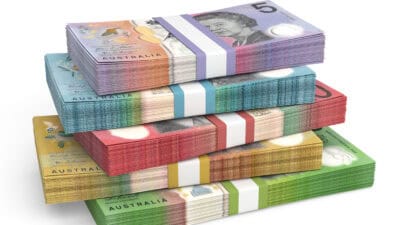
The amount of money you have to invest can change the best way to approach the ASX.
A $500 investment needs simplicity. A $5,000 investment gives more room for choice. A $50,000 investment allows investors to think more carefully about diversification, income, growth, and risk.
Here is how investors could think about putting each amount to work.

Image source: Getty Images
How to invest $500 in ASX shares
With $500, the most important thing is getting started sensibly.
A smaller investment does not leave much room to build a portfolio of individual shares. Brokerage costs can also impact you more when the investment amount is modest.
That is why an ASX exchange traded fund (ETF) could be a useful starting point.
A fund such as the iShares S&P 500 ETF (ASX: IVV) gives investors exposure to 500 of the largest listed companies in the United States through one trade.
That includes businesses across technology, healthcare, financial services, consumer goods, communication services, and industrials.
This can be a simple way to gain instant diversification and global exposure. It also removes the pressure of trying to choose the perfect first share.
The first $500 may not transform a portfolio overnight, but it can create momentum. Once the first investment is made, investors can add more over time and allow compounding to do more of the work.
How to invest $5,000
With $5,000, investors have more flexibility.
One option would be to split the money between a broad ETF and one or two high-quality ASX shares.
For example, an investor could use part of the money for the IVV ETF or the Vanguard MSCI Index International Shares ETF (ASX: VGS), then put the remainder into a quality ASX blue chip.
Wesfarmers Ltd (ASX: WES) could be one option. The company owns Bunnings, Kmart, Officeworks, and industrial businesses, giving investors exposure to a collection of strong brands and cash-generating assets.
Another possibility is Goodman Group (ASX: GMG), which has exposure to logistics property, industrial assets, and data centres across key global markets.
The advantage of this approach is balance. The ETF provides diversification, while the individual shares allow investors to start building positions in companies they believe can compound over time.
At this level, investors should still avoid spreading the money too thinly. Owning too many small positions can make the portfolio harder to follow and may reduce the impact of the best ideas.
How to invest $50,000
A $50,000 investment opens up more choices. At this size, investors can build a more complete ASX portfolio with a mix of ETFs, growth shares, dividend shares, and defensive holdings.
A possible structure could include a core allocation to broad ETFs such as the IVV, VGS, or the Vanguard Australian Shares Index ETF (ASX: VAS). These funds can provide exposure to large baskets of local and international companies.
From there, investors could add selected ASX shares.
For growth, companies such as Xero Ltd (ASX: XRO), Pro Medicus Ltd (ASX: PME), and Goodman could be worth considering. These businesses give exposure to cloud software, medical imaging technology, and global property infrastructure.
For income, investors may look at shares such as Transurban Group (ASX: TCL), APA Group (ASX: APA), or Rural Funds Group (ASX: RFF). These offer exposure to toll roads, energy infrastructure, and agricultural property assets.
With $50,000, risk management becomes more important. Investors can spread money across different sectors, avoid relying too heavily on one company, and keep some cash available for future opportunities.
Build the habit
The best approach will depend on an investor's goals, time horizon, risk tolerance, and need for income.
But the broad idea is quite simple. Start with diversification when the investment amount is small, add quality shares as the portfolio grows, and build a stronger mix of growth, income, and defensive exposure once the capital base becomes larger.