Superannuation can be a powerful place to build passive income for retirement.
It gives investors a long time horizon, tax advantages, and the ability to keep compounding returns over many years.
But how much super would someone actually need to generate $52,000 per year in passive income?
Let's break it down.

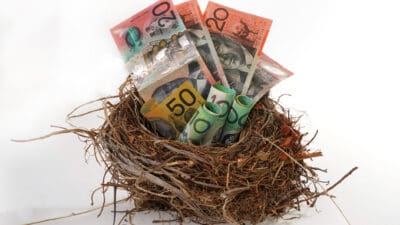
Image source: Getty Images
$52,000 per year in passive income
A passive income target of $52,000 per year works out to $1,000 a week or around $4,333 per month.
That could be a useful amount for many retirees. It could help cover everyday living costs, bills, insurance, travel, healthcare, or simply provide more breathing room in retirement.
This would leave most Australians well-placed for a comfortable retirement.
How much superannuation is needed?
If a superannuation portfolio generated a 3% dividend yield, it would need to be worth around $1.73 million to produce $52,000 per year in passive income.
That is a large amount of money, but it is worth noting that the required balance falls as the portfolio yield rises.
A 4% yield would require a balance of around $1.3 million. A 5% yield would require approximately $1.04 million. A 6% yield would need about $867,000, while a 7% yield would require roughly $743,000.
That shows why yield makes such a big difference.
The same $52,000 income target can require a very different super balance depending on the investments selected.
Should investors chase the highest yield?
A higher yield can make the numbers look more achievable, but it can also introduce more risk.
The highest-yielding ASX shares are not always the safest income options.
Sometimes a very high dividend yield appears because the share price has fallen sharply and the market expects the dividend to be cut. In other cases, the company may be under pressure from weaker earnings, rising debt, lower commodity prices, or a cyclical downturn.
A better approach is to look for income that can be sustained. That means focusing on companies with reliable cash flow, sensible payout ratios, strong balance sheets, and businesses that can continue operating through different economic conditions.
A portfolio built only around maximum yield can become fragile. But a portfolio built around quality income has a better chance of lasting.
What could a passive income portfolio include?
ASX shares can be useful inside superannuation because many pay dividends and some come with franking credits.
Large banks, infrastructure shares, property trusts, telecommunications companies, retailers, and listed investment companies can all play a role.
Examples could include income-focused blue chips such as Commonwealth Bank of Australia (ASX: CBA), Telstra Group Ltd (ASX: TLS), or Wesfarmers Ltd (ASX: WES).
Investors looking for property or infrastructure-style income might consider names such as Charter Hall Long WALE REIT (ASX: CLW), APA Group (ASX: APA), or Transurban Group (ASX: TCL).
Listed investment companies and dividend-focused ETFs can also help spread income across a wider range of holdings.
Foolish takeaway
A $52,000 annual passive income stream from superannuation is possible, but it generally requires a sizeable portfolio.
The rough balance needed could range from about $743,000 at a 7% yield to $1.73 million at a 3% yield.
Most investors may prefer to sit somewhere in the middle, balancing income with quality, diversification, and long-term capital preservation.
But it is always worth remembering that the goal is not just to reach $52,000 in one year. It is to build an income stream that can keep supporting retirement for many years to come.