The Fair Work Commission handed down its 2026 Annual Wage Review decision yesterday, and it came in above most forecasts.
Australia's 2.8 million lower-paid workers will receive a 4.75% pay rise from 1 July 2026, lifting the national minimum wage to A$1,004.90 per week, or A$26.44 per hour.
That is the first time the weekly minimum wage has crossed $1,000 in Australian history.
The increase was higher than last year's 3.5% rise and 3.75% rise in 2024, but lower than the 5% to 6% increase sought by trade unions.
For ASX consumer stocks, the decision creates tension.
Higher wages for workers mean higher spending power for consumers. But they also mean higher labour costs for the large employers who dominate the retail sector.
Here is how the three biggest consumer names on the ASX are likely to navigate that tension.
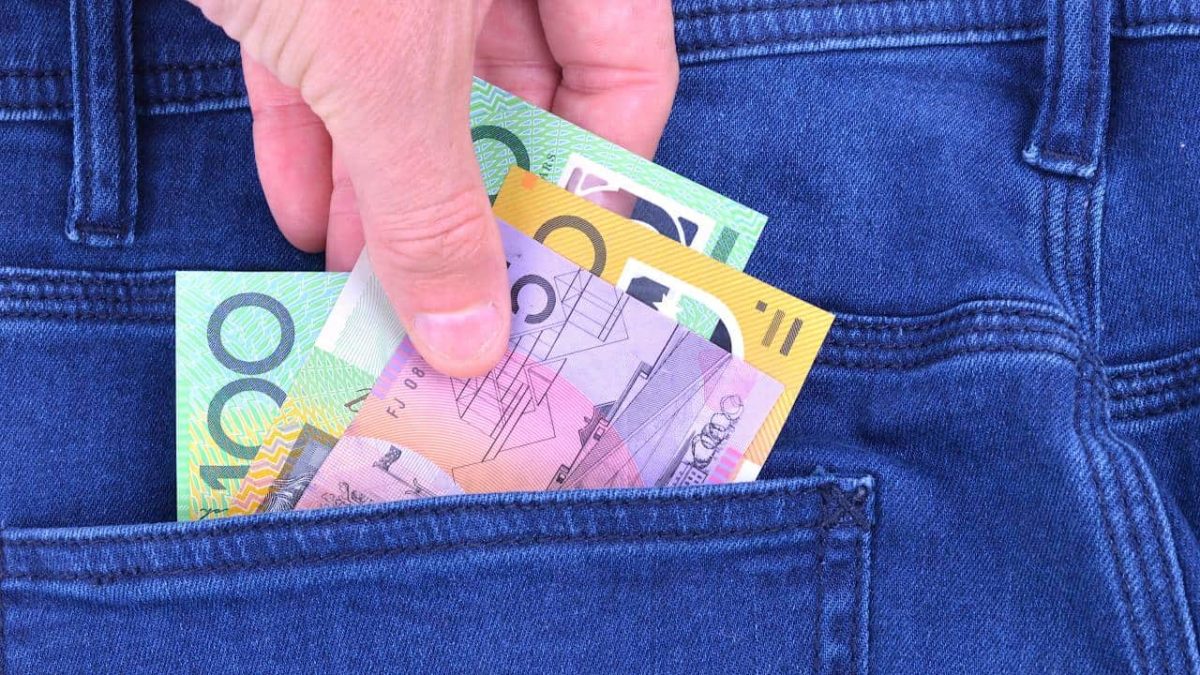
Image source: Getty Images
Woolworths Group Ltd (ASX: WOW)
Woolworths employs more than 100,000 team members across Australia, the vast majority of whom are covered by enterprise agreements or modern award rates.
A 4.75% increase in award wages flows directly into Woolworths' cost base. This already came under pressure in FY2026 as the company invested heavily in price competitiveness to win back market share.
The positive offset is that Woolworths' customers are also among the workers receiving the wage increase.
Every dollar added to the weekly pay packet of a lower-income Australian household tends to flow quickly into grocery spending, which is exactly the category Woolworths dominates.
Woolworths CEO Amanda Bardwell has previously flagged that the company is navigating a "more cautious consumer" heading into the second half of FY2026.
A wage increase that puts more money in the pockets of the lowest-income households could be precisely the stimulus that reverses that caution for grocery spending, even if it simultaneously pressures the supermarket's own wages bill.
Additionally, Westpac flagged today that the 4.75% increase was bigger than their expected 4.25% rise and implied some upside risk to wage growth. The bank flagged that there is risk inflation expectations remain elevated for longer, making the RBA's job harder.
RBA risk cuts negatively for Woolworths, as further rate hikes would squeeze mortgage-holding households and reduce discretionary spending.
Wesfarmers Ltd (ASX: WES)
Wesfarmers faces the wage increase across a far more diverse set of businesses than Woolworths.
Bunnings, Kmart, Officeworks, and Target each employ significant numbers of award-covered workers, meaning the 4.75% increase flows through a wide cost base.
However, Wesfarmers has a meaningful advantage over most of its retail peers: pricing power.
In the first half of FY2026, Wesfarmers delivered NPAT of $1,603 million, up 9.3% year-on-year, with Bunnings and Kmart both delivering strong earnings growth despite a tough consumer environment.
That track record suggests Wesfarmers has the pricing discipline and operational efficiency to absorb a meaningful cost increase without sacrificing profitability.
Kmart in particular, with its low-price value proposition, stands to benefit if lower-income households use their wage increase to trade up from pure discount retailers while remaining value-conscious.
Morgans recently upgraded Wesfarmers to accumulate with an $81.10 price target. The broker cited the quality of the business and improving valuation after a 9% pullback over the past twelve months.
The wage increase is unlikely to change that broadly positive view on the stock's medium-term trajectory.
JB Hi-Fi Ltd (ASX: JBH)
JB Hi-Fi occupies the most interesting position of the three in the context of a minimum wage increase.
The consumer electronics retailer draws its customers disproportionately from households in the middle-income bracket, not the very lowest incomes most directly affected by a minimum wage increase.
That means the direct spending boost from today's decision is likely smaller for JB Hi-Fi than for Woolworths or Kmart.
However, there are tangible indirect benefits. A rising wage floor supports broader household income growth across the economy. This tends to increase consumer confidence and discretionary spending over time.
JB Hi-Fi delivered a strong first half of FY2026 with gross sales rising 13.2%, as the company benefited from strong demand for consumer electronics and the ongoing rollout of AI-capable devices.
For JB Hi-Fi, the wage increase is a secondary factor compared to the trajectory of interest rates and consumer confidence.
If the 4.75% increase adds to RBA concerns about inflation and increases the probability of another rate hike, that would be net negative for JB Hi-Fi's customer base.
The inflationary risk
Today's announcement carries a broader risk.
The Fair Work Commission noted it would not be practicable or responsible to award an increase sufficient to fully close the real wage gap that has opened since July 2021. This would have required a rise of more than 5%.
Nevertheless, a 4.75% increase on top of three consecutive RBA rate hikes creates a risk of a wage-price spiral if businesses pass through the cost increase in the form of higher consumer prices.
That is the scenario the RBA most fears, and it is the kind of development that could tip the June hold into an August hike.
Markets are currently pricing in a 7% chance of a fourth rate hike at the June meeting, but that probability could shift if this week's wage decision is interpreted as adding to inflationary pressure.
Foolish takeaway
A minimum wage increase is not inherently good or bad for ASX consumer stocks.
For Woolworths it is both a cost headwind and a demand stimulus.
With Wesfarmers, it is a cost to manage but one its operational strength can absorb.
For JB Hi-Fi it is largely a sideshow to the interest rate story.
For all three, the more important variable in the months ahead remains what the RBA does next with rates, and whether today's wage decision gives the board reason to keep the hiking cycle going.