Will the ASX 200's 'China problem' get worse?

Does the ASX have a China problem? And will it get worse before it gets better for ASX 200 investors? The resources sector could be next.

| More on:
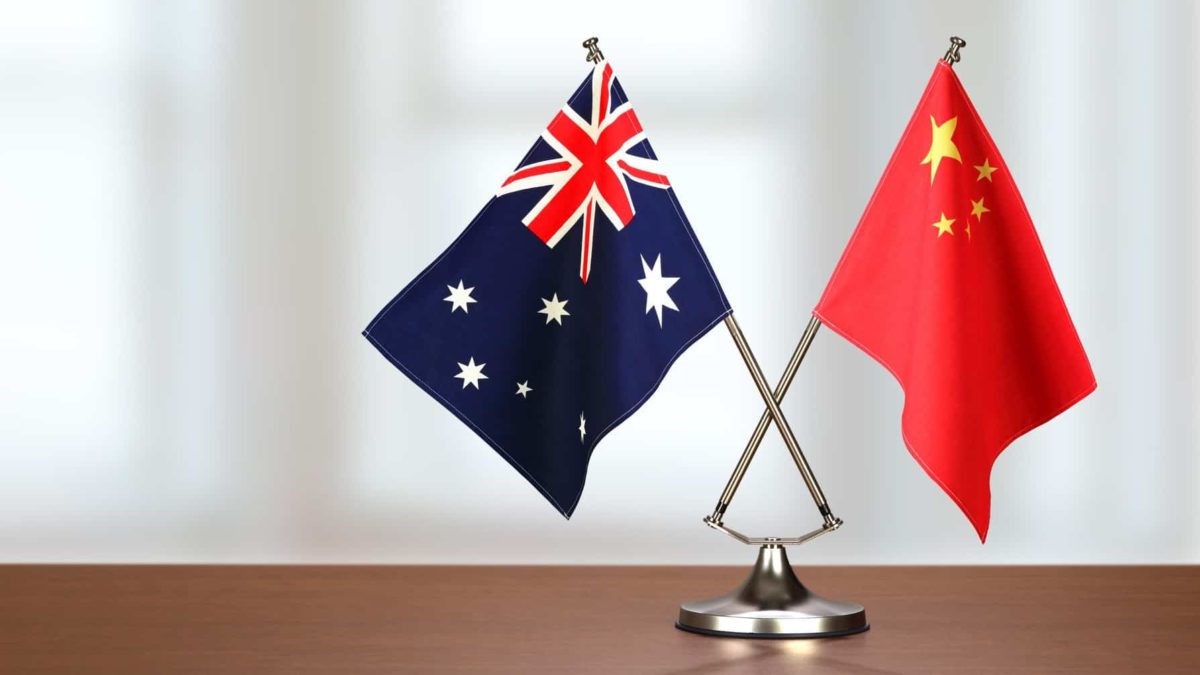
Two flags - one from China, the other Australian - sit together on a desk

Image source: Getty Images

You’re reading a free article with opinions that may differ from The Motley Fool’s Premium Investing Services. Become a Motley Fool member today to get instant access to our top analyst recommendations, in-depth research, investing resources, and more. Learn More

The S&P/ASX 200 Index (ASX: XJO) has started the week slightly down, dropping 0.24% at the time of writing. Earlier this morning, we discussed how Treasury Wine Estates Ltd (ASX: TWE) share price was also taking a tumble this morning. Although Treasury shares have somewhat recovered at the time of writing, they were down as much as 4% in early trade today. The catalyst? China's Ministry of Commerce confirming there would be a 175.6% tariff on the importation of Australian wine for the next five years. Now officially, this tariff is meant to be an 'anti-dumping' measure.

But it's regarded as something of an open secret that it is actually a byproduct of the current freeze in Sino-Australian relations. Last year saw Australian exports of barley and other agricultural goods curtailed for similar reasons.

But is this only the start of the ASX's 'China problem'?

The ASX's 'China problem'

There are many, many ASX companies that would likely suffer if relations between Australia and China get any worse. Companies like A2 Milk Company Ltd (ASX: A2M) and Bubs Australia Ltd (ASX: BUB) have suffered from their daigu markets collapsing. Daigou trade involves customers buying products in bulk in Australia, and shipping them to China to be resold. The coronavirus pandemic was largely to blame for A2 Milk and Bubs' initial woes in this area. But it is very conceivable that the deteriorating diplomatic relationship would exacerbate the daigou problem.

The Sino-Australian relationship has now become a pawn in the far larger game of the Sino-US relationship. Earlier this month, Chinese and US officials held a fiery bilateral dialogue. It was the first contact between US and Chinese officials under the new Biden Administration. The US reportedly made re-engagement with Australia a primary condition of any improvement in their own relationship with China. In other words, global geopolitics is now a part of our economic relationship with China.

Suppose this hinders, rather than helps, Sino-Australian relations.

Things could get worse before they get better

Well, the ASX's China problem could get a lot worse. As most investors would know, the primary trade routes between Australia and China run on iron ore, coal, and other commodity resources.

If China really decides that it needs to send a message to the US or to us, this might be the next sector to feel the diplomatic heat. In this case, our biggest miners like BHP Group Ltd (ASX: BHP), Rio Tinto Limited (ASX: RIO), and Fortescue Metals Group Limited (ASX: FMG) could have a lot of trouble ahead. Imagine a 175.6% tariff on Australian iron ore… That would get every ASX investors' attention, I'd wager.

Even if international relations isn't your area of expertise, it's shaping up as a key flashpoint for ASX investors, whether we like it or not. So watch this space.

Sebastian Bowen owns shares of A2 Milk. The Motley Fool Australia's parent company Motley Fool Holdings Inc. owns shares of BUBS AUST FPO. The Motley Fool Australia owns shares of and has recommended A2 Milk and Treasury Wine Estates Limited. The Motley Fool Australia has recommended BUBS AUST FPO. The Motley Fool has a disclosure policy. This article contains general investment advice only (under AFSL 400691). Authorised by Bruce Jackson.

More on Economy

graphic depicting australian economic activity
Share Market News

Buying ASX 200 shares? Here's what the latest spending report means for interest rates in 2026

The ASX 200 dropped 0.3% following the release of the consumer spending report. But why?

Read more »

Percentage sign with a rising zig zaggy arrow representing rising interest rates.
Share Market News

With inflation edging lower, here's the latest 2026 interest rate forecast from CBA

Buying ASX shares and pining for interest rate relief? Here’s CBA’s latest 2026 forecast.

Read more »

A happy young couple celebrate a win by jumping high above their new sofa.
Retail Shares

2 quality ASX 200 shares to buy now amid a rising Aussie dollar

Amid CBA’s forecast of a strengthening Aussie dollar, it may be time to shake up that ASX share portfolio.

Read more »

Australian dollar notes and coins in a till.
Share Market News

Why CBA is forecasting a stronger Aussie dollar in 2026, and what that means if you're buying ASX shares

Amid CBA’s forecast of a strengthening Aussie dollar, which ASX shares might benefit and which might struggle in 2026?

Read more »

Higher interest rates written on a yellow sign.
Share Market News

Experts forecast rising interest rates in 2026. Here's what that means if you're buying ASX shares

Buying ASX shares? Here’s why CBA and NAB are forecasting RBA interest rate hikes in 2026.

Read more »

Magnifying glass on a rising interest rate graph.
Share Market News

Buying ASX shares? Why, and how, you should prepare for higher interest rates in 2026

The odds of RBA interest rate hikes in 2026 are rising. Here’s what that means if you’re buying ASX shares.

Read more »

A young woman uses an application in her smart phone to check currency exchange rates in front of an illuminated information board.
Economy

What a rising Aussie dollar means for your ASX shares

A rising dollar flows through to many ASX shares.

Read more »

Percentage sign on a blue graph representing interest rates.
Share Market News

ASX 200 turbulent following the RBA interest rate decision

ASX investors will need to accept plenty of uncertainty on the outlook for interest rates in 2026.

Read more »