Rio Tinto Ltd (ASX: RIO) shares have long been a popular choice with Australian income investors.
The mining giant has returned substantial amounts of cash to shareholders over the years.
At around $166.25 today, are Rio Tinto shares still worth considering for passive income?

Image source: Getty Images
Why miners can work for income investors
Rio Tinto and BHP Group Ltd (ASX: BHP) are regular fixtures in many income portfolios for good reason.
Both companies own large, long-life mining operations that can generate enormous amounts of cash when commodity markets are supportive.
For Rio Tinto, iron ore remains a key part of the business. Its Pilbara operations produce huge volumes and have historically generated substantial profits.
That cash can then be used to fund new projects, strengthen the balance sheet, and pay dividends to shareholders.
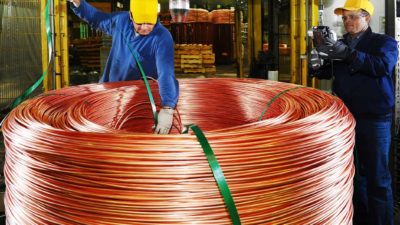
I also like that Rio Tinto is building out its exposure to copper. That gives the company another potential source of earnings as demand grows from areas such as electrification, power networks, and renewable energy infrastructure.
For income investors, I think that mix works well. Rio Tinto has major assets generating cash today while still investing for the future.
What could the dividend look like?
For passive income investors, Rio Tinto's dividend is one of the main reasons to consider the shares.
According to consensus forecasts, the miner is expected to pay fully franked dividends of $6.34 per share in FY26 and $6.62 per share in FY27.
At the current Rio Tinto share price, that works out to be prospective dividend yields of around 3.8% and 4%, respectively.
Those yields may not jump off the page, but I think they are attractive when combined with the potential benefit of franking credits.
For me, the bigger point is that investors are getting a reasonable level of income from a company I would also be comfortable owning for the long term.
What does the valuation look like?
Consensus forecasts are for earnings per share of $12.07 in FY26 and $12.04 in FY27.
At the current share price, Rio Tinto is therefore trading on a PE ratio of around 14 times forecast earnings.
I think that is a reasonable valuation for a business of this scale, particularly when the dividend is also part of the return.
Of course, Rio Tinto's earnings will always move with commodity prices.
Iron ore weakness could put pressure on profits and dividends, while stronger prices could have the opposite effect.
That variability is simply part of owning a large miner.
I would not rely on the dividend alone
Rio Tinto is not the type of income share where I would expect the dividend to rise neatly every year.
The payout can move significantly depending on profits and commodity markets.
For that reason, I would see Rio Tinto as one part of a broader passive income portfolio rather than relying on it to provide a fixed amount every year.
That would still leave plenty of room for the company to make a meaningful contribution when conditions are favourable.
Foolish takeaway
Yes, I would buy Rio Tinto shares for passive income.
The prospective yield is solid, the dividends are expected to be fully franked, and the valuation looks reasonable.
I also like that Rio Tinto can offer more than income alone, with its existing assets and growing copper exposure giving the business opportunities to create value over the years ahead.