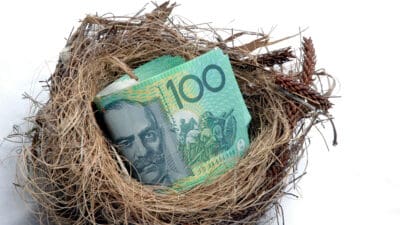
Superannuation is a very effective way for full-time working Australians to invest for passive income.
One of the best things about superannuation is the fact that it has a lower tax rate than the individual tax rate and company tax rate. It may have a lower tax rate than trusts too.
Another advantage of superannuation investing is its structure, which promotes long-term investing. For people in the accumulation phase, they may make investments for decades before they can access that money.
When it comes to investing in passive income, the money we can use is the after tax amount. That's why it's more fruitful to invest for passive income in superannuation because less of the income is being lost to tax than most of the tax brackets for individuals. I'd prefer not to lose a third of my passive income to tax each year.
Pleasingly, not only is the tax rate lower in the superannuation accumulation phase, it could be as low as 0% in retirement, depending on the superannuation balance.
The taxation circumstances of each household is different, so we'll just look at the income goals from now on.

Image source: Getty Images
How much is needed in superannuation for $7,000 of monthly passive income?
Receiving $7,000 in dividends each month equates to an annual goal of $84,000 per year. I'd love to receive that level of dividend income.
The question of how much it would take to generate that much income comes down to the yield of the investment. Of course, there's more to investing than just the yield. Reliability and growth are also important factors.
Many ASX shares offer the great bonus of franking credits, boosting the dividend yield on offer.
I'll point out that a portfolio with an average dividend yield of 3% would need to be double the size of a portfolio with a dividend yield of 6% to generate the same level of passive income.
For example, if a portfolio were $1.4 million in size, it would generate $84,000 of annual passive income with a 6% dividend yield. If the portfolio had a 3% dividend yield, it would need to be $2.8 million in size to achieve the same level of annual payments.
Every dividend yield would require a different portfolio size to achieve $84,000 annually. For example, a 4% dividend yield would require a $2.1 million portfolio and a 5% dividend yield would require a $1.68 million portfolio.
The types of ASX dividend shares I'd choose to buy
As stated earlier, if I'm investing for passive income in superannuation, I'd also want to consider reliability and growth. I rate all the investments I'm about to highlight as above-average for payout reliability.
If investors want to unlock mid-to-higher dividend yields, I'd look at quality companies with franking credits, good value and reliable real estate investment trusts (REITs), and listed investment companies (LICs).
Some of the businesses with a dividend yield of between 5% to 7% that I'd look at include Telstra Group Ltd (ASX: TLS), WCM Global Growth Ltd (ASX: WQG), Centuria Industrial REIT (ASX: CIP), Dexus Industria REIT (ASX: DXI), Rural Funds Group (ASX: RFF), Charter Hall Long WALE REIT (ASX: CLW), MFF Capital Investments Ltd (ASX: MFF) and L1 Long Short Fund Ltd (ASX: LSF).
Then there's ASX dividend shares with a larger dividend yield. Some of my favourites with bigger yields include WAM Microcap Ltd (ASX: WMI), Future Generation Global Ltd (ASX: FGG), Future Generation Australia Ltd (ASX: FGX), WAM Leaders Ltd (ASX: WLE), Universal Store Holdings Ltd (ASX: UNI) and Hearts and Minds Investments Ltd (ASX: HM1).