Fortescue Ltd (ASX: FMG) and Rio Tinto Ltd (ASX: RIO) are two of the biggest mining shares on the ASX.
Both give investors exposure to iron ore, both can pay large dividends, and both are trying to position themselves for the next phase of resources demand.
But they are not the same investment.
Fortescue offers a larger forecast dividend yield today, while Rio Tinto gives investors a broader commodity mix and, in my view, a more balanced long-term opportunity.
So, which one would I buy?

Image source: Getty Images
The case for Fortescue shares
Fortescue remains one of the ASX's great mining success stories.
The company built a world-class iron ore business in the Pilbara and has rewarded shareholders handsomely over the years when iron ore prices have been strong.
According to CommSec, consensus estimates point to earnings per share of $1.73 in FY26 and $1.42 in FY27. Based on the current share price of $20.47, that puts Fortescue on around 12 times FY26 earnings and 14 times FY27 earnings.
But the main attraction today is income. Dividend estimates sit at $1.19 per share in FY26 and 94 cents in FY27. That implies forward dividend yields of approximately 5.8% and 4.6%.
Those are attractive numbers, particularly for investors looking for resources income.
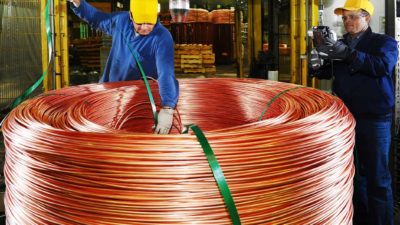
I also think it is worth noting that Fortescue is no longer only talking about iron ore and green energy. It has turned more attention to copper, which could be a smart move if the company can build meaningful exposure over time.
Copper should benefit from electrification, grid investment, data centres, renewable energy, and industrial demand. So, I like the direction of travel.
The challenge is that Fortescue remains highly exposed to iron ore today. If iron ore prices weaken, earnings and dividends can move quickly. That does not make it a bad investment, but it does make the income outlook more cyclical than the headline yield might suggest.
The case for Rio Tinto shares
Rio Tinto is also heavily exposed to iron ore, but I think it offers a broader and more attractive long-term mix.
CommSec's consensus estimates point to earnings per share of $11.88 in FY26 and $12.38 in FY27. With the share price around $185.59, that puts Rio Tinto on roughly 16 times FY26 earnings and 15 times FY27 earnings.
Dividend estimates are $6.54 per share in FY26 and $6.81 in FY27. That implies forward yields of approximately 3.5% and 3.7%.
Those yields are lower than Fortescue's, but I do not think yield alone should decide this comparison.
Rio Tinto has exposure to iron ore, copper, aluminium, lithium, and other materials tied to global industrial growth and the energy transition. That broader commodity base is the main reason I prefer it.
Iron ore may remain a major profit driver, but I like miners that have more than one path to create value. Rio Tinto has the balance sheet, project pipeline, and global asset base to keep investing across several important commodities.
Copper is particularly important to me. The world will likely need more copper over the coming decades, and building new supply is not easy. Rio Tinto's copper exposure gives it a valuable long-term growth angle that Fortescue is still trying to develop.
Which would I buy?
I would choose Rio Tinto shares.
Fortescue's yield is attractive, and I can see why income investors may prefer it. If iron ore prices remain supportive, Fortescue can continue to generate strong cash flow and dividends.
But Rio Tinto is the better buy for me because it offers a more diversified resources exposure.
The valuation is not demanding, the dividend yield is still useful, and the business has more ways to benefit from the long-term demand for critical materials. I also think its copper exposure gives it a stronger position for the next decade.
Fortescue's copper ambitions are worth watching, but Rio Tinto already has a wider base to work from.