Today, the direction of the US dollar is arguably the single most important macro variable for Australian resource investors, and the news could not be better.
The US dollar index has fallen more than 6% since January 2026, reflecting growing concerns about US fiscal sustainability, trade policy uncertainty, and the Federal Reserve's cautious approach to interest rate normalisation.
For BHP Group Ltd (ASX: BHP), Rio Tinto Ltd (ASX: RIO), and Fortescue Ltd (ASX: FMG), a weaker US dollar is a powerful earnings tailwind, and it is blowing firmly in their favour right now.

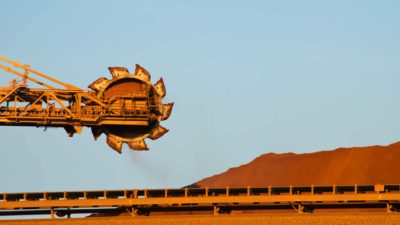
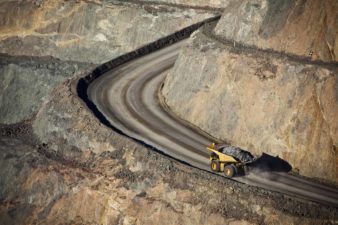
Image source: Getty Images
Why the US dollar matters so much
The mechanism is straightforward but powerful.
Global commodities including iron ore, copper, and aluminium are priced in US dollars on international markets.
When the US dollar weakens, those commodities become cheaper for buyers using other currencies, which tends to stimulate demand and push prices higher.
The US dollar index has fallen more than 8% since January 2026, reaching its lowest level since 2022, as concerns about US fiscal sustainability and trade policy uncertainty have accelerated the decline.
The impact on commodity prices has been immediate and significant.
Copper has risen to trade above US$13,000 per tonne on the London Metal Exchange, a level not seen in recent history.
Iron ore has recovered above US$100 per tonne, supported by fresh buying from Chinese steel mills amid depleting steel inventories.
While a weaker US dollar also tends to strengthen the Australian dollar, partially offsetting the AUD earnings benefit for local miners, the net effect has historically been positive when commodity demand remains robust.
Current demand conditions across copper, iron ore, and lithium are among the strongest in years.
BHP
BHP is arguably the best-positioned of the three to benefit from the current environment, given its growing exposure to copper, the commodity most directly tied to the electrification and AI infrastructure megatrends driving demand.
The weaker US dollar has amplified the price gains in copper that were already being driven by structural demand from AI data centres, EV production, and grid infrastructure.
BHP reported a 31% increase in its average realised copper price to US$5.47 per pound in its March quarter update, a direct reflection of both the commodity price rally and the currency tailwind.
UBS recently reiterated a hold rating on BHP with a price target of $52, noting the company's fundamental quality while acknowledging near-term iron ore price headwinds.
Rio Tinto
Rio Tinto benefits from the weak US dollar through its diversified commodity exposure spanning iron ore, copper, aluminium, and lithium, all of which are priced in US dollars on global markets.
The company's share price has risen as the combination of a weaker dollar, Chinese stimulus expectations, and rising copper prices drove a broad-based re-rating of the diversified mining sector.
Furthermore, Rio's $6.7 billion acquisition of Arcadium Lithium, completed in early 2026, adds a further USD-priced commodity to its portfolio at precisely the moment the lithium price is recovering.
Lithium prices have risen enormously year to date in 2026, and with the majority of that revenue denominated in US dollars, a weaker greenback amplifies the AUD earnings contribution from Rio's rapidly growing lithium business.
Rio maintains a 60% payout ratio dividend policy, meaning higher earnings from commodity tailwinds flow through directly and predictably to shareholder distributions.
Fortescue
Fortescue offers the most leveraged and concentrated play on the weak US dollar theme among the three, given its near-total dependence on iron ore revenues.
Iron ore remains priced in US dollars, and every one dollar decline in the US dollar index tends to support higher iron ore prices as Chinese steel mills, who buy in yuan, face lower effective costs.
Fortescue shares have risen in the past year, reflecting both the iron ore price recovery and growing investor appreciation for its green energy ambitions under the Fortescue Energy division.
The company maintains a dividend payout policy of 50% to 80% of net profit after tax, with dividends paid fully franked twice per year.
This means that the current commodity and currency tailwinds should flow through to shareholder distributions when Fortescue reports its full-year results in August 2026.
For income-focused investors, that combination of a recovering iron ore price and a weaker US dollar amplifying AUD earnings is an attractive backdrop.
Foolish Takeaway
A weaker US dollar is not a guaranteed tailwind for Australian miners.
If it is accompanied by slowing global growth or Chinese demand weakness, the commodity price benefit can be offset quickly.
However, in the current environment, where structural demand from AI infrastructure and electrification underpins copper, where lithium is recovering, and where iron ore supply constraints remain intact, the weak US dollar looks more like a meaningful earnings amplifier than a warning sign.
For long-term investors in BHP, Rio, and Fortescue, the currency backdrop in 2026 is about as favourable as it gets.