The BHP Group Ltd (ASX: BHP) share price has been an incredible performer compared to the S&P/ASX 200 Index (ASX: XJO) in the past year.
In the last 12 months, the ASX mining share has gone up by 55%, as the chart below shows, while the ASX 200 is only up by 5%. That means $10,000 is now worth around $15,500.
BHP has been one of the best-performing blue-chips on the ASX in that time. I think there are a few reasons why the business has performed so strongly for shareholders.

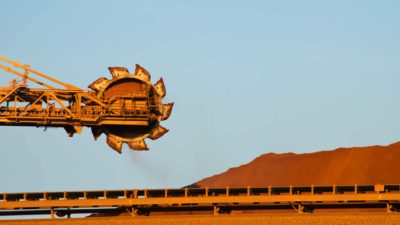
Image source: Getty Images
US tariffs in 2025
When we're looking at how much a share has risen over a certain time period, it's important to consider where the share price started and where it ended.
A year ago, the BHP share price was suffering amid investor concerns surrounding US tariffs and what impact that may have on the Chinese economy and demand for iron ore.
Understandably, as the months went by and China continued buying iron ore, investor concerns faded away amid ongoing strength for the iron ore price.
Resource prices
A key input of BHP's profitability is the resource price. Its costs per tonne don't change much month to month, so any extra revenue for that production is a great boost for its earnings.
The iron ore price has remained strong enough for the ASX mining share to deliver significant profits.
According to Trading Economics, the iron ore price is currently sitting at US$111 per tonne. That's a lot stronger than I was expecting it would be by now. The iron ore price is up by 11% over the past year, with that extra revenue largely adding to net profit, aside from paying more to the government.
The copper price has also performed strongly – in the FY26 third-quarter, the company reported that its average realised price was US$5.47 per pound, up 31%. Again, a lot of this additional copper revenue is a strong boost for profitability.
Strong production
Resource prices are just part of the picture, the business is also capitalising on the higher resource prices by delivering high levels of production.
In the third quarter of FY26, the company reported that it produced 62.8kt of iron ore, representing 2% growth year-over-year.
Copper production of 476.8kt was 7% lower year-over-year, but that was still a strong output for the business.
With the company working on increasing its production at existing projections and building new ones, it can increase its output in the coming years.