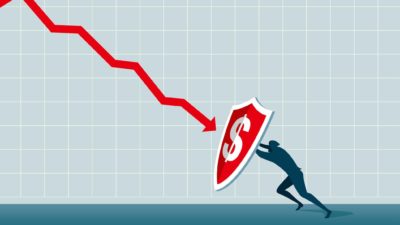
Well, the hopes of investors for a smooth and prosperous 2026 that many harboured at the start of this year are looking increasingly precarious as we approach April. With the ongoing and perhaps escalating war in the Middle East, investors are bracing for ongoing fallout in their ASX share portfolios.
This war has already delivered a severe and perhaps unprecedented energy shock, which is what happens when 20% of the global oil supply is effectively shuttered overnight. By many accounts, even if the war ends tomorrow, the energy shock will persist for some time. And if it doesn't end in the next few weeks, that shock could get even worse.
This all puts ASX investors in a tricky position. Almost no ASX share outside the energy sector is completely immune from the deleterious effects of sharply higher oil costs. Oil and its derivatives, including petrol, diesel, aviation fuel, and plastics, are inputs into the production of most every good and service one can think of. Not to mention the primary input of transport.
So, putting all of this together, how should investors build a defensive portfolio in 2026 that is capable of riding out this brewing storm?

Image source: Getty Images
Building a defensive ASX share portfolio in 2026
It might be tempting to take a look at what's happening in the Middle East and go out and buy ASX energy stocks. Or even energy-linked exchange-traded funds (ETFs) like the BetaShares Global Energy Companies ETF (ASX: FUEL). Otherwise, investors might be tempted to sell ASX shares and buy that famous 'safe-haven asset', gold.
I'm not doing any of that though.
Yes, energy shares are the one sector that is shining right now. However, energy prices are famously volatile. If this energy shock begins to choke the growth of the global economy, there is a good chance that oil prices come off the boil and fast. Recessions tend to see demand for energy collapse, as we saw back in the global financial crisis. No one knows if or when this dynamic could play out. As such, I would equate buying ASX energy shares right now to gambling.
Instead, I would continue to invest as I always do – by looking for ASX shares that possess some kind of economic moat that can protect them from inflation, high energy prices, or a recession. The best companies tend to possess at least one form of moat. That could be a cost advantage (i.e. providing a good or service at consistently lower prices than competitors), or else selling a good or service that customers find difficult to avoid using.
Moats are your ASX share portfolio shield
Telstra Group Ltd (ASX: TLS) and Woolworths Group Ltd (ASX: WOW) are two examples of companies that possess such a moat. Telstra offers vital telecommunications services to Australians with the nation's superior mobile network. Many customers simply have to use Telstra for mobile and internet, given it covers parts of the country that competitors do not. Higher energy costs and lower economic growth will not change this dynamic.
In Woolworths' case, yes, its costs are set to rise significantly with higher energy bills. But, given we all need to eat and stock our households with life's essentials, most of us will continue to shop there if it remains the cheapest and most convenient place to do so.
As such, I would ensure my ASX share portfolio is only occupied by these sorts of companies that offer some kind of moat that can protect their profits from external threats.
A final note on cash
Normally, I don't hold a lot of cash in my portfolio, besides a prudent rainy day safety net. I also don't sell ASX shares just because the market is in a downturn. However, I think as a short-term investment, cash is abnormally attractive right now. Interest rates are high, and might continue to rise. Indeed, you can apply for a term deposit with an interest rate above 5% today. A safe 5% return is not a bad way to put your surplus cash to work in an environment so rife with uncertainty as this.