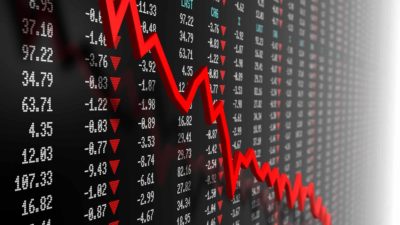
No one enjoys seeing the share market crash.
With the exception of those investors who've resorted to short selling, most of us stand to see our portfolios shrink when a bear market sinks in its teeth.
With a share market crash and bear market technically defined as a fall of more than 20%, the S&P/ASX 200 Index (ASX: XJO) hasn't hit that rough patch yet during this year's market sell-off.
From 13 August's peak high through to the 20 June trough, ASX 200 shares fell 15.7%.
Since then, the ASX 200 has enjoyed a strong rebound, up 9%, which leaves the benchmark index down 8.1% from last August.
ASX tech shares have fared worse amid fast rising inflation and interest rates. Though they've also enjoyed some of the biggest rebounds since the June lows.
From mid-November 2021 through to mid-June the S&P/ASX All Technology Index (ASX: XTX) plunged 45%. Despite the big bounce since then, the All Tech Index remains down 24% since November.
So, as far as tech stock investors are concerned, a share market crash has eventuated.

Image source: Getty Images
What goes up when the share market crashes?
The current ructions hitting stocks around the world and raising fears of a share market crash largely stem from unexpectedly fast rising inflation and the resulting interest rate hikes from global central banks.
Rising geopolitical tensions and lingering supply issues from the pandemic haven't helped either.
So where can ASX investors turn during a share market crash?
First, gold.
The classic safe haven metal has seen its value increase in six of the nine share market crashes between 1976 and 2020, according to GoldSilver.
During the ASX sell-off in 2022, gold hasn't shot the lights out.
But the yellow metal hasn't fared too badly. On 1 January an ounce of gold was trading for US$1,829. That same ounce is currently worth US$1,791, down 2%.
The same can't be said for most ASX gold shares, as witnessed by the 17% year-to-date fall in the S&P/ASX All Ordinaries Gold Index (ASX: XGD).
One way to invest in physical gold via the ASX is through the Betashares Gold Bullion ETF (ASX: QAU).
The currency hedged exchange-traded fund (ETF) aims to track the performance of the price of gold. It employs a currency hedge against movements in the exchange rate between the US and Aussie dollars.
QAU is down 2% in 2022 compared to an 8% loss posted by the ASX 200.
Bonds and inflation protection
Another safe haven asset, if held to maturity, is a government bond.
If a share market crash is being driven by inflationary pressures, then you may want to consider exchange-traded Treasury Indexed Bonds (eTIBs).
What are these?
According to the ASX:
Exchange-traded Treasury Indexed Bonds (eTIBs) offer a convenient and readily accessible way to invest in Treasury Indexed Bonds. Treasury Indexed Bonds are capital-indexed bonds issued by the Australian Government. The capital value of the investment is adjusted by reference to movement in the Consumer Price Index (CPI)…
Treasury Indexed Bonds are not traded on an exchange and are typically traded in large parcels, putting them beyond the reach of many investors. eTIBs have the appeal and convenience of being electronically traded and settled through the Australian Securities Exchange (ASX) in small or large parcels.
In a share market crash, be sure you're diversified
The ASX 200 has been marching higher over the past few weeks. So perhaps the worst is behind us.
But if we are looking at a share market crash, it pays to have a diversified portfolio.
In inflationary times with interest rates rising fast, look for companies with strong balance sheets, unlikely to be hit with large increases in debt repayments.
Companies with plenty of cash flow that can continue dividend payouts also tend to be less volatile than growth stocks.
These may still well fall during a share market crash. But at least you'll be getting some regular income during the retrace.
And if you've got a long-term investment horizon, history shows that well run companies operating in growing markets tend to reward their shareholders over time. Even if few, or none, are immune to some medium-term downside during a market crash.
So, if you do see the value of some of your cherished stocks take a hit, remember that they're only paper losses unless you sell them during the retrace.
Finally, in times like these, it's more important than ever to keep some powder dry.
Aside from having some ready liquidity in case of unforeseen needs, you could scoop up some steals.
As my fellow Fool, Bruce Jackson writes, "If the market does indeed test its June 2022 lows, it gives you an opportunity to snap up some more bargains."