



- What are ASX copper stocks?
- Why invest in ASX copper shares?
- How have copper shares fared recently, and what's ahead?
- Recent developments in the Australian copper industry
- Top copper shares on the ASX
- BHP
- Sandfire Resources
- Aeris Resources
- Pros of investing in copper shares
- Structural demand growth
- Supply constraints
- Leverage to mega-trends
- Cons of investing in copper shares
- Price volatility
- Long lead times and execution risk
- Environmental and regulatory risks
- Are ASX copper shares right for you?
Copper is among the world's most heavily consumed industrial metals, and the case for its long-term importance has never been stronger. Global copper demand is projected to rise 50% by 2040, growing from around 28 million metric tons today to 42 million1, driven by the energy transition, AI and data centres, grid expansion, and core economic growth.
The metal sits at the centre of modern electrification. Solar installations require 3.5 to 4 tonnes of copper per megawatt, while a battery electric vehicle contains approximately 83 kg of copper, compared to just 23 kg in a conventional internal combustion engine vehicle. EV-related copper demand alone is set to double by 20352. Combined with the rise of AI-driven data centre construction, copper's industrial footprint is expanding faster than at any point in its history.
Yet supply is struggling to keep pace. The International Copper Study Group expects a refined copper shortfall of around 150,000 tonnes in 2026, reversing what had been a forecast surplus. New mines take decades to bring online, and ore grades have been declining for years. This tightening supply-demand balance has made copper one of the most closely watched commodities of the decade, and a growing focus for Australian investors.
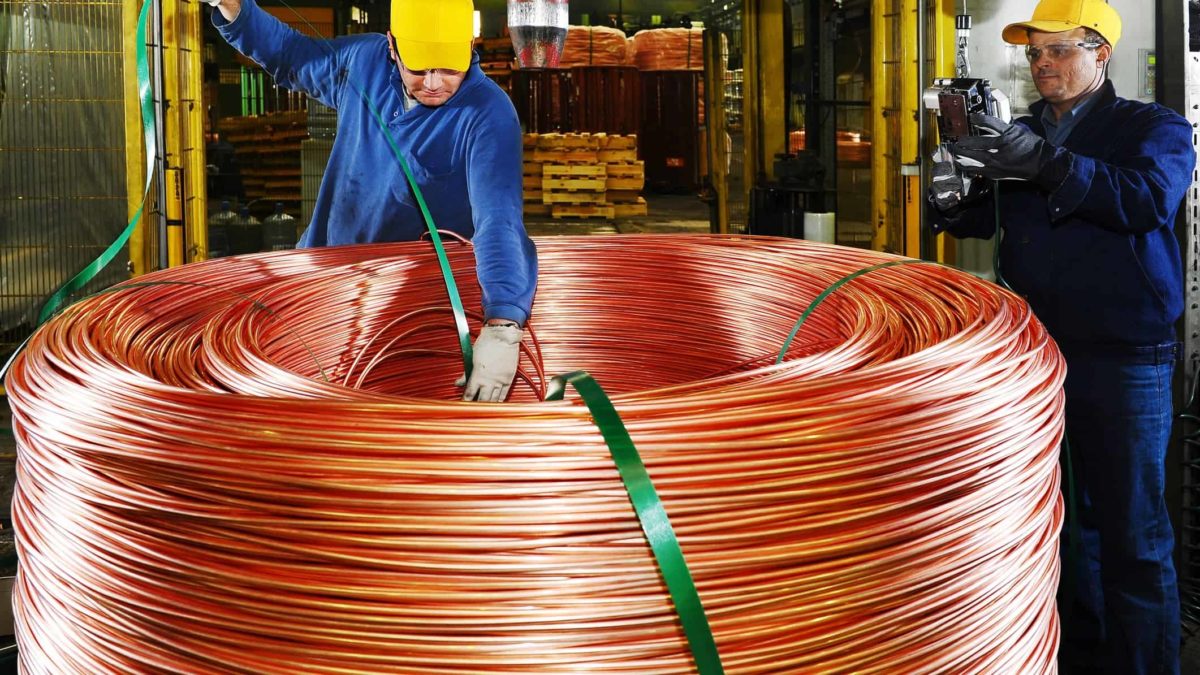
Image source: Getty Images
What are ASX copper stocks?
ASX copper stocks provide investors with exposure to the copper industry. They include companies already producing copper, such as mining giants Rio Tinto Limited (ASX: RIO) and BHP Group Limited (ASX: BHP), as well as junior miners with copper projects in the development phase, like Havilah Resources Ltd (ASX: HAV).
'Pure play' copper companies focus exclusively on copper production. As their fortunes rest almost entirely on the value of the red metal, their share prices will be sensitive to movements in the copper price. Hot Chili Ltd (ASX: HCH) is one example, developing its Costa Fuego copper-gold project in northern Chile, a region with substantial mineral resources and an active drill programme testing new targets.
Other mining companies, like BHP and Rio Tinto, operate a diversified portfolio of mining projects and produce many different metals and minerals besides copper. They are less dependent on the price of copper to turn a profit, so their share prices may move due to a range of factors, such as the prices of the other commodities they produce.
Pure play companies offer investors more direct exposure to copper but can also be more volatile because they rely so heavily on the copper price. Diversified majors, by contrast, may provide a smoother ride while still offering meaningful copper exposure as the metal's long-term demand story plays out.
Why invest in ASX copper shares?
Copper has applications across a vast range of industries, making it one of the most in-demand industrial metals on the planet. We use it in electrical wiring, electronics, car radiators, and heating systems, and it forms the basis of both bronze and brass. But copper's role has expanded well beyond these traditional uses.
Copper hit fresh all-time highs in mid-May 2026, climbing above $6.6 per pound on the back of stronger Chinese demand, supply disruptions, and robust consumption across power grids, renewable energy, and AI infrastructure — up more than 40% over the past year. Even so, new supply is years away, with most new projects in copper-rich Chile not expected to boost output until 2028 or 2029.3
The long-term outlook is equally compelling. Goldman Sachs forecasts the copper price to reach $15,000 per tonne by 2035, as structural demand from electrification, grid modernisation, and digital infrastructure continues to outpace what miners can bring to market. For Australian investors, ASX copper shares offer a direct way to participate in that story.
How have copper shares fared recently, and what's ahead?
Copper companies such as Sandfire Resources Ltd, which saw share prices climb in the first half of 2024, have seen gains moderate in recent months amid high inflation and global recession fears. High interest rates and persistent inflation have dampened the economic outlook, which is reflected in the share prices of many copper companies.
Although long-term trends for copper remain positive, heightened economic uncertainty puts pressure on the commodity's price. Because it is used in so many industries, copper is often seen as a bellwether for the health of the wider economy. Rising interest rates curb business activity and slow economic growth, which causes short-term demand for copper to wobble.
However, the long-term potential for the red metal is difficult to ignore, with analysts predicting copper shares could continue to benefit from some healthy tailwinds.
Recent developments in the Australian copper industry
In an article about the Australian copper industry, we would be remiss if we didn't mention the takeover of OZ Minerals Limited by mining giant BHP in 2023. Until it was acquired, OZ Minerals was the largest pure-play copper miner on the ASX, with BHP paying $9.6 billion in the takeover deal. The deal transformed BHP's copper footprint in South Australia, adding the Prominent Hill and Carrapateena mines to its existing Olympic Dam operations. Together, the three mines form the third-largest copper resource in the world.
Since the acquisition, BHP has moved aggressively to capitalise on the asset, committing hundreds of millions of dollars to growth projects at Olympic Dam and announcing plans to expand refinery capacity to approximately 500,000 tonnes of copper per year, with potential to reach 650,000 tonnes. The company's broader ambition is to grow its total copper output from 1.7 million tonnes to around 2.5 million tonnes per year.
The acquisition did, however, leave a gap in the market. With the largest pure-play copper miner on the ASX absorbed into BHP, options for investors seeking dedicated copper exposure have narrowed. Hot Chili Ltd (ASX: HCH) remains one of the few pure-play options, advancing its Costa Fuego copper-gold project in Chile, though given its size and pre-production status it remains a speculative investment.
Top copper shares on the ASX
Ranked by market capitalisation from high to low.
| Company | Description |
| BHP Group Ltd (ASX: BHP) | Operates the largest copper mine in the world in northern Chile |
| Sandfire Resources Ltd (ASX: SFR) | An international mining company with significant copper assets |
| Aeris Resources Ltd (ASX: AIS) | Mid-tier metals producer with a copper-heavy mining portfolio |
BHP
It's impossible to exclude BHP (ASX: BHP) from any list of major mining stocks. It is, after all, the largest mining company in the world – and with a market cap of close to $300 billion, it is also one of the largest companies currently trading on the ASX.
BHP produces copper from operations in Australia, Chile, and Peru, alongside its global iron ore, potash, and uranium businesses. Its flagship asset is Escondida in northern Chile, the largest copper mine in the world, in which BHP holds a 57.5% interest. Following the 2023 acquisition of OZ Minerals, BHP now also operates the Olympic Dam, Prominent Hill, and Carrapateena mines in South Australia.
Copper has become central to BHP's earnings, contributing 51% of Group EBITDA in the first half of FY26, with copper production up roughly 30% over the past four years. BHP raised its full-year FY26 copper production guidance to 1.9–2.0 million tonnes.
BHP is also a diversified mining company operating many large mining projects worldwide. For investors seeking copper exposure alongside other commodities, BHP remains a natural starting point.
Sandfire Resources
Sandfire Resources (ASX: SFR) has grown into a significant mid-tier global copper producer. Its primary operations are the MATSA copper-zinc-lead complex in southwestern Spain, acquired for US$1.865 billion in 2022, and the Motheo copper mine in Botswana, which was officially opened in 2023. In FY25, Sandfire reported record revenue of US$1.18 billion, a 26% increase on the prior year, with total copper equivalent production reaching 152,000 tonnes.
For FY26, the company retained guidance of 149,000–165,000 tonnes of copper equivalent production, though it expects to finish in the lower half of the range following some operational challenges at MATSA and a delay in accessing higher-grade ore at Motheo. Sandfire is also advancing the Kalkaroo copper-gold project in South Australia following a binding agreement with Havilah Resources, adding a domestic growth option to its global portfolio.
Aeris Resources
Aeris Resources (ASX: AIS) is a mid-tier base and precious metals producer with a copper-dominant portfolio. The company reported a strong FY25, posting a net profit of $45.2 million and producing 24.9kt of copper and 55.2koz of gold. Its flagship asset is the Tritton Copper Mine in the Cobar region of central NSW, a long-life underground operation that has been producing since 2005. Aeris also operates gold and base metals mines across Queensland and Western Australia, as well as the Stockman copper-zinc development project in Victoria.
In 2026, Aeris has been reporting encouraging drilling results at Tritton, with follow-up work expanding substantially after new high-grade trends were identified in late 2025. While Aeris remains the smallest and riskiest company on this list, its diversified Australian asset base and improving financial position make it a notable option for investors seeking domestic copper exposure.
Pros of investing in copper shares
Structural demand growth
Copper is one of the most widely consumed industrial metals in the world, underpinned by decades of everyday use in construction, electronics, and manufacturing. But the longer-term demand picture has strengthened considerably. Electric vehicles require 2.9 times more copper than a conventional car, and solar and wind installations require significantly more copper than fossil fuel-based power generation — meaning the global energy transition is a powerful additional tailwind on top of existing demand.
Supply constraints
Unlike many commodities, copper supply cannot easily be ramped up to meet rising demand. New mines in developed regions typically take 20 to 30 years to bring online, and global ore grades have declined from 1.2% in 1990 to below 0.7% today, making new production increasingly costly and time-consuming. This structural tightness supports a favourable price environment for producers over the long term.
Leverage to mega-trends
Copper sits at the intersection of several of the defining investment themes of the decade — electrification, AI infrastructure, defence modernisation, and the energy transition. Global copper demand is projected to rise 50% by 2040, driven by these four vectors of growth. ASX-listed copper shares offer Australian investors a direct way to capture that upside.
Cons of investing in copper shares
Price volatility
Copper's price is closely tied to the health of the global economy, particularly industrial activity in China, which consumes over half of global supply. During economic downturns or periods of weak Chinese demand — as seen at various points in 2024 and 2025 — the copper price can fall sharply, dragging down share prices with it. This economic sensitivity means copper shares may not provide strong diversification benefits in a bear market, and can amplify losses across a portfolio during downturns.
Long lead times and execution risk
The same supply constraints that support copper prices also make it difficult for mining companies to grow production quickly. Projects face lengthy permitting processes, community approvals, and significant capital requirements. Junior and development-stage miners carry additional risk — delays or cost blowouts can erode shareholder value even when the underlying commodity is performing well.
Environmental and regulatory risks
Copper mining is subject to strict environmental regulations that can increase costs and create operational uncertainty. Declining ore grades mean miners must process significantly more rock for equivalent output, raising energy consumption and environmental impact. Regulatory changes, community opposition, or project shutdowns can affect timelines and profitability, particularly for smaller operators with less financial buffer.
Are ASX copper shares right for you?
As discussed, there are some compelling reasons to invest in copper. It is a highly consumed industrial metal with various applications and will be crucial to the global push towards renewables. It is forecast that long-term demand for copper may outstrip supply, which could see the value of the red metal rise over the longer term.
However, there are also risks to investing in copper. Short-term price declines on copper shares may add to your portfolio's losses during a recession when demand for copper is likely to be lower.
You should weigh these risks and rewards before deciding whether to invest in copper shares. Before making any investment, it is always important to consider whether it fits your personal risk tolerance and investing goals.
- With additional reporting by Motley Fool contributor Kate O'Brien
