Founded in 1993 by brothers Tom and David Gardner, The Motley Fool helps millions of people attain financial freedom through our website, podcasts, books, newspaper column, radio show, and premium investing services.
Laura Stewart is a Finance Editor at The Motley Fool, where she covers Australian and international equity markets. She joined the company in 2022, following a career transition from legal advisory work in Southeast Asia into the investment industry.
Prior to her current editorial role, Laura spent three years as an Equity Analyst and Writer, producing investment research across the ASX, NYSE, and NASDAQ. Her coverage included small-cap growth companies, thematic investment ideas, and high-quality U.S.-listed businesses.
Laura holds a Master of Applied Finance and brings additional expertise in accounting, taxation, and estate and wealth planning from her postgraduate studies. She also has a background in law and communications, which supports her analytical and reporting work in financial markets.
Outside of work, she enjoys spending time in the Adelaide Hills with her flock of sheep.
Education
Laura holds a Bachelor of Laws, a Bachelor of Communication (Journalism), and a Bachelor of Commerce with majors in Accounting and Corporate Finance. In 2025, she completed a Master of Applied Finance at the University of Adelaide, receiving postgraduate awards in Accounting Concepts & Methods, Ethical Principles in Accounting & Finance, Real Estate Valuation & Investment, and Tax, Estate & Wealth Planning.
"Compound interest is the eighth wonder of the world. He who understands it, earns it... he who doesn't... pays it."
— Albert Einstein
Published
Investing in gold has been one of the most fruitful trades in recent years.
Up until recently, gold beat both the S&P 500 and ASX 200 on most short and medium-term timeframes.
Unprecedented demand from central banks around the world, lower interest rates, geopolitical conflict, and a weaker US dollar, sent the gold price to an all-time high of US$5,379 per ounce in January.
Despite retreating from this level, gold remains ahead of both the S&P 500 and ASX 200 over the past 5 years. Since November 2021, the precious metal has risen more than 125%. This still handedly beats the S&P 500's 61% gain and ASX 200's 20% gain.
However, gold has now fallen firmly behind these indices on a one year basis.
Last week, gold plummeted to US$3,885.70 a troy ounce. This was its lowest level since 3 October 2025. It's now down around 30% since its peak.
The cause? Persistently high energy prices and inflation, which strengthened expectations of another US interest rate hike.
Higher interest rates have driven bond yields higher. In early October, the US 10-year bond yield surged to a 24-year high of 5.36%, pulling back below the 5% threshold.
In Australia, the 10-year bond hit 5.4%, and currently sits at around 5.2%.
Higher interest rates (and bond yields) spell bad news for gold investors. Since gold pays no interest, it becomes a far less attractive investment.
Last week, artificial intelligence spending concerns also triggered a sharp sell-off in equities, giving investors another excuse to sell stocks and buy bonds.
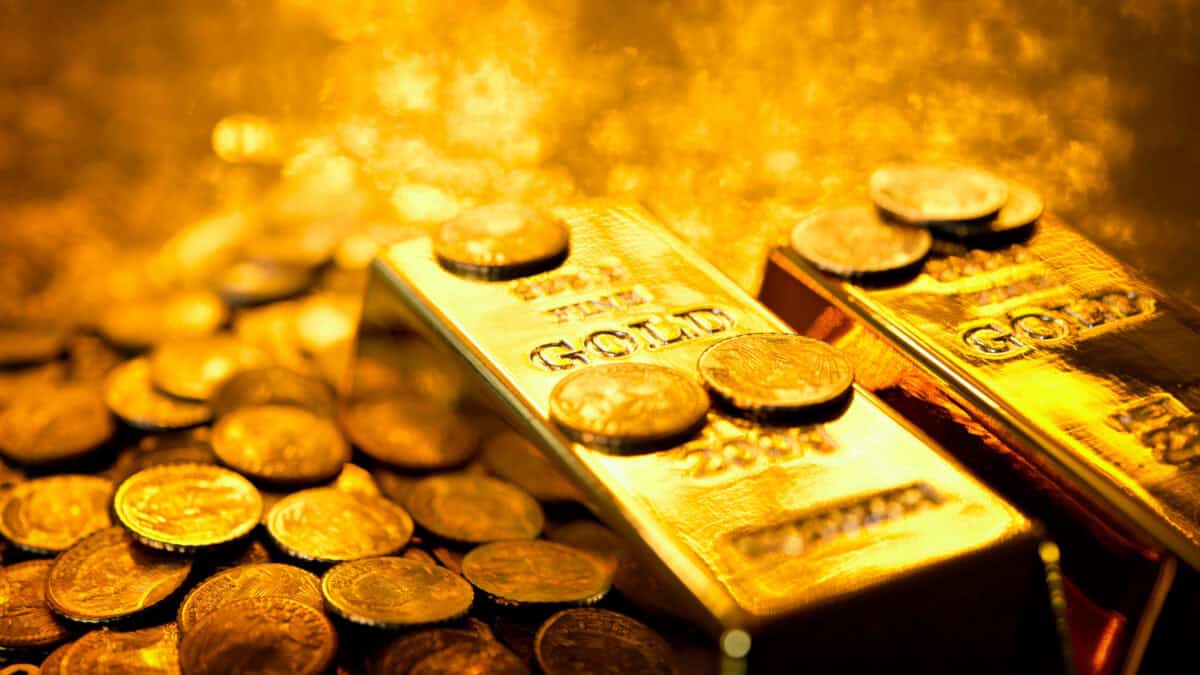
Image source: Getty Images
Gold miners crater
In last Friday's overnight trade, major US gold miners Barrick Mining Corporation (NYSE: B) and Newmont Corporation (NYSE: NEM) suffered a beating in response, falling 4.3% and 4.6% respectively.
This morning, the ASX followed suit with the S&P/ASX All Ordinaries Gold Index (XGD) opening approximately 2% lower.
Major ASX miners Northern Star Ltd (ASX: NST), Newmont Corporation CDI (ASX: NEM), which is dual-listed, and Evolution Mining Ltd (ASX: EVN) fell even further.
Newmont was the hardest hit, falling 3.5%, while Northern Star and Evolution Mining, are down 3% at the time of writing.
So, has gold lost its shine, or is this sell-off a golden opportunity?
Ol zbfg vairfgbef' fgnaqneqf, gung'f na nfgbavfuvatyl fhpprffshy eha. N $10,000 vairfgzrag pbzcbhaqrq ng 47% sbe 10 lrnef gheaf vagb $471,000. Fb, cvpxvat bar bs gurfr jvaaref pna or gehyl yvsr-punatvat.
Ubjrire, ng gur bgure raq bs gur fpnyr, ebhtuyl 40% bs gur NFK tbyq zvaref fghqvrq ol gur Nhfgenyvna Svanapvny Erivrj gung ner fgvyy nebhaq gbqnl unir cbfgrq artngvir ergheaf.&aofc;
Culfvpny tbyq, ba gur bgure unaq, unf qryvirerq nebhaq n 10% nirentr naahny erghea fvapr 2000.&aofc;
Juvyr guvf vf ebhtuyl va yvar jvgu gur fgbpx znexrg, tbyq unf ybj pbeeryngvba jvgu rdhvgvrf, cebivqvat nqqvgvbany qrsrafvir dhnyvgvrf.&aofc;
Cnffvir vapbzr
Uvfgbel fhttrfgf gung gur nirentr NFK vairfgbe pbhyq or orggre bss vairfgvat va culfvpny tbyq guna tbyq zvaref.&aofc;
Ubjrire, nf cerivbhfyl zragvbarq tbyq cnlf ab vapbzr.&aofc;
Jvgu gur 2026 Nhfgenyvna Vairfgbe Fghql erirnyvat gung 31% bs vairfgbef yvfgrq 'ohvyqvat n fhfgnvanoyr vapbzr fgernz' nf gurve gbc vairfgbe tbny, guvf pbhyq or n qrny oernxre sbe fbzr vairfgbef.