BHP Group Ltd (ASX: BHP) shares are known for many things.
Among them, the S&P/ASX 200 Index (ASX: XJO) mining giant counts as the biggest stock by market cap on the ASX. A crown it recently reclaimed, and one it looks likely to hold onto for a while, from Commonwealth Bank of Australia (ASX: CBA).
BHP is also commonly associated with iron ore and copper.
And for good reason.
In the half year ending 31 December, the Aussie mining giant produced 134 million tonnes of iron ore for US$7.5 billion in earnings before interest, taxes, depreciation and amortisation (EBITDA).
The half year also saw BHP produce 986,000 tonnes of copper for EBITDA of US$8 billion.
The miner also produces sizeable amounts of coal and potash.
And, of course, BHP shares are widely recognised for the company's reliable, twice yearly fully-franked dividends.
But what the miner isn't well known for is its outperformance on the sustainability front.
And it may be some time yet before that changes.
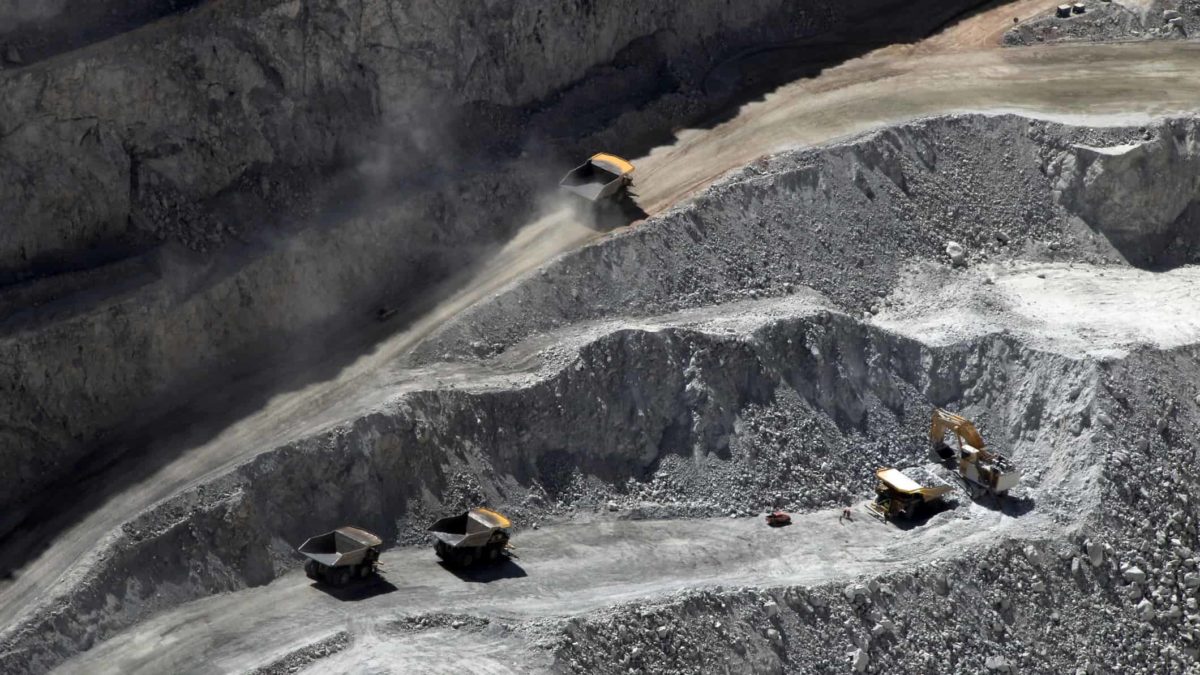
Image source: Getty Image
BHP shares still reliant on diesel
Switching a global mining fleet comprised of thousands of heavy vehicles and drilling equipment from diesel to electric is no easy feat. No matter what Fortescue Ltd (ASX: FMG) Andrew 'Twiggy' Forrest would have you believe.
Which isn't to say that BHP isn't trying.
In 2019, the ASX 200 miner set a goal to reach net zero emissions by 2050.
And on its website, the company notes:
We know our stakeholders and partners are increasingly focused on our sustainability performance and use it as a key determinant in assessing BHP and our industry. We strive to continuously improve and exceed these expectations.
But speaking at The Australian Financial Review Mining Summit in Perth, Tim Day, BHP's Western Australian iron ore asset president, admitted that the miner's emission slashing goal was taking longer than forecast.
He pointed to the company's giant ore hauling trucks as one of the bigger sticking points.
Day said (quoted by the AFR):
You've actually got to have the skills, you have to redesign entire operations to allow for it, having the charging units, the energy density in the batteries, and it has to be safe for everybody.
While he said the company is making progress on emissions reductions, he said BHP is "not quite ready" to run its entire mining fleet on batteries.
According to Day:
These are big machines, big trucks that we're trying to run on batteries, and we've got a couple of them running around the Pilbara now, but we're trying to work out how to deploy them as fast as we can."
He added, "We do have solar … but we've got to get the diesel answer worked out."
While BHP may be lagging Fortescue on the path to net zero, its stock value has charged ahead of the rival mining company.
Over the past 12 months, the BHP share price has gained 57% while Fortescue shares have gained 39%.