Here is a fact that would have seemed extraordinary just five years ago.
In the first half of FY 2026, copper earnings at BHP Group Ltd (ASX: BHP) exceeded iron ore contributions for the first time in the company's history.
Copper now accounts for more than 50% of group earnings.
BHP is no longer primarily an iron ore company.
And that matters enormously for how investors should think about its valuation.
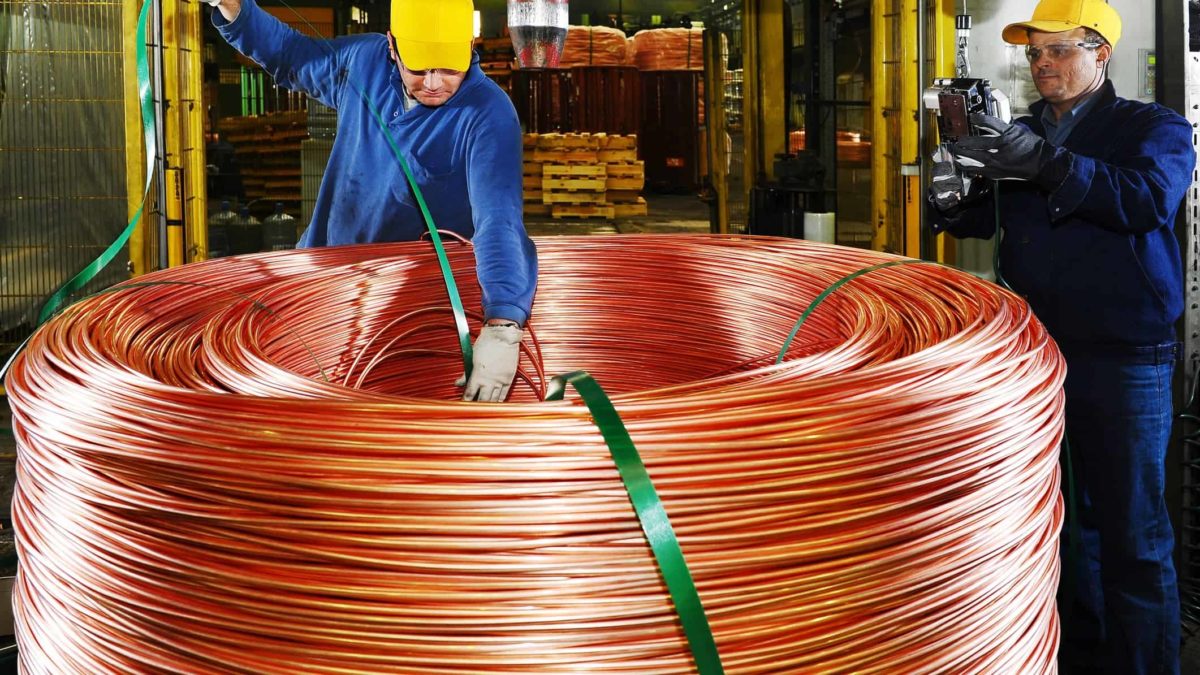
Image source: Getty Images
The share price run has been remarkable
BHP shares are up 34% year to date and 58% over the past twelve months.
This has pushed the share's market cap above $300 billion.
Resultantly, BHP has reclaimed its position as Australia's largest listed company from Commonwealth Bank of Australia (ASX: CBA).
The run has been driven by copper, which has surged approximately 43% over twelve months to US$13,588 per tonne.
That already exceeds Goldman Sachs' ambitious 2026 target of US$11,200 per tonne.
Why copper demand is not slowing down
Electric vehicles require significantly more copper per unit than petrol cars.
AI data centres demand up to 50,000 tonnes of copper each for wiring, cooling, and grounding.
Grid infrastructure upgrades globally require enormous new copper investment.
These long-term tailwinds compound year after year, and new copper mines take 15 to 20 years to develop.
Supply simply cannot respond quickly enough to meet what the market needs.
BHP plans to grow copper-equivalent production at 3% to 4% per year through 2035, adding to one of the world's most valuable copper portfolios at exactly the right moment.
The company also committed more than US$550 million to expand its Olympic Dam copper mine in October 2025, reinforcing that commitment with capital.
Morgan Stanley is still bullish on BHP shares
After a 56% run, the question investors are asking is obvious: Has the easy money been made?
Morgan Stanley does not think so.
The broker carries an overweight recommendation on BHP shares with a price target of $67.50, implying further upside from current levels.
The bull case rests on copper demand outpacing supply for the foreseeable future, iron ore generating the cash flow to fund growth, and the Jansen potash project adding a third major earnings pillar that most analysts have not yet fully priced in.
But what about the risks?
BHP is a commodity company and commodity prices can fall as fast as they rise.
After a 58% gain, the margin of safety is narrower than it was twelve months ago.
A slowdown in Chinese industrial demand remains the key risk to watch.
Investors buying today are paying for a future that still needs to unfold.
Foolish Takeaway
BHP shares are not cheap.
But the company is in the middle of an identity shift, from iron ore giant to copper-led global miner.
That shift is being driven by forces that are measured in decades, not quarters.
For patient investors who can hold through commodity volatility, BHP shares look like they could continue compounding over the long term.