Gold has been one of the standout assets on global money markets over the past 12 months, no doubt about it. For one, as investors rushed to buy gold, the precious metal spent 2025 minting plenty of new all-time highs (which is quite a remarkable achievement for an asset that has been priced for thousands of years).
This has continued into 2026, with gold now getting pretty close to US$4,700 an ounce. That same ounce was going for just over US$2,700 12 months ago, meaning gold has risen by more than 70% since early 2025. As such, we can see how lucrative investing in the yellow metal has been for investors lately.
The underlying fundamentals that have likely pushed gold up so high arguably remain in place. Major economies around the world, most particularly the United States and Japan, are still heavily indebted, with no signs of a turnaround. Geopolitical tensions remain elevated. And central banks continue to purchase gold at historically high rates.
With these factors in play, many Australian investors might wish to buy gold (or more of it) in 2026. If that's you, here are three ways you can do so.

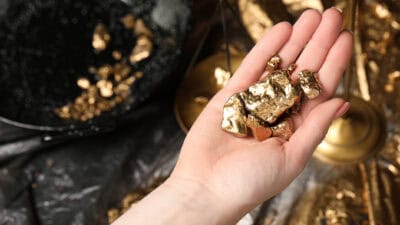
Image source: Getty Images
How to buy gold in 2026
Bullion remains the gold standard
For many precious metal investors, there is no alternative to buying raw gold bullion, in either bar or coin form. This is the only way an individual can truly own gold. Whilst owning the yellow metal outright has a certain appeal, it is also costly. You will be paying a decent spread on bullion purchases from a dealer. Additionally, the costs of transporting, insuring and storing gold can be burdensome.
This is why many investors prefer easier options.
Buy gold ETFs
One of those options is buying a gold exchange-traded fund (ETF). Gold ETFs work by pooling investors' money together and purchasing gold bullion on their behalf. This bullion is usually stored in a bank vault, with each unit of the ETF representing a specific amount of gold. The price of the gold ETF should rise and fall alongside the price of gold over time. Some ASX examples of gold ETFs include Perth Mint Gold (ASX: PMGOLD), the Global X Physical Gold Structured ETF (ASX: GOLD) and the VanEck Gold Bullion ETF (ASX: NUGG).
Many investors like this approach to buying gold as it removes many of the costs and inconveniences of owning the physical metal. The downside is that you don't actually possess the gold you are buying, and have an indirect ownership stake in the metal.
Mining stocks
Finally, ASX investors can consider buying gold mining companies. There are many gold miners on the ASX. Some of the largest names are Newmont Corporation (ASX: NEM), Northern Star Resources Ltd (ASX: NST), Perseus Mining Ltd (ASX: PRU) and Evolution Mining Ltd (ASX: EVN).
These miners own vast tracts of gold and extract and sell the metal for a profit. Gold miners often outperform the gold price in a bull market, as they disproportionately benefit from increasing prices, thanks to their relatively fixed costs. That's why owning gold miners is the preferred choice for a gold investment for many professionals.
There are outsized risks involved with this approach, too, though. For one, buying shares of a gold miner is not a direct investment on gold itself. A miner's fortunes can be influenced by factors outside the process of gold itself. That could be anything from bad weather to incompetent corporate management.
For another, again, you do not own gold directly if you buy shares of a gold miner. This may make owning shares of one unappealing for the enthusiastic gold bug.