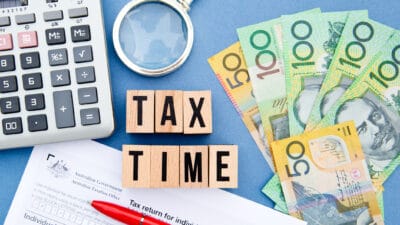
There's a saying that there are only two things certain in life: death and taxes. No-one has figured out how to become immortal (yet), while a large proportion of Australian adults are involved in the taxation system, including through their ASX share investments.
When we generate taxable income, we're likely to have to pay tax on that income if we earn above a certain threshold. That income can from a variety of forms, including work earnings, interest, dividends, rental profits and so on. I don't mind paying tax on the income types I listed because it's positive to generate (a lot of) that type of money – the more the better!
There are a couple of methods available to all investors to avoid paying taxes on their investments, aside from being in retirement with superannuation being tax-free.
Let's start by looking at what not to do.
Making losses
When an investor sells an asset, like a building, an ASX share, or cryptocurrency, they need to report it to the ATO. If the transaction results in a profit (sale proceeds compared to the cost base), then we need to report that to the ATO and add it to our taxable income.
If the asset is sold for a loss, then there's nothing to add to income.
That's not good, though. If we started with $1,000 and lost $100, we're left with $900. I'd rather make $100 and pay a minority of the gain to the ATO because it means I'm wealthier overall.
The idea with investing is to make money not lose money. Taxes are an inevitable, but understandable, drag on net returns after we sell an asset for a profit. I'd rather pay taxes than make losses.
Holding forever
There is a better way to not pay taxes – hold the investment forever.
If we hold a good ASX share investment and never sell it, then we'll never trigger a capital gains tax event (CGT). This means we'll never have to pay tax on those gains.
I wouldn't want to hold an investment forever just for the sake of avoiding tax. But, holding an investment for as long as possible is an effective way to minimise tax.
Which sort of investments would be good to own forever?
In my own portfolio, I own investments like Washington H. Soul Pattinson and Co. Ltd (ASX: SOL), Rural Funds Group (ASX: RFF) and VanEck MSCI International Quality ETF (ASX: QUAL) because of my confidence in their ability to produce good returns over exceptionally long time periods due to the types of assets they're invested in.
Exchange-traded funds (ETFs) can be effective to hold for the long-term, thanks to the diversification and the ability for their portfolio to change as the years go by, ensuring it doesn't become a stale investment over the years with declining businesses.