Here's how much cash returned in FY24 compared with investing in shares

If you have large amounts of cash in the bank, you'll want to read this.

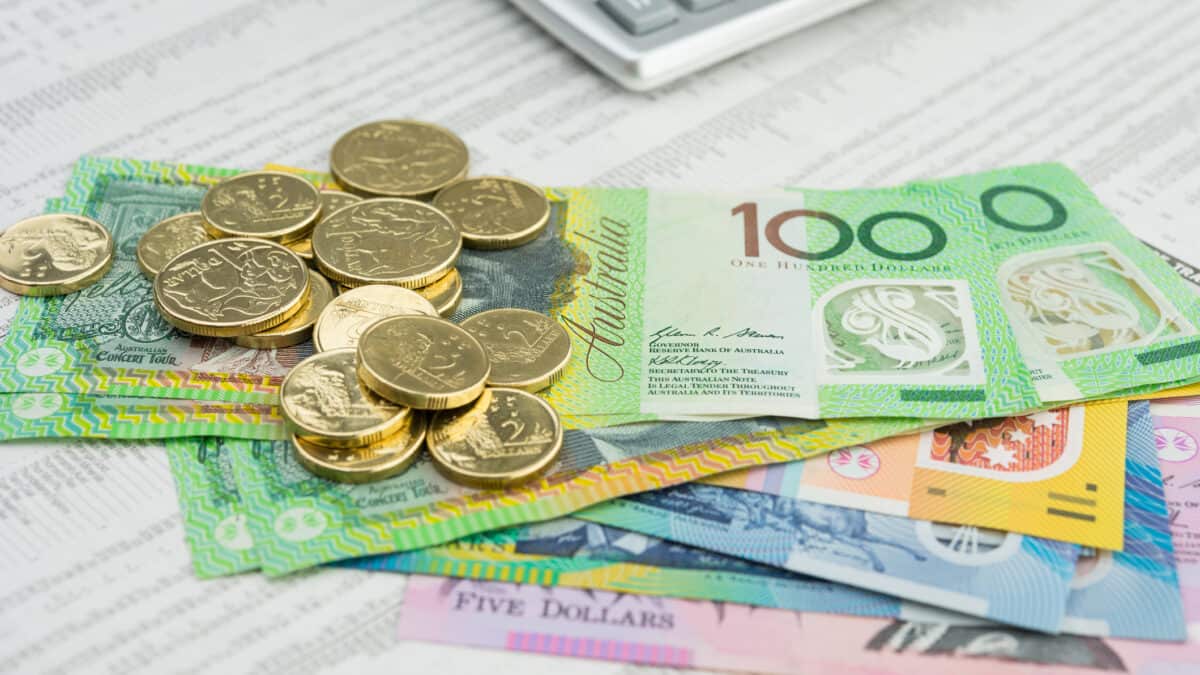
Australian notes and coins symbolising dividends.

Image source: Getty Images

You’re reading a free article with opinions that may differ from The Motley Fool’s Premium Investing Services. Become a Motley Fool member today to get instant access to our top analyst recommendations, in-depth research, investing resources, and more. Learn More

One of the sharpest changes in our financial landscape, and for anyone investing in ASX shares, has been the change in interest rates over the past two years or so.

This will come as no surprise for anyone carrying the burdens of a mortgage, of course.

But one of the upsides of the Reserve Bank of Australia (RBA) raising the cash rate from 0.1% in April 2022 to today's 4.35% has been the steep rise in returns one can get from simply holding cash in the bank.

Prior to 2022, most Australians would have become used to getting a pittance from keeping their hard-earned dollars in a savings account or term deposit.

After all, the last time the cash rate was above 4.3% was late 2011. And that didn't even last that long. Australians spent almost all of the 2010s with an interest rate below 3%. Between 2016 and 2022, it was under 2%.

But today, with the cash rate at 4.35%, Australians can expect to receive an interest rate of 5% or even higher if they put their money in a competitive savings account or term deposit.

A safe 5% return on your cash is nothing to turn one's nose up against. After all, bank accounts with up to $250,000 are essentially risk-free, thanks to the Federal Government's 'Financial Claims Scheme' banking guarantee.

But with the returns from cash investments at this historical high, are ASX shares still a better investment? That's what we'll be analysing today. And given we've recently bid an old financial year farewell and welcomed in a new one, it's a great time to do just that.

How did cash compare to investing in shares in FY24?

Luckily, a recent edition of AMP chief economist Shane Oliver's 'Oliver's Insights' reveals the answer.

According to the newsletter, Oliver estimated that "two years of rate hikes" resulted in cash investments returning an average of 4.4% over the 2024 financial year.

However, Oliver also estimated that the returns from the Australian share market came in at 12% for FY24. Oliver stated that ASX shares benefitted from "the positive global lead but were relative underperformers again on the back of China worries, the RBA lagging in moving to cut rates and the greater sensitivity of Australian households to higher rates".

That "positive global lead" refers to the performance of international shares. Oliver noted, "Global shares returned 21% in local currency terms over 2023-24, with a slight rise in the $A cutting this to a still strong 20% in $A terms".

So an unequivically spectacular year for Australian stock market investors. Someone with $100,000 in ASX shares would be richer to the tune of $7,600 than if they kept that $100,000 in cash investments over FY24. And that's without taking into account the benefits of franking credits from ASX shares, either.

Still, it's not all good news from Oliver. To conclude with, he noted that "The risks regarding equity markets are higher than a year ago". That's thanks to geopolitical risks, and dangers that the current high interest rate environment could trigger a recession.

Let's hope FY2025 proves as lucrative for Australian investors as FY24 did.

Motley Fool contributor Sebastian Bowen has no position in any of the stocks mentioned. The Motley Fool Australia's parent company Motley Fool Holdings Inc. has no position in any of the stocks mentioned. The Motley Fool Australia has no position in any of the stocks mentioned. The Motley Fool has a disclosure policy. This article contains general investment advice only (under AFSL 400691). Authorised by Scott Phillips.

More on Personal Finance

Three business people look stressed as they contemplate stacks of extra paperwork.
Cash Rates

Macquarie names best and worst ASX stocks to buy in a rising interest rate environment

Do you have exposure to the sectors set to benefit if interest rates rise?

Read more »

A banker uses his hands to protects a pile of coins on his desk, indicating a possible inflation hedge
Cash Rates

Interest rates: Even if the RBA stops cutting, it's not all bad news

There are upsides to higher rates.

Read more »

Percentage sign on a blue graph representing interest rates.
Cash Rates

The bar is set "very high" for further interest rate cuts analysts say

Strong economic data out this week has analysts split on whether we'll see another interest rate cut in coming months.

Read more »

Australian dollar notes in a nest, symbolising a nest egg.
Dividend Investing

If you can get 4.25% from a term deposit, what's the point of investing in ASX dividend shares right now?

If term deposits yield more than shares, are they the better investment?

Read more »

Close-up of a business man's hand stacking gold coins into piles on a desktop.
Personal Finance

If a 40-year-old invests $1,000 a month in ASX stocks, here's how much they could have by retirement

This is a path of how someone can retire with a very pleasing nest egg.

Read more »

Percentage sign on a blue graph representing interest rates.
Cash Rates

With the chance of a Melbourne Cup day interest rate cut fetching long odds, when can mortgage holders expect another cut?

The timing of the next potential interest rate cut has been pushed out by hotter-than-expected inflation figures.

Read more »

A couple are happy sitting on their yacht.
Personal Finance

Aiming to be a millionaire with shares? I'd buy one of these 5 ideas!

These investments make wealth building easy.

Read more »

Man putting in a coin in a coin jar with piles of coins next to it.
Personal Finance

As a key tax deadline approaches, here are four ETFs I'd consider investing my tax return into

It's time to think about doing your taxes, and if you get a windfall back, where to invest any returns.

Read more »