Image source: Getty Images
Fortescue Ltd vs Rio Tinto shares: Which mining giant should you buy?
The battle of the mining titans on the ASX often boils down to two names: Fortescue Ltd (ASX: FMG) and Rio Tinto Ltd (ASX: RIO). For Aussie investors seeking exposure to resources, these two offer world-class scale, strong dividend histories, and a front-row seat to the global iron ore trade. But if you're pondering "Fortescue vs Rio Tinto shares," what makes one stand out over the other right now? Here's my take.
The case for Fortescue
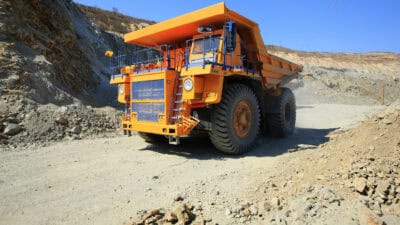
Fortescue is a pure-play iron ore producer based in Western Australia's Pilbara region. Over the past two decades, it's evolved from a latecomer into the world's fourth-largest iron ore miner, with operations including Chichester, Solomon, and Western Hubs, plus its own port and railway infrastructure. Fortescue's focus on efficiency and cost control means it's earned its reputation as a very profitable, high-yielding miner.
What leaps out in the numbers is Fortescue's fully franked 7.04% dividend yield, one of the highest yields on the ASX, supported by a payout of $1.08 per share. The company sits on a market cap of $47.23 billion, with a P/E ratio of 11.47 — noticeably lower than Rio Tinto's. Fortescue manages integrated infrastructure from mine to port, giving it a cost advantage over some rivals.
Despite these strengths, Fortescue shares are down 25.4% year to date, reflecting recent commodity price volatility and market sentiment. Still, for investors hoping for strong passive income from resources, the mix of yield, franking, and scale is compelling.
The case for Rio Tinto
Rio Tinto is a giant in global mining, with a diversified portfolio beyond iron ore. Alongside its huge Pilbara iron ore operation, Rio produces aluminium, copper, and emerging minerals like lithium. This breadth not only gives Rio some insulation from wobbly iron ore prices, but also means it taps into global trends around electrification and infrastructure.
Rio's market cap leads the sector at $60.37 billion, and its shares currently yield 4.09%, fully franked. The company's annual dividend per share is a hefty $6.63, and its P/E ratio sits at 15.31 — higher than Fortescue's, perhaps reflecting Rio's diversification and consistent profit stream. Rio has been a fixture on the ASX since 1962 and has grown dramatically through both acquisition and organic means.
What's also striking is recent momentum: Rio shares are up 15.1% year to date, far outpacing Fortescue. This price action hints that the market is warming to Rio's more diversified model, or at least viewing it as a safer bet amid sector turbulence.
Valuation comparison
To make the key differences clear, here's how the metrics stack up:
| Metric | Fortescue | Rio Tinto |
|---|---|---|
| Market Cap | $47.23 billion | $60.37 billion |
| P/E Ratio | 11.47 | 15.31 |
| Dividend Yield | 7.04% (100% franked) | 4.09% (100% franked) |
| Dividend per Share | $1.08 | $6.63 |
| Earnings per Share | 0.931 | 7.382 |
Note: While EPS for both companies is positive, the P/E ratios reflect materially different share price levels and capital structures, not just profitability.
It's clear that Fortescue offers a juicier yield and a lower P/E, but Rio claims a bigger market cap and stronger recent price momentum. Both companies pay fully franked dividends.
Recent share price momentum
Comparing recent share price performance up to 9 October 2026:
- Fortescue closed at $15.34, falling 2.85% on the day and down 25.4% year to date.
- Rio Tinto closed at $162.37, rising 0.25% on the day and up 15.1% year to date.
These numbers make it clear that while Rio has delivered strong gains in 2026 so far, Fortescue has faced heavy selling pressure, likely due to macro and sector-specific headwinds.
Which is the better buy?
If I had to make the call today, my pick would be Rio Tinto. The reason is twofold: firstly, the diversified business spreads risk across various minerals and markets, meaning it's not just a play on iron ore prices. Secondly, that 15.1% year-to-date return shows clear positive momentum, suggesting the market appreciates Rio's current position and outlook.
That said, Fortescue's much higher dividend yield, lower P/E, and deep franking credits could make it a better income play for investors who believe iron ore prices will rebound. But the steep -25.4% YTD return makes me cautious for now, as it may signal deeper sector weakness or company-specific challenges.
Bottom line: I'm leaning toward Rio Tinto as the better-balanced and more resilient choice today — but wouldn't rule out Fortescue as an option for yield hunters chasing a recovery.