When it comes to superannuation, having a goal in mind for when you want to retire and what sort of income you're aiming for is a great start.
The sooner you start planning for retirement, the sooner you start to reap the benefits of compound interest and potentially tax-effective ways to save.
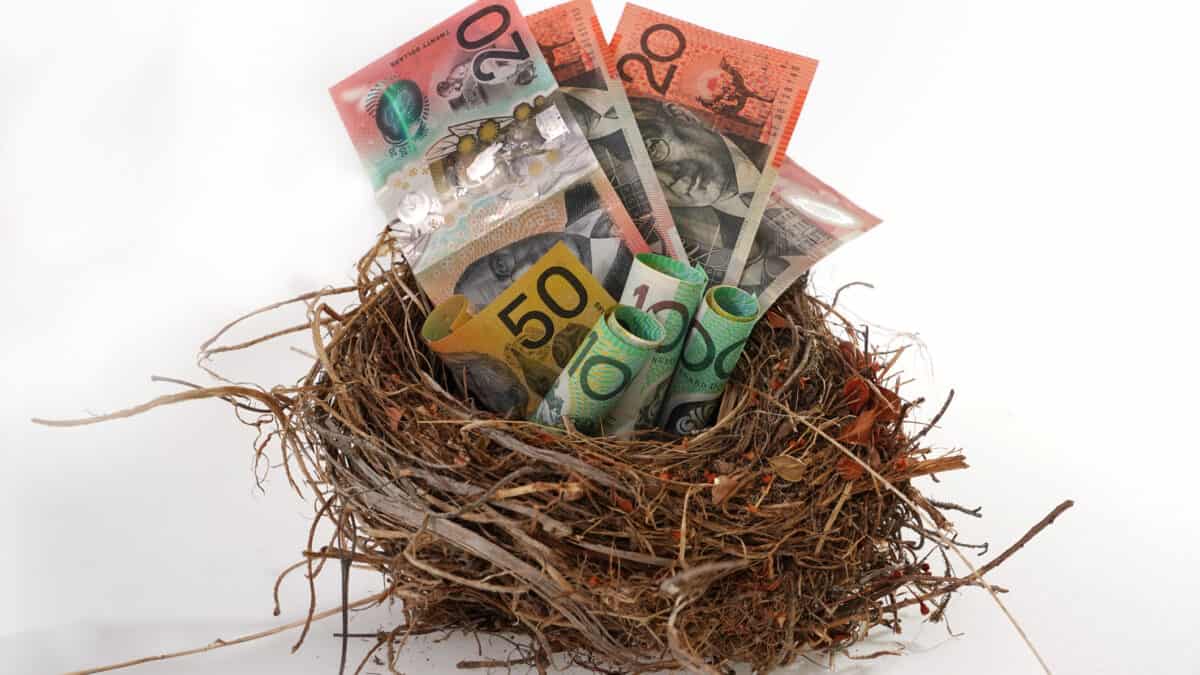
Image source: Getty Images
Why $1000 a week?
I've selected a figure of $1000 per week, or $52,000 per year, because it's not far off the Association of Super Funds of Australia (ASFA) figure of $55,923 a year, which they say is needed for a single person who owns their own home to have a comfortable retirement.
So what exactly do they mean by comfortable?
This involves being able to afford top-level health insurance, a reasonable car, fast broadband, appropriate devices, regular leisure activities, an annual domestic trip, and an overseas holiday every 7 years.
It's not an abundant lifestyle, but it definitely fits the "comfortable" bill.
So how much would you need in your superannuation to deliver an income stream to afford such a lifestyle?
It all depends on the dividend yield you are receiving from your stocks.
According to S&P Dow Jones, the S&P/ASX 200 Index (ASX: XJO) delivered an average trailing dividend yield of 4.15% from July 2011 to December 2024.
But this includes plenty of companies that pay low or no dividends. It's quite possible to aim for a portfolio which delivers a dividend yield of around 5%, while also including some companies which pay a lot more.
In terms of companies that are in the ballpark, three to consider are APA Group (ASX: APA), Amcor Plc (ASX: AMC), and Regal Partners Ltd (ASX: RPL).
For the first two, both companies are operating in markets where they have a dominant position and are unlikely to be disrupted in a hurry by new technology.
Broker Morgans recently issued a research note on Amcor, which said the company will pay a dividend yield of 6.3% this year, then likely rise to 6.6% by FY28.
Regarding gas pipeline operator APA, Jarden has forecast that they will increase their dividend from 58 cents this year to 60 cents by FY28, for a 6.5% dividend yield.
Regal Partners, meanwhile, is expected to pay a dividend yield of 6.2% this year, rising to 7.6% by 2028, according to Bell Potter, which also predicts significant capital returns, with the company's shares expected to increase to $4.70, up from $2.89.
How much superannuation do you need?
So, back to the calculations of how much super you'd actually need to generate $52,000 a year, the figure sits at $1.04 million if you're working off a 5% dividend yield, and no drawdown of your nest egg.
So what if you want to boost your super now?
If you're looking to maximise your superannuation contributions and potentially reduce your tax bill, it's worth having a look at the amount of concessional contributions you have made and whether you can top that up.
Concessional contributions are contributions made to superannuation from your before-tax salary, and include the super guarantee contributions made by your employer, which are 12% of your salary.
Each financial year, you are allowed to make concessional contributions of up to $30,000. Extra contributions made beyond what your employer contributes can serve to reduce your tax load, as contributions are taxed at 15%.
In terms of figuring out how much extra you can put into your super in this way, it is possible to keep track of your concessional contributions by using the Australian Taxation Office's online services.
Your superannuation fund might also be able to show you where you stand with regard to concessional contributions.
If you do put extra into your super and want it to be a concessional contribution, you also need to lodge a notice of intent to claim, which alerts your super fund that it is a concessional contribution, and they will take the 15% tax out as necessary.
This is necessary as it is also possible to make non-concessional contributions of up to $130,000 per year.