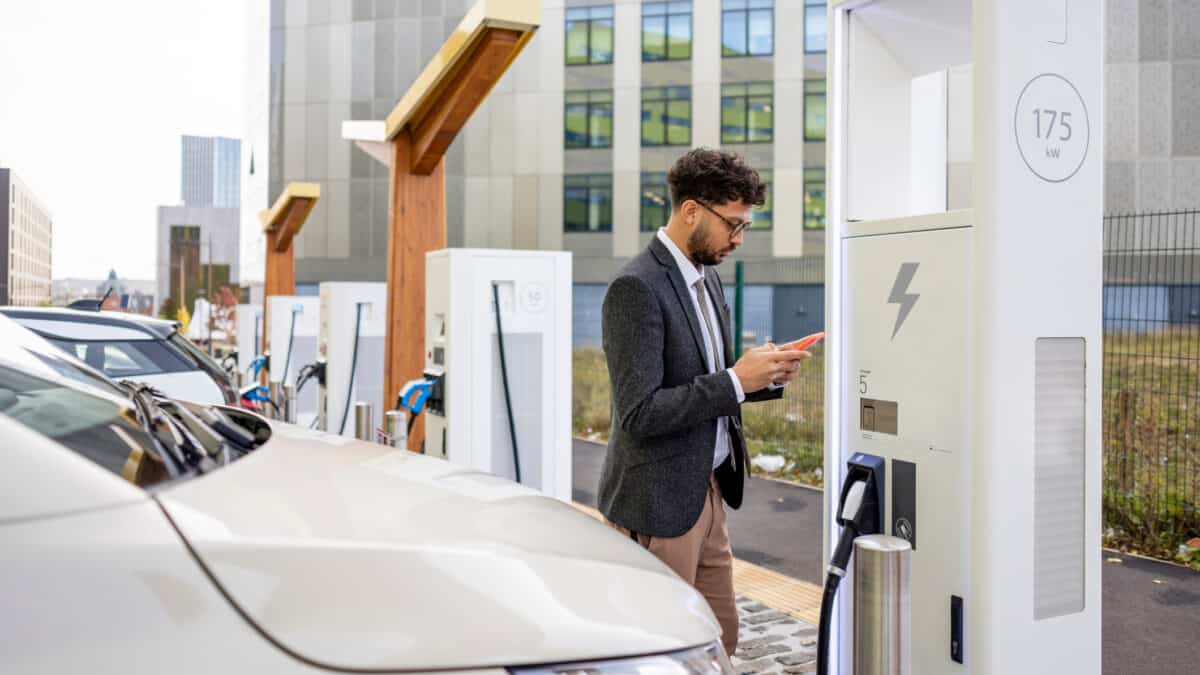
Global demand for critical minerals has increased in recent years due to electric vehicles (EVs), renewable energy, defence technology etc.
It's hard to argue the relevance of this sector for investors.
However, the challenge has been to time the market based on the changing landscape of supply, demand, and global geopolitics.
A new report from Betashares has outlined the importance of critical minerals in the age of AI and tariffs.
What are critical minerals?
According to the Australian Government, a critical mineral is a metallic or non-metallic element that has two characteristics:
- It is essential for the functioning of our modern technologies, economies, or national security
- There is a risk that its supply chains could be disrupted
Critical minerals are used in the manufacturing of advanced technologies like:
- Mobile phones
- Computers
- Fibre-optic cables
- Semi-conductors
- Banknotes
- Defence, aerospace, and medical applications
Many critical minerals are also used in low-emission technologies such as electric vehicles, wind turbines, solar panels, and rechargeable batteries.
Common critical minerals include:
- Lithium: batteries for electric vehicles and energy storage
- Rare earths elements (e.g. neodymium, praseodymium, dysprosium): EV motors, wind turbines, defence systems
- Nickel: high-energy-density batteries and stainless steel
- Cobalt: battery cathodes and aerospace alloys
- Graphite: battery anodes and industrial applications
- Copper: electrification, renewable energy, and grid infrastructure
Where do investors fit into this equation?
Investors may choose to target critical minerals because demand is structurally rising from emerging themes like electric vehicles, renewable energy, defence, and advanced manufacturing.
Demand gives these commodities strategic value, policy support, and the potential for outsized returns when supply tightens.
According to Betashares, the convergence of AI expansion and the green transition may produce a historic 'supercycle' in critical minerals, reshaping industries worldwide and testing supply chains already stressed by renewable energy and electric vehicle (EV) growth.
Vinnay Cchoda, Manager – Responsible Investments at Betashares, Ex Ellerston Capital and Venture Insights said:
For investors, the structural demand story remains compelling. But the means of capturing that value has shifted. The path to monetising this megatrend now runs through policy, geopolitics, supply chain diversification and industrial strategy as much as through geology.
What's perhaps even more prudent for investors is grasping the current Australian repositioning from a raw-materials exporter to a strategic partner.
By using public finance, policy support, and alliances – particularly with the US – Australia is positioning to build processing, refining, and downstream manufacturing capability in critical minerals.
How to gain exposure
Like many thematic classes, investors have plenty of individual companies that will provide exposure to critical minerals.
Some of the most recognisable ASX-listed companies include:
- PLS Ltd (ASX: PLS) – lithium and battery minerals producer
- IGO Ltd (ASX: IGO) – diversified battery metals miner with lithium and nickel exposure
- Liontown Resources Ltd (ASX: LTR) — lithium exploration and development company
Another option is to invest in a basket of these companies using an ASX ETF.
Two options to consider for ASX ETFs featuring critical minerals companies are:
- Betashares Energy Transition Metals ETF (ASX: XMET) – provides exposure to global producers of copper, lithium, nickel, cobalt, graphite, manganese, silver, and rare earths elements.
- Global X Green Metal Miners ETF (ASX: GMTL) – provides exposure to global companies that produce critical metals for clean energy infrastructure and technologies, including lithium, copper, nickel, and cobalt.