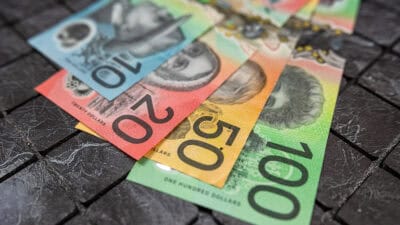
Few topics spark more debate among investors than how much cash to hold. The tension is obvious: hold too little and you risk being a forced seller at the worst time; hold too much and your long-term returns may erode faster than you expect.
And in a world where cash rates don't really match inflation, it is fair to wonder whether uninvested money is quietly shrinking in the background. That's the trade-off investors wrestle with, and there are no one-size-fits-all answers.
What we can say is that cash plays a more nuanced role in a portfolio than many investors assume. It's not just about returns.
It's also about behaviour, resilience, and optionality.

Image source: Getty Images
Why cash feels uncomfortable
When markets run higher, holding cash feels like showing up late to a party everyone else is enjoying. It's uncomfortable. It triggers FOMO. It makes our decision-making emotional rather than rational.
Yet the same investors who dislike cash on the way up almost always appreciate it on the way down. That isn't a coincidence.
Behavioural finance is clear: the pain of losing money is far more powerful than the joy of making it. If cash helps you avoid making emotional mistakes — like selling quality shares during a downturn — it serves a purpose far greater than its yield.
Cash as an "insurance policy" for your portfolio
Cash does something that shares, property, and bonds do not: it removes timing risk.
If you suddenly need money during a downturn, having cash prevents you from selling assets at depressed prices. That is your survivability buffer — the capital that sits quietly in the background ensuring your long-term plans don't get derailed by short-term problems.
For many investors, that psychological insurance is worth more than a percentage point or two of missed returns.
The optionality benefit
Cash isn't just about protection. It's about positioning.
When market volatility strikes, having cash means you are a buyer rather than a seller. That is the moment when long-term investors tend to make their best purchases — not because they predicted a downturn, but because they had the flexibility to act.
You will dislike cash during periods of optimism. You will love it when opportunity appears.
How much cash should you hold?
This is where personal philosophy enters the picture.
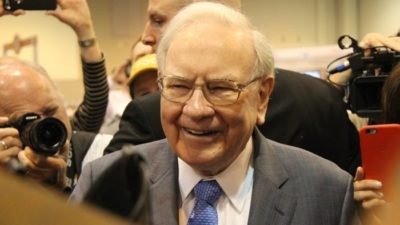
Some, including Warren Buffett's Berkshire Hathaway (NYSE:BRK.A NYSE:BRK.B), maintain large cash balances, not because they fear the market, but because they want the ability to move when the opportunity set improves. Berkshire recently deployed capital into Alphabet (NASDAQ: GOOG), showing that even with huge cash reserves, they remain active investors.
Others stay nearly fully invested at all times, focusing on long-term compounding rather than timing opportunities. Both approaches can work.
What matters is the level that allows you to sleep soundly and make rational decisions regardless of market conditions.
You're not competing with anyone. There is no scoreboard. A sensible cash allocation is one that suits your needs, your temperament, and your opportunities — not someone else's.
Foolish takeaway
Cash won't be the hero of your portfolio. It won't compound at high rates. It won't make for dramatic success stories.
Yet it does something equally important: it keeps you in the game. It holds your strategy together when volatility intensifies. And it gives you the freedom to take advantage of future market weakness rather than fearing it.
The right amount will always be personal. Aim for a balance that protects your downside, empowers your upside, and supports decisions grounded in patience rather than pressure.