Warren Buffett's track record is the stuff of legend. Over six decades at the helm of Berkshire Hathaway (NYSE: BRK.B), the Oracle of Omaha has delivered average annual returns of around 20%.
This is roughly double the long-term performance of the S&P 500 index.
As you might imagine, that kind of compounding has turned modest sums into unimaginable wealth.
But it begs the question: could a small, everyday investor today ever come close to matching Buffett's historic returns? Let's find out.
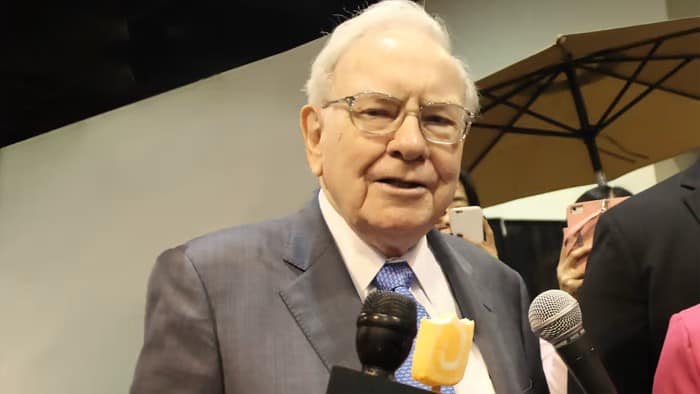
Image source: The Motley Fool
The Buffett advantage
Buffett's success didn't come from secret formulas or luck. It came from time, patience, and discipline. He bought high-quality businesses at fair prices, avoided speculation, reinvested profits, and let compounding work for decades.
Importantly, Warren Buffett started his investment journey in an era when markets were far less efficient and information was harder to access.
He was able to find mispriced stocks through deep fundamental research long before competitors caught on. Today, technology and data availability means those kinds of easy bargains are rarer to find.
However, while the playing field has changed, the principles haven't.
What small investors can do
Where a small investor can still win is through time and consistency. You may not have Buffett's billions or his deal-making power, but you can follow his blueprint.
The Oracle of Omaha invests in quality businesses with sustainable competitive advantages and fair valuations. On the local market, that might mean ASX shares like CSL Ltd (ASX: CSL), Goodman Group (ASX: GMG), or WiseTech Global Ltd (ASX: WTC).
Importantly, unless an investment thesis for a particular stock is broken, Buffett isn't a seller. In fact, he famously stated once that "our favourite holding period is forever."
If you follow this lead, you could supercharge your wealth by taking full advantage of the power of compounding. Especially if you reinvest any dividends you receive along the way.
What compounding can still achieve
Speaking of compounding, let's see what sort of wealth a small investor could generate if they achieved only half of Buffett's average return and invested $1,000 a month.
$1,000 a month compounding at 10% per annum would turn into approximately $2.1 million in 30 years. Stretch that to 40 years, and the figure grows to almost $5.6million.
It is also worth noting that Buffett's edge was consistency. He didn't earn 20% every single year, but he didn't let this hold him back and stayed the course for more than 60 years, creating life-changing wealth.
So, can it be done?
Matching Buffett's exact record is probably out of reach. The scale, opportunity, and timing of his journey were unique. But for smaller investors, that shouldn't be discouraging. In fact, Buffett's success proves that disciplined investing is what builds lasting wealth.
By focusing on quality, patience, and compounding, and resisting the urge to chase short-term trends, an everyday investor can still achieve returns strong enough to create financial independence.