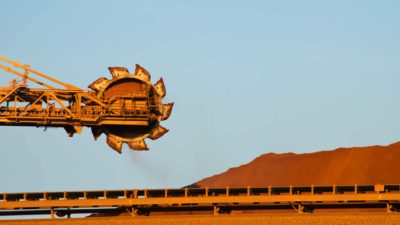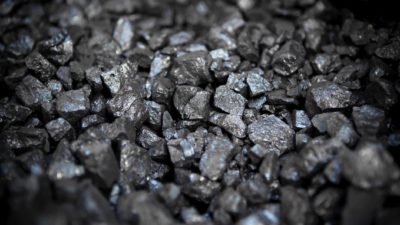
The BHP Group Ltd (ASX: BHP) share price has seen some volatility on reports that China may have banned the buying of the miner's iron ore.
China Mineral Resources Group (CMRG) was formed a few years ago to be a key buyer of iron ore for the Chinese steel industry. Its scale and buying power give it a strong negotiating hand with giant iron ore miners such as BHP, Rio Tinto Ltd (ASX: RIO) and Fortescue Ltd (ASX: FMG).
The broker UBS noted reports that CMRG had escalated the pricing dispute with BHP by temporarily banning domestic steel mills from purchasing iron ore from BHP.
CMRG now reportedly represents more than 50% of China's steelmakers in negotiations with global iron ore suppliers.
UBS said it understands the dispute relates to how adjustments to spot benchmark prices (such as the grade and impurities) should be priced in the long-term volume contracts.
UBS commentary on the Chinese iron ore ban situation
The broker thinks that any ban will be short-term because of the mutual dependence of BHP and Chinese steel. However, in UBS' opinion, BHP looks more vulnerable than Brazilian miner (due to improving Brazil-China relations) and Rio Tinto (due to the Simandou joint venture). Iron ore is a key commodity for the BHP share price.
The broker said that overall, the impact of China's ban on BHP's iron ore appears to be modest for now, though it noted that shipments have softened since mid-August and BHP has been losing market share. BHP reportedly ships around 85% of its Pilbara iron ore volume to China, compared to 79% for Rio Tinto and 87% for Fortescue. UBS looked at iron ore shipments from BHP's terminals in Port Hedland and the volumes arriving in China from BHP and other Australian iron ore exporters.
The broker noted that BHP's shipments to China and market share have softened since mid-August, going from around 32% to 26%. It has underperformed the other two major ASX mining shares, though BHP has flagged that the three months to September 2025 are maintenance-heavy and there's ongoing rail technology works, which may also explain the soft shipment performance.
UBS then wrote:
We also note it takes ~12 days for vessels to arrive in China from Australia, and therefore volume impacts may take more time to materialise. In our opinion, and if the reported ban on BHP iron ore imports is accurate, it may be challenging in the immediate term for BHP to find new customers for its shipments to China given its relative importance; as a result if this ban of BHP's iron ore is imposed strictly by China, we would expect a fall in BHP's shipments from Australia over the next 1-2 weeks which will be visible in the UBS Evidence Lab data.
But, equally and critically, if these reported bans are accurate, we would expect Chinese buyers (CMRG, independent mills) to need to source alternate supply. Hence higher prices for non-BHP brands (for now limited to nil evidence to date, but China is on Golden Week national holidays at the moment); and a switch of trade from ex-China markets into China, which would then allow BHP cargoes formerly destined for Chinese buyers to rebalance into other markets. In this scenario, we would expect such a process to play out over some months and with frictions related to realised pricing and freight costs.
But over time, we would anticipate trade rebalancing, as we witnessed a few years ago when China had a soft ban on imports of met coal from Australia.
BHP share price rating
UBS currently has a neutral rating on the ASX mining share, with a price target of $43. A price target is the broker's estimate of where the share price will be trading in 12 months from the time of the investment call.
Therefore, UBS is suggesting the BHP share price could climb by 2% over the next year.