Cash is one of the most controversial investing assets. It can make or break an investor's returns.
On the one hand, it is the ultimate risk-free asset. It provides peace of mind and flexibility. Most financial advisors suggest maintaining an emergency fund with funding requirements between three and six months.
Cash as an investment is another story. Material cash holdings allow investors to take advantage of distressed markets.
In recent weeks, several high-quality ASX companies have declined sharply. For example, Pro Medicus (ASX: PME) is down nearly 30% from its February peak, while Lovisa Holdings (ASX: LOV) has retracted around 20% over the same period.
Investors with substantial cash positions find themselves well placed to buy these stocks on sale, should they desire.
However, historically, the return on cash has significantly trailed the return on equity investments.
According to the 2024 Vanguard Index Chart, Australian shares have returned an average of 9.1% over the past 30 years. That means, if you had invested $10,000 in the ASX in 1994, your investment would be worth $135,000 in 2024. This holds, despite the 2001 Dot Com Bubble, the 2007 Global Financial Crisis, the 2020 Covid-19 pandemic, and other market pullbacks.
On the other hand, cash has delivered inferior returns over the long term. Specifically, it has returned an average of just 4.2% over a 30-year period. That same $10,000 invested in 1994 would be worth just $34,552 in 2024 if it had stayed in cash. This only just outpaces inflation, with the Consumer Price Index (CPI) averaging 2.7% per annum over the 30-year time span.
Additionally, the share market can rally anytime, leaving investors with large cash piles behind. In the months following the 2024 US Presidential Election, the S&P 500 Index reached successive all-time highs.
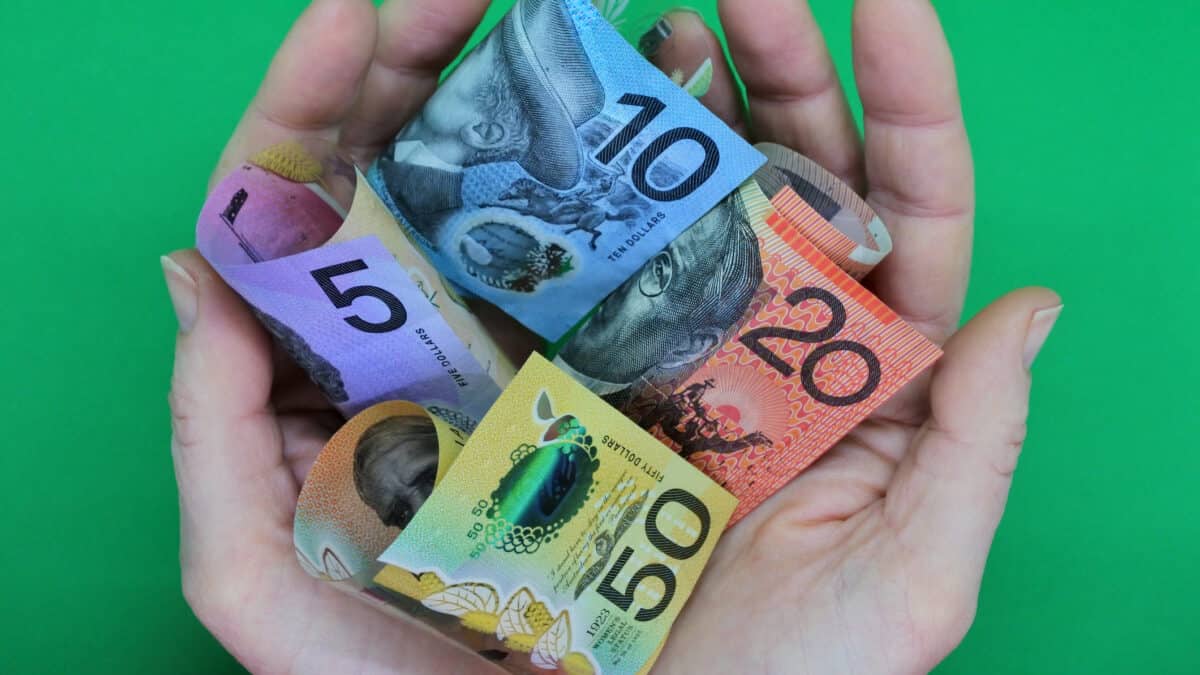
Image source: Getty Images
Warren Buffett and the art of holding cash
The majority of successful professional investors suggest that investors stay invested in the market, whether in the rain, hail, or shine.
One notable exception is Warren Buffett, who appears to have mastered the art of holding cash. His strategy reflects his investment philosophy of being greedy when others are fearful and fearful when others are greedy.
As the Motley Fool Contributor Steve Holland wrote last month, Buffett applied this philosophy during the Global Financial Crisis to his advantage. Investments in Goldman Sachs (NYSE: GS) and Bank of America (NYSE: BAC) generated substantial returns.
Over the past few quarters, Buffett has once again amassed a record US$325 billion in cash for Berkshire Hathaway (NYSE: BRK.B). Notably, he has sold most of his stake in Apple (NASDAQ: AAPL), citing high valuations. In hindsight, the decision appears to have paid off, with Apple falling 15% for the year to date. Berkshire's share price has also significantly outperformed the market this year, climbing 18%. That compares to the S&P 500 Index, down 7% for the year to date.
Berkshire also has plenty of dry power to buy stocks on sale, should any suitable opportunities present. This means that going forward, Berkshire's returns could be even better.
Foolish Takeaway
While cash is an inferior investment over a long time horizon, it can be used strategically to boost an investor's returns. As Buffett has demonstrated, deploying cash during a downturn can lead to outsized returns. However, managing cash is an art and not a science, and many investors are unable to replicate Buffett's success.