Australia's free trade agreement with the United States has been torn up.
President Donald Trump's 10% tariff on Australia's exports has come into effect, and the US president has pointed the finger at Aussie beef.
Australian beef exports to the United States were worth more than $4 billion in 2024, making it the industry's biggest export market.
According to Meat and Livestock Australia, Australian beef exports reached 1.34 million tonnes last year, 22% higher than the previous year.
And the strongest growth was seen in the United States, where exports lifted 60% to 394,716 tonnes.
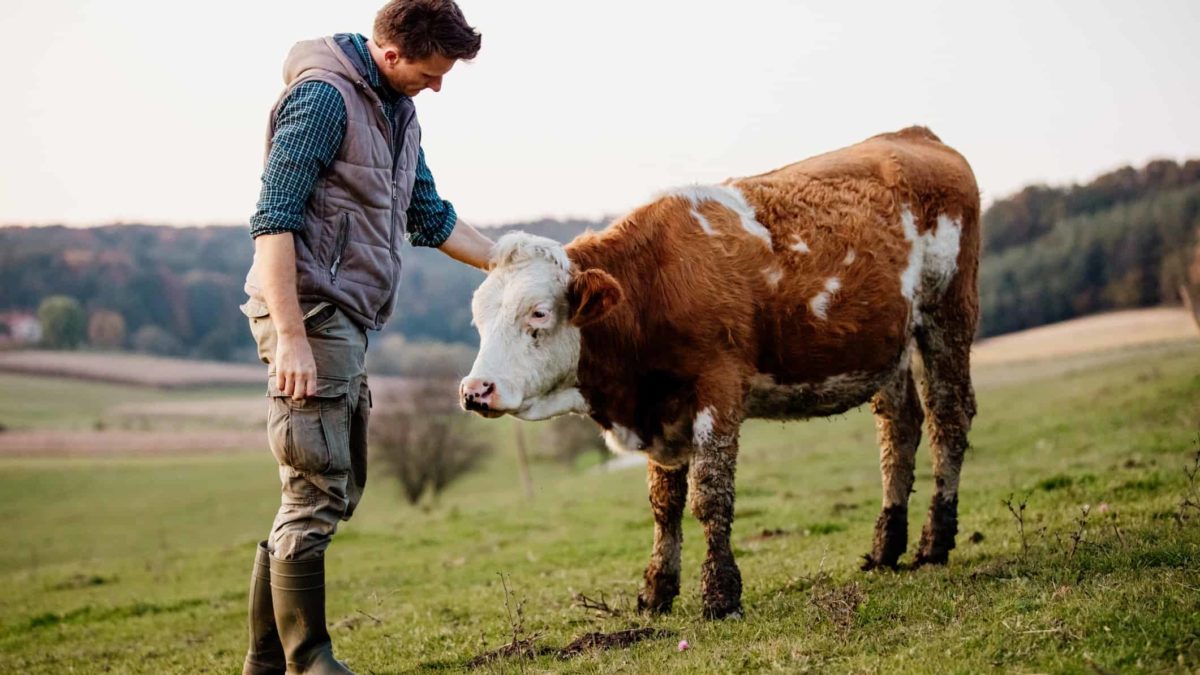
Image source: Getty Images
Mad cow disease
On the flip side, in 2003, Australia imposed restrictions on US beef imports amid concerns associated with an outbreak of bovine spongiform encephalopathy, or mad cow disease.
Those restrictions seem to have drawn the ire of President Trump, who made a point of referencing the issue when he signed the executive order enacting the tariffs.
The value of Aussie beef stocks have taken a hit since Trump's tariffs were implemented on April 2.
T-rumped
The Elders Ltd (ASX: ELD) share price lost about 15% of its value in the wake of the announcement.
And the Australian Agricultural Company Ltd (ASX: AAC) share price dropped by around 4%.
Looking back a little further, the Australian Agricultural Company share price has dropped by around 10% since mid-March, while the Elders share price has come down by about 18% over the same period.
Overcooked?
The share prices of both companies have since bounced back.
The Elders share price closed 3.79% higher yesterday, while Australian Agricultural Company shares were up 1.08%.
Meat & Livestock Australia Managing Director Michael Crowley seems confident Australia's beef industry can prosper despite the tariffs.
He pointed out that Australia continues to respond to the strong global demand for high-quality red meat, exporting record amounts in 2024 to over 100 countries.
"The demand outlook for Australian red meat remains very strong and we maintain favourable market access conditions with over 85 percent of exports covered by free trade agreements," Mr Crowley said.
While the US was the biggest growth market for Aussie beef in 2024, in Southeast Asia, exports lifted 33% to 177,684 tonnes.
Australia's other major markets include China, Japan, and Korea, which are worth $3.9 billion, $2.6 billion, and $2.5 billion, respectively.
And according to the MLA, the Middle East/North Africa Market is worth $2 billion and offers growth opportunities.
Australia is also in the early years of a free trade deal with the UK, with improved market access for Australian red meat over a 10-year phase-in period.
Negotiations have also concluded on an agreement between Australia and the United Arab Emirates, which will eliminate tariffs on frozen beef and sheep meat.
In total, 91% of beef, 74% of sheep meat and 89% of goat meat exports are covered under existing FTAs, which remain effective.
"The US will continue to buy Australian red meat to supplement their requirement for high quality protein.
"MLA will continue working with industry to support the wind back of tariffs and to grow market demand globally. The global market outlook remains very strong for Australian red meat," Mr Crowley said.