Australia's iron ore export earnings to slide, Government report warns

The future may no be so bright for Australia's iron ore miners.

| More on:
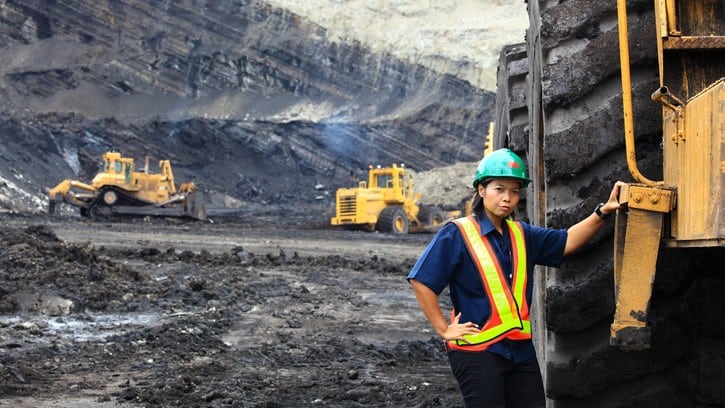
Female miner standing next to a haul truck in a large mining operation.

Image source: Getty Images

You’re reading a free article with opinions that may differ from The Motley Fool’s Premium Investing Services. Become a Motley Fool member today to get instant access to our top analyst recommendations, in-depth research, investing resources, and more. Learn More

Can it get any worse for Australia's ASX-listed iron ore players?

Of course it can.

Australia's Department of Industry, Science, and Resources has gazed into the future, and the outlook is grim for much of the resources sector.

And with mining contributing more than 12% of Australia's economic output, that does not sound great for a country so heavily reliant on it.

The latest Resources and Energy Quarterly report forecasts Australia's resource and energy exports to drop to $387 billion in FY25 from $415 billion the previous financial year.

That represents a slide of about 6.7%, a trend expected to continue.

The report predicts earnings will likely continue to sink over the next five years before steadying at $343 billion towards the end of that period.

As such, Australia's resource and energy exports could see a 17% decline in value over the next five years.

And iron ore, Australia's largest export, contributes about a quarter of the country's resource and energy exports.

Australia's iron ore miners, led by Rio Tinto Ltd (ASX: RIO), BHP Group Ltd (ASX: BHP), and Fortescue Ltd (ASX: FMG), have enjoyed solid growth over the past 20 years.

Australia's iron ore production, mainly centred around Western Australia's Pilbara region, has more than tripled since 2004 when the country's miners produced about 200 million tonnes.

Australia is still the biggest iron ore producer in the world, exporting 902 million tonnes of iron ore in 2024.

China remains by far the world's biggest importer, consuming about 72% of the world's supply in 2023, followed by Japan's 6%, with South Korea importing 4%.
One way to go?

But things are changing.

The report stated that Australia's iron ore miners are "running fast to stand still".

It warned that sustaining production volumes at the current high levels would require "ongoing investment in exploration to address declining volumes and ore quality, as well as investment to develop new deposits and build tie-in infrastructure".

A rock and a hard place

The report also noted that lower forecast prices could reduce Australia's iron ore export earnings in real terms from around $117 billion in FY25 to about $109 billion in FY26.

Further declines could see export earnings drop to $81 billion in FY30, representing a decline of more than 30% from the FY25 figure.

But it's not all doom and gloom.

Spot iron ore prices have been relatively stable so far this year after plunging for most of 2024.

The price of iron ore is currently hovering around $104 per tonne, having fallen to $91 per tonne in 2024.  

World steel production is also projected to rise to about 2 billion tonnes by the end of 2030.

And while declining output in China will have an impact on Australia's iron miners' operations, that decline is expected to be offset by new capacity in India, Southeast Asia, and the Middle East.

Motley Fool contributor Steve Holland has no position in any of the stocks mentioned. The Motley Fool Australia's parent company Motley Fool Holdings Inc. has no position in any of the stocks mentioned. The Motley Fool Australia has no position in any of the stocks mentioned. The Motley Fool has a disclosure policy. This article contains general investment advice only (under AFSL 400691). Authorised by Scott Phillips.

More on Resources Shares

Image of young successful engineer, with blueprints, notepad and digital tablet, observing the project implementation on construction site and in mine.
Resources Shares

Bell Potter names two base metals companies which are worth a look

The broker has named two base metals miners it believes will outperform, with a focus on copper and nickel.

Read more »

Pile of copper pipes.
Resources Shares

This ASX 200 copper share is a buy – UBS

Mining analysts say this is a stock worth digging into.

Read more »

A gloved hand holds lumps of silver against a background of dirt as if at a mine site.
Resources Shares

Which Aussie silver company's shares are charging higher on positive news?

This company says the high silver price is changing the game for its South Australian silver project.

Read more »

A boy is about to rocket from a copper-coloured field of hay into the sky.
Resources Shares

Broker tips more than 15% upside for Orica shares after a "strong" start to the year

Orica shares are good buying at current levels, RBC Capital Markets says.

Read more »

Female miner in hard hat and safety vest on laptop with mining drill in background.
Resources Shares

Lynas shares: After a year of outperformance, is it still a buy?

Lynas investors have seen massive volatility. Is it a good time to buy?

Read more »

Iron ore price Vale dam collapse ASX shares iron ore, iron ore australia, iron ore price, commodity price,
Resources Shares

Rio Tinto milestone sends shares in resources tech stock higher

This company has passed a key due diligence milestone triggering a payment from global miner Rio Tinto.

Read more »

Engineer at an underground mine and talking to a miner.
Resources Shares

Up 263% since April are Mineral Resources shares still a good buy today?

A leading investment expert delivers his outlook for Mineral Resources surging shares.

Read more »

Coal miner holding a giant coal rock in his hand making a circle with his hand, symbolising a rising share price.
Broker Notes

Expert says this strategic ASX mining stock could rocket 219% or more

Big upside potential.

Read more »