Taking that first step to invest in ASX shares can seem scary for a beginner.
Newspapers and news websites do a great job of highlighting when the ASX share market has had a sizeable fall – "ASX wipes out $50 billion in horror day".
Those days do happen.
But, the media doesn't write coverage about the smaller, more regular gains that the market experiences over the months and years – "ASX adds yet another $10 billion in normal day" doesn't quite have the same ring to it.
It's true that the ASX share market can indeed go through bear markets – when the market goes through a large drop – but there are also bull markets. That's when shares are charging ahead.
When some people think about the share market, or stock market, there seems to be an impression that they're like gambling chips that just randomly move up and down. I believe that if you treat shares like gambling, possibly short-term trading, then the results are likely to look like that.

Image source: Getty Images
Long-term returns
I think everyone would feel better if it was called the 'business market' instead. That's what we're doing, buying pieces of businesses. Plenty of businesses have been operating for decades.
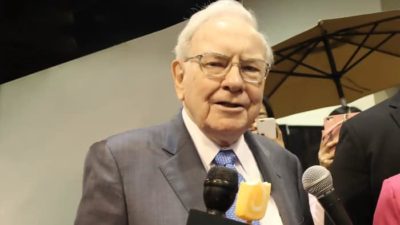
One of the world's wisest and best investors, Warren Buffett, once said this about market declines:
To refer to a personal taste of mine, I'm going to buy hamburgers the rest of my life. When hamburgers go down in price, we sing the 'Hallelujah Chorus' in the Buffett household. When hamburgers go up in price, we weep. For most people, it's the same with everything in life they will be buying — except stocks. When stocks go down and you can get more for your money, people don't like them anymore.
In other words, it can be a good thing that shares fall sometimes because it gives us the chance to buy parts of businesses for less. We can 'buy the dip'.
I think it's worth focusing on the fact that, over the long term, business values have collectively increased. This happens for a few different reasons. Inflation over the decades is a useful tailwind. But businesses are doing their best to grow their profit (margins), launching new products or services, and perhaps expanding geographically to open up new markets.
Part of the variability of the ASX share market comes from whether people are feeling optimistic or pessimistic that day. Sentiment changes all the time.
Historically, we can see (for example using this charting tool from Vanguard) that over the long term, ASX shares have returned an average per year of around 10%.
That doesn't mean that shares will make a 10% return every single year. It's an average. One year could see a 10% fall, while the following year could see a 20% rise. The entry price into investing in shares is volatility. But volatility can be our friend to help buy at cheaper prices.
When should investors start?
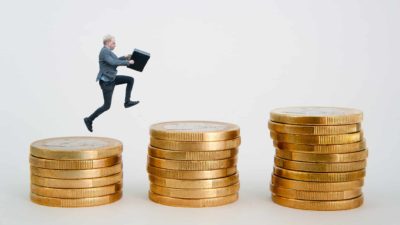
There isn't a wrong time to start investing, in my view. It's like the question 'when should I start working out?'. Starting today can give people the longest time for their money to compound.
Legally, brokers require investors to be 18 years old to own shares in their own name. Investors can start investing with as little as $500 per transaction. But, the smaller the brokerage fee of the transaction (in percentage terms), the better.
The longer investors are invested in the market, gives investors more time to grow their wealth. I'll give an example of this in action.
Using the Moneysmart compound interest calculator, if the share market keeps growing at an average of 10% per annum, and someone invested just $200 a month for 40 years, they would end up with $1.06 million at the end.
What ASX shares should investors buy?
You don't need to be an expert to achieve solid returns or do PhD-level analysis. There are lots of different investment choices to pick from.
There are investment options called exchange-traded funds (ETFs) that enable people to simply track the performance of a share market benchmark like the S&P/ASX 300 Index (ASX: XKO) with an ETF like the Vanguard Australian Shares Index ETF (ASX: VAS), which is focused on ASX shares.
Each ETF enables investors to buy a whole group of shares at once. The Vanguard Australian Shares Index ETF is invested in 300 ASX shares.
Then there are ETFs that invest in the global share market, such as Vanguard MSCI Index International Shares ETF (ASX: VGS) or BetaShares Global Sustainability Leaders ETF (ASX: ETHI).
Plenty of investment professionals underperform the returns generated by ETFs, so regular investors can beat the experts by just tracking the market return.
ETFs often come with cheap fees.
Investors could also pick listed investment companies (LICs), which are companies managed by fund managers that do investing on behalf of investors. Investors often like to look at LICs as options for dividends.
For investors wanting to choose individual ASX shares, that's possible as well. That's largely what The Motley Fool is all about. Investors often like to categorise many businesses into dividend or growth shares. I recently wrote an article about how I'd invest if I were starting my portfolio from scratch.
Foolish takeaway
Just remember, investing is a long-term affair. I'd want to pick long-term investments that I'd want to buy more of if the market fell heavily. Volatility should be expected so, when it comes, we can be prepared to snap up some bargains.