Image source: Getty Images
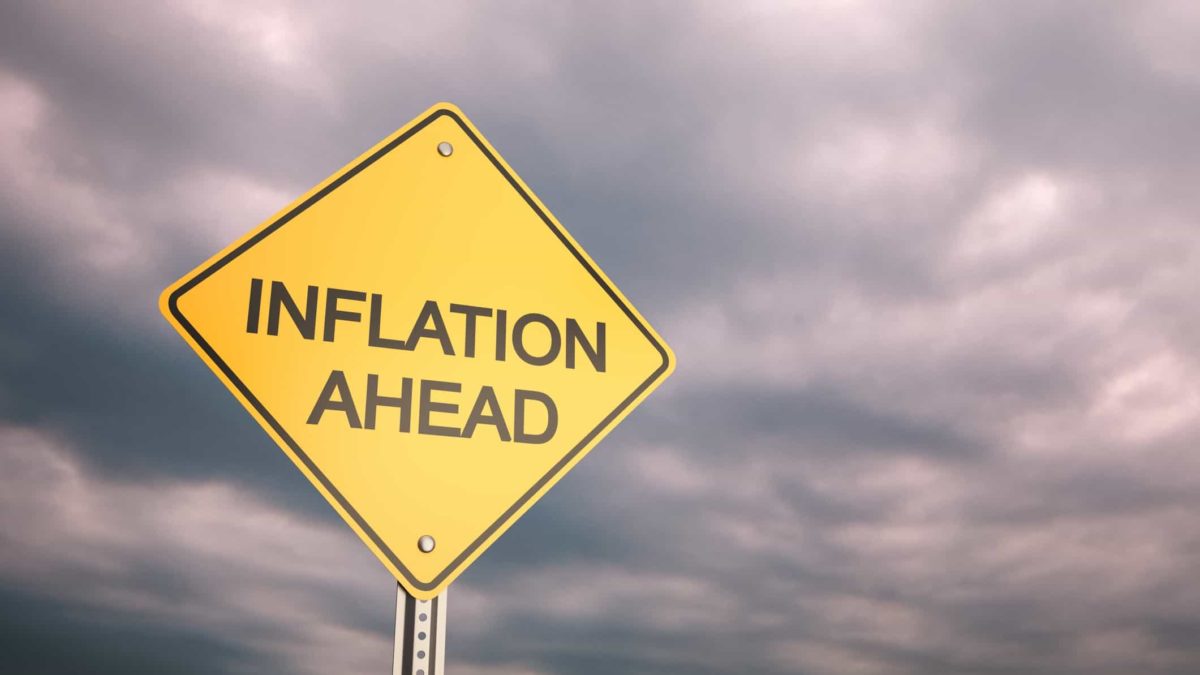
How do you solve a problem like inflation?
Bloody hell. 5.1%
Five. Point. One. Per cent.
That's the official inflation rate, according to today's release from the Australian Bureau of Statistics.
Now, let's be honest – we all knew prices were going up.
And by a lot.
We felt it at the pump. At the supermarket. At the butcher, baker and candlestick maker.
Yes, the official number is higher than expected, but only by a little (relatively speaking).
Still, seeing that number, in black and white, is a pretty serious reality check.
I think history will judge the RBA badly for holding onto low rates for so long, even though their intent was noble.
They had months to see what was happening in the United States.
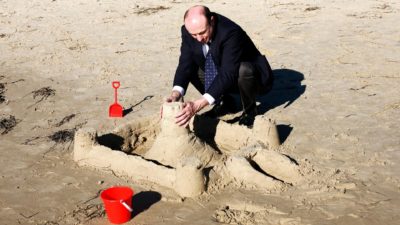
But they, and others, hoped for the best (or stuck their heads in the sand, if you're less kind).
It was, I think objectively, a low probability bet.
Which isn't to say they couldn't have been right.
But the odds weren't great.
And now we know.
It's been my view that:
1. The RBA's change from being 'proactive' – acting in advance – to 'reactive' – waiting for the data – would be a mistake. It's too early to tell, but it doesn't look good; and
2. The RBA should have been 'normalising' rates months and months ago, rather than holding to 'emergency levels' for so long
Time will tell, and hopefully lessons will be learned (if I'm right).
But that's both water under the bridge and also a conversation for another, future time.
The question now is what will the RBA do in response.
Last month, the Reserve's rhetoric (paraphrased) changed from 'it's a long time away' to 'the next couple of months will matter'.
Now?
Can they really afford to ignore an inflation number with a 5 in front, or kick the 5% larger can down the road for a little longer?
Or should they grasp the nettle and act now?
I think you know my view.
The inflation genie is out of the bottle.
There is more pain ahead.
I think they have little choice but to start to raise rates, and to do it next week.
Why wouldn't they?
No, it's not a rhetorical question; there are real reasons they might hold fire.
Most of the inflation is 'supply push', rather than 'demand pull'. That is, it's not reckless spending that needs to be cooled, but rather higher energy prices and a stuttering supply chain that's causing problems… and raising rates can't influence those factors.
And the economy is still recovering from the COVID impacts… taking away the punch bowl just as customers are returning is, well, imperfect timing to say the least.
And – and I desperately hope this isn't part of the calculus – the RBA won't want to be seen as influencing the election campaign or outcome by bumping up lending costs so close to polling day.
Are these enough?
I don't think so. Then again, I haven't spent decades as a central bank bureaucrat, so I don't pretend to have their expertise or depth of knowledge.
Frankly, though, right now we're really only talking about timing. And probably as little as a month.
If they don't raise rates next week, it'll probably be done in June anyway. July at the latest.
So, rates are going up.
Probably by an uncomfortable amount, if you're a borrower… especially if you borrowed recently.
Yes, raising costs to, well, restrain rising costs is counterintuitive.
But the RBA will raise rates to cool an overheating economy (at least price-wise).
And – you won't hear this from the pollies or the usual suspects – that's precisely what's supposed to happen at this point in the economic cycle.
For years, people have tried to pretend that the only economic circumstances are 'a lot' and 'more'.
That's been the result of the 1990s recession, followed by the GFC, followed by the COVID recession.
That's why we have an official cash rate of 0.1%.
And the pollies all want to put 'downward pressure' on interest rates.
Newsflash: Rates are supposed to go both ways.
That's. How. They. Work.
And, even when it feels uncomfortable (and that time is coming) it's infinitely better than the alternative.
Well-implemented monetary policy (interest rates) and fiscal policy (government decisions on taxation and spending) are supposed to make economic cycles less extreme.
They take the top off the booms, and take the bottoms off the crashes.
You can't do one without the other.
A boom left, unchecked, creates a deeper and longer crash.
Higher rates (and, if our pollies had guts, a structurally-balanced budget) would do precisely that: gradually applying the brakes and things get overheated, and gradually pushing on the accelerator when things slow down.
No-one wants to pay higher interest rates on their mortgage.
No-one wants to pay more on a business loan.
But it is much, much better than enduring a long, deep crash that comes when an economy runs too hot for too long.
There is no magic wand, unfortunately.
Right now, we're about to take some medicine – medicine that doesn't taste good, but will stop us getting sicker.
As unwelcome and uncomfortable as it is, paying a little more on a home loan is infinitely better than losing your job, or your business.
That's the honest truth you won't hear from a politician during this election campaign.
But it's the truth nonetheless.
I'm sorry to be the bearer of bad – if honest – news, but higher rates are coming, they're going to hurt, but they're better than the alternative, even if we'd like to close our eyes, put out fingers in our ears and say 'lalalalalala' until the feeling passes.
Fool on!