Much like the seasons, stock market crashes come and go. However, unlike the predictable nature of changes in season, the market's next move is near impossible to foresee.
As long-term investors, we accept this unstructured cyclic pattern that ebbs and flows as it pleases. One thing we know for sure is that time and time again crashes eventually give way to new highs.
Conveniently, we don't need to look too far back to reflect on such an occurrence. It was 17 months ago that the S&P/ASX 200 Index (ASX: XJO) capped off its ~32% COVID-19 induced crash. An event that unfolded in the space of a mere 28 days from top to bottom. Yet, here we are 17 months later and 53.5% higher.
Looking back, we now have the benefit of hindsight — and while that may not be helpful to the decisions made back in 2020, it can be put to good use in the event of any future stock market crashes.
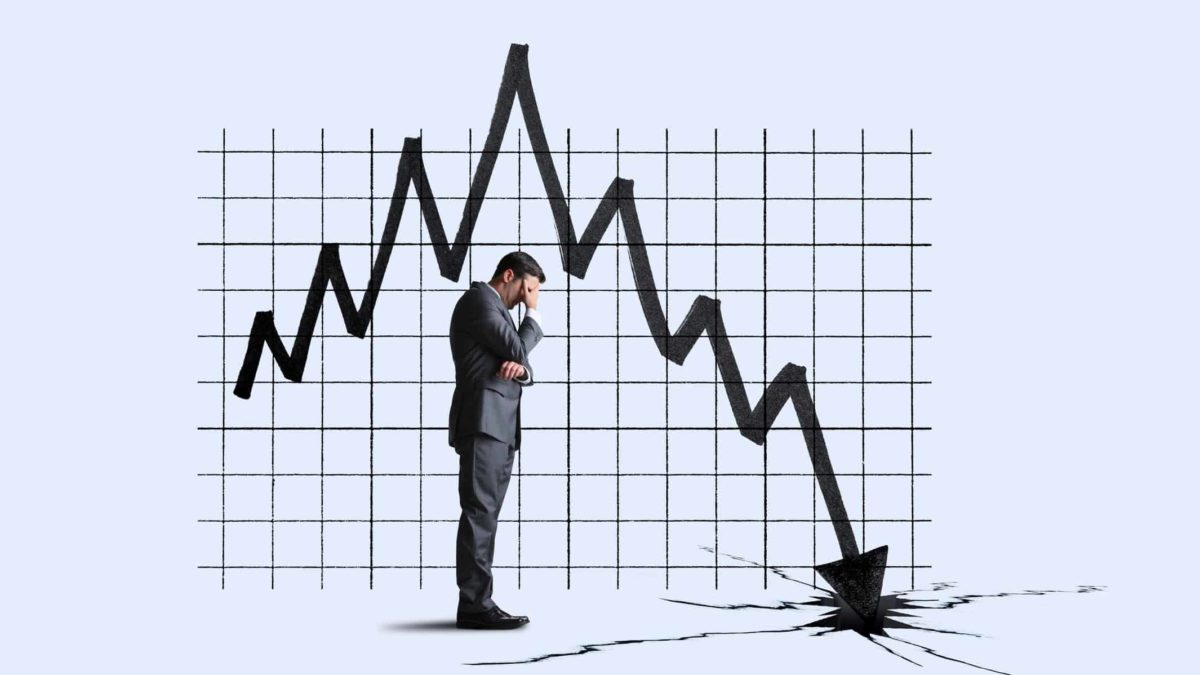
Image source: Getty Images
Lessons worth remembering for another stock market crash
Timing the market is a fool's errand
It seems obvious, but it must be said — no one can accurately predict the future, and certainly not consistently. Occasionally, we might 'luck out' and sell out of a company at the top, or buy-in towards the bottom. However, this strategy comes with its flaws.
See, we humans are emotional beings. As much as we'd like to believe we can make completely rational decisions, our instinctual nature tends to override our logical decision-making. The problem with this is that when the market is falling, it instils fear. We can't help but be overwhelmed with the numbing distress of losing our hard-earned money. As a result, we often avoid the stock market completely when it is crashing.
However, the fact is, the days of the greatest historic stock market returns are wedged in between some of the worst.
In other words, you either need a DeLorean from Back to the Future to pick which days to buy and sell. Or you employ the strategy of dollar-cost averaging and settle in for the long haul. One of those two options is feasible at the time of writing this article.
Allocate appropriately based on your own circumstances
The next lesson is more of a personal consideration. When investing and the market is going up, it is easy to get carried away. It is important to consider how a stock market crash would impact your own situation and to invest accordingly.
In terms of cash, a good rule of thumb is to conserve roughly 6 months' worth of expenses. This could be higher or lower depending on your circumstances. The importance of this emergency fund is to ensure that we as investors are not forced to sell our investments while they are in the doldrums. Because, as we discussed above, it could be soon after selling that they bounce back.
At the same time, having some extra cash on the sidelines affords us the ability to take advantage of depressed share prices, if we so please.
Additionally, taking an audit of our investment allocations in terms of sectors can also be important. For example, if a portfolio was heavily weighted towards retail shares, would we still be able to sleep at night if it was particularly hit hard during a stock market crash?
This self-assessment ensures that we can stomach the risk we have assigned ourselves. If we can't, then it jeopardises the ability to stay the course through market volatility.
Look at the business, not the share price
Lastly, our final lesson is helpful in aiding in our rational decision-making during irrational market moments.
While the share price matters to investors in the long term, it can be a distraction in the short term. At the end of the day, we are investing in businesses and people, not just ticker codes on a screen.
Amazon.com, Inc. (NASDAQ: AMZN) is a good example of this. During the dot-com crash, the company's share price plummeted 80%. Yet, all the internal metrics relating to sales, customer numbers, etc. were in an upwards trend.
It is during market crashes that a disconnect between the share price and the business fundamentals can occur. In the words of Jeff Bezos, "The company is not the stock, and the stock is not the company." So, in saying that, it can be helpful to look at the progress of the company during such times.
Avoiding a stock market crash
This is a trick question, there is no avoiding stock market crashes as a long-term investor. Instead, we should only hope to navigate them better. Like a fisherman going out to sea — we are likely to encounter the occasional storm and rough waters — but as long as we have come prepared, then we can be confident in our actions.
Ironically, rough waters can be even better for fishing, as choppy conditions provide good conditions for fish to be more active in the water. So, with our lessons in mind, we should be equipped to cast a line in the next stock market crash.