When markets are near record highs, it's natural to wonder whether the next big move is down. I get asked this a lot. Are we due for a crash, or is this just the usual anxiety that shows up whenever prices run hot?
My short answer is this. A crash is always possible. But based on what I can see today, it is not the outcome I'm planning my investing around.
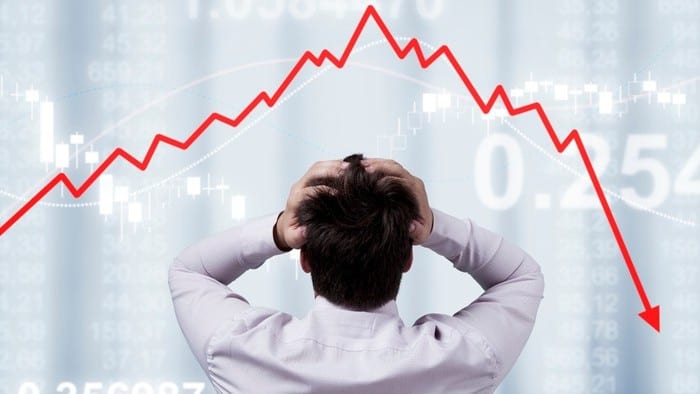
Image source: Getty Images
What people usually mean by a stock market crash
Most investors use the word crash loosely. A 10% pullback feels dramatic in the moment, but it is actually very normal. Even 15% falls show up regularly across market history.
A decline of 10% to 20% is referred to as a market correction.
A true crash is different. That usually involves a sudden, severe decline driven by a shock the market did not see coming. Think financial system stress, a major policy mistake, or an unexpected geopolitical escalation.
Those events are rare. By definition, they are also hard to predict.
Why crash fears feel louder right now
There are understandable reasons investors are nervous.
Valuations in parts of the global market look full. A small group of large global stocks has driven a disproportionate share of returns over the past five years. Interest rates remain higher than many expected a few years ago. And recent volatility has left investors more sensitive to bad news.
On top of that, geopolitics has become noisier.
One example that keeps popping up is the Trump administration's renewed push to gain control over Greenland. This has strained relationships between the US, Denmark, and the EU, including threats of tariffs. Then there are Russia-Ukraine, Israel-Palestine, and US-Iran tensions to consider.
Situations like this matter for markets because they can lead to trade retaliation, alliance instability, and supply chain disruptions. None of that is helpful for sentiment.
Why a major crash is not my base case
Despite those risks, I don't think a full-blown crash is the most likely outcome before the end of 2026.
Corporate balance sheets are generally in decent shape. Banks are better capitalised than they were before past crises. Central banks are more cautious and data-driven, even if they sometimes move slowly. Importantly, many companies are still growing earnings rather than contracting.
Markets have also spent the past few years absorbing a lot of bad news. Inflation shocks, rapid rate rises, wars, and political uncertainty have all been digested to some extent. That doesn't make markets immune, but it does mean we are not coming from a place of complacency.
What history teaches about timing crashes
One of the clearest lessons from market history is that crashes are almost impossible to time.
They tend to arrive when confidence is high, but they are usually triggered by something unexpected. Investors who sit in cash waiting for certainty often miss years of compounding while they wait for the perfect entry point that never quite arrives.
Volatility feels uncomfortable, but it is also the price of admission for long-term returns.
What I'm doing instead
Rather than trying to predict a crash, I'm sticking to what has worked over time.
I plan to continue investing as normal. That means buying quality ASX shares when I can get them at good prices. It means focusing on businesses with sustainable earnings, strong balance sheets, and sensible management teams. It also means accepting that there will be periods when markets pull back, sometimes sharply.
If volatility shows up, I see that as part of the process, not a signal to stop.
Foolish takeaway
A stock market crash is always possible. Pretending otherwise would be naive.
But planning your entire investment strategy around that fear can be just as costly. I'm siding with the view that markets are more likely to grind forward with bumps along the way than fall off a cliff. My focus remains on steadily building positions in quality ASX shares, or ETFs like Vanguard Australian Shares Index ETF (ASX: VAS) and iShares S&P 500 AUD ETF (ASX: IVV), and letting time and compounding do its thing. I'd rather be prepared for volatility than paralysed by it.