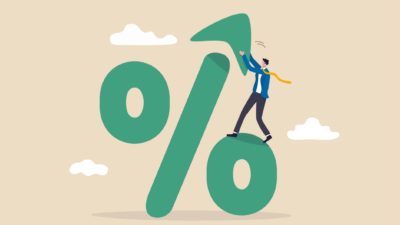
Should you borrow to invest in shares?

Should investors borrow money to invest in shares? It's an important question because it raises the risks and rewards.

| More on:
a woman

You’re reading a free article with opinions that may differ from The Motley Fool’s Premium Investing Services. Become a Motley Fool member today to get instant access to our top analyst recommendations, in-depth research, investing resources, and more. Learn More

Shares are the best way to grow your wealth over the long-term in my opinion. Share markets such as the ASX 200 (INDEXASX: XJO) have returned an average of 10% per annum over the long-term.

Property investors often point to the fact that you can use debt to build your wealth quicker.

You could say the same thing about shares. You can borrow money to invest in shares and that would really accelerate your returns.
The benefits

Shares have made strong returns over the decades. The last decade was particularly strong. Why wouldn't you want to get more exposure to that wealth-building awesomeness by using debt?

Margin loans typically have a high interest rate. But, these days, interest rates are so low. Australia's interest rate is now at a record low. That means it's cheaper to borrow and we'd get a better net benefit, assuming the returns of shares don't drastically change because of lower interest rates. There are ways that you can borrow at quite a low interest rate which could also be tax deductible.

The problems

The debt must be paid off. Debt isn't free money, a lender isn't just giving you free shares, you have to pay back that loan at some point.

Interest rates can rise. It is very unlikely that interest rates will remain this low for the next decade. At some point interest rates could rise and shares could fall at just the time you may want to sell your shares to pay off the increasingly expensive debt.

Shares could perform poorly. There is no guarantee that your shares will go up just because you own them. Share returns are not guaranteed, but your debt obligations won't change if there is a market crash.

Your investment income is still taxable. If you're in a high tax bracket then a good portion of your gains could be lost to tax.

My answer?

I don't think the risks are worth the potential rewards most of the time except perhaps during an actual recession. Shares are often priced as though everything is perfect, or the world is ending. When the world seems to be ending, when shares drop more than 20% or more, could be a calculated time to use debt when the long-term rewards significantly outweigh the potential pain.

Debt is a dangerous tool that can cause everything to go wrong. I haven't used it and I wouldn't even consider the idea unless the world goes through a major downturn. But, it's up to each investor to decide their tolerance of risk and ability to weather economic dips.


Motley Fool contributor Tristan Harrison has no position in any of the stocks mentioned. The Motley Fool Australia has no position in any of the stocks mentioned. We Fools may not all hold the same opinions, but we all believe that considering a diverse range of insights makes us better investors. The Motley Fool has a disclosure policy. This article contains general investment advice only (under AFSL 400691). Authorised by Scott Phillips.

More on Personal Finance

Percentage sign with a rising zig zaggy arrow representing rising interest rates.
Cash Rates

The Commonwealth Bank has called it! Interest rates to rise in the new year, but how soon?

Commonwealth Bank economists have made a call on interest rates.

Read more »

A businesswoman aims an arrow at a target
Cash Rates

RBA watch: Sectors to target and avoid should interest rates rise – Expert

Anticipating further hikes in 2026? Here are sectors to watch.

Read more »

Interest rate written with a green arrow going up, symbolising rising interest rates.
Cash Rates

Which stocks are looking good as rates appear to be heading north?

With interest rates now more likely to go up than down, Wilsons Advisory has made some key picks in each…

Read more »

Three business people look stressed as they contemplate stacks of extra paperwork.
Cash Rates

Macquarie names best and worst ASX stocks to buy in a rising interest rate environment

Do you have exposure to the sectors set to benefit if interest rates rise?

Read more »

A banker uses his hands to protects a pile of coins on his desk, indicating a possible inflation hedge
Cash Rates

Interest rates: Even if the RBA stops cutting, it's not all bad news

There are upsides to higher rates.

Read more »

Percentage sign on a blue graph representing interest rates.
Cash Rates

The bar is set "very high" for further interest rate cuts analysts say

Strong economic data out this week has analysts split on whether we'll see another interest rate cut in coming months.

Read more »

Australian dollar notes in a nest, symbolising a nest egg.
Dividend Investing

If you can get 4.25% from a term deposit, what's the point of investing in ASX dividend shares right now?

If term deposits yield more than shares, are they the better investment?

Read more »

Close-up of a business man's hand stacking gold coins into piles on a desktop.
Personal Finance

If a 40-year-old invests $1,000 a month in ASX stocks, here's how much they could have by retirement

This is a path of how someone can retire with a very pleasing nest egg.

Read more »