The best time to make big portfolio moves isn't Monday morning; it's Saturday afternoon.
With the ASX share market closed and share prices frozen, the noise disappears. This leaves you free to think clearly without the temptation to engage in any reactionary trading.
Over the past few weeks, market jitters have permeated major indices around the globe.
The CBOE Volatility Index (CBOE: VIX), commonly known as the 'fear index', spiked to its highest point since 'Liberation Day' last week.
Many investors were caught off guard. Some headed for the exits, only to buy back in strongly when Nvidia's CEO Jensen Huang was handed back the keys to his old office.
Here's how I plan to use the current environment to upgrade the quality of my portfolio.

Image source: Getty Images
The preparation zone
Both the ASX and US stock markets have generally trended upward over the past 15 years.
This has pushed valuations higher. I've had several investments on my watchlist for years that have remained too expensive to buy. Pro Medicus Ltd (ASX: PME) is an example.
There's only been a handful of times when valuations have temporarily fallen low enough to be eye-wateringly attractive.
COVID is the most obvious example. In hindsight, there were stock market bargains everywhere during that period. However, buying fallen stocks during a crisis is always easier said than done, with every new crisis taking on a new life of its own.
The other issue is funding.
If an investment opportunity suddenly arises, how will I pay for it?
Unfortunately, my capital is finite. The funding for every new investment must come from somewhere. Unless it can be funded by cash, that means selling an existing investment.
However, we cannot predict when opportunities arise. We can only prepare as well as possible to see which current holdings should be first to go.
I am taking the opportunity to review my portfolio to identify investments that could be trimmed or sold if a superior investment presents itself.
Here are three criteria I'm filtering for this month.
A periodic check-up on the fundamentals
This is a general periodic check-up I like to do on a periodic basis.
Strong business fundamentals are key to successful investing. While sentiment can drive short-term ASX share market price movements, underlying fundamentals determine long-term performance.
While I review my investments' results during their reporting periods, I also take time to regularly review competitors and industry dynamics. Specifically, whether competitive dynamics have become more or less attractive.
Portfolio diversification
The majority of my first ASX investments were in managed funds, including listed investment companies (LICs). Over the past few years, a couple of these investments have shifted their focus. As a result, my funds now have more overlapping stocks than when I first invested.
Earlier this year, I acted on this by selling down some WAM Leaders Ltd (ASX: WLE) shares, an LIC I have held since 2017. It invests in the ASX 200, so it has significant overlap with many other ASX-focused funds.
Over the next few weeks, I will review my other funds to identify any overlap and may sell down as needed.
Insider alignment
I'll also be checking up on the level of insider alignment between management and shareholders for my investments. This filter has become increasingly important to me over time.
I find this check-up especially important for funds. Fund managers' ownership of the funds they run often changes on a regular basis.
How much of a manager's own wealth should be invested in the business they run? I don't believe there's a magic number. Instead, I look at what else they're invested in, why they might have sold down, and any other additional circumstances. For me, this criterion is more 'vibe-based' than science.
Weighing opportunity cost: Knowing both opportunities
Investing is not a matter of just buying and selling. It's about opportunity cost.
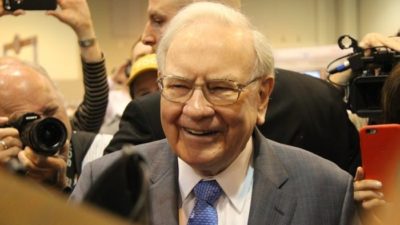
As Warren Buffett once put it:
The real cost of any purchase isn't the actual dollar. Rather, it's the opportunity cost – the value of the investment you didn't make because you used your funds to buy something else.
Over the next couple of weeks, I will get up to speed on the latest news about my investments and decide what role they play in my portfolio.
If I'm selling something to buy another investment, I want to be fully aware of what I'm letting go of.