Turning $10,000 into $100,000 sounds like a big goal, but compounding can do surprising things when it is given enough time.
If I assume an average annual return of 9% and no further contributions, the maths gives us a good idea of what the journey could look like.

Image source; Getty Images
How long would it take?
At a 9% annual return, $10,000 would grow to approximately $100,000 after 27 years.
Of course, it is worth remembering that the share market will not return exactly 9% every year. There will be strong years, weak years, and probably some uncomfortable falls along the way.
But I think it shows what long-term compounding can achieve when an investment is given enough time.
How would I target a 9% return?
If I were choosing individual ASX shares, I would focus on businesses I believe can steadily increase their value over many years.
I would look for strong competitive positions, opportunities to reinvest money at attractive returns, capable management, healthy balance sheets, and markets with room for growth.
I would also spread my money across several businesses rather than relying on one company to deliver the entire result.
For investors who would rather avoid stock picking, an index-tracking fund could provide a simpler route.
The Vanguard Australian Shares Index ETF (ASX: VAS), for example, seeks to track the S&P/ASX 300 Index and provides exposure to hundreds of Australian shares through one investment.
There is no guarantee that the VAS ETF, or the Australian market generally, will deliver 9% per year from here. But broad diversification and reinvesting dividends would allow investors to capture whatever long-term return the market provides.
Could $100,000 come sooner?
It certainly could if the portfolio achieves a higher return.
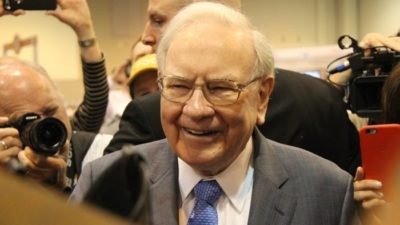
Warren Buffett provides an extraordinary example of what sustained outperformance can do.
Berkshire Hathaway (NYSE: BRK.B)'s per-share market value compounded at nearly 20% annually between 1965 and 2025, compared with 10.5% for the S&P 500 including dividends.
I think Buffett's approach offers some valuable lessons. He is known to look for businesses he understands, durable competitive advantages, strong long-term economic prospects, and managers who act like owners. Buffett then aims to remain patient and let compounding unfold.
Those sound like straightforward ideas. Applying them successfully for decades is much harder.
Even professional investors regularly struggle to outperform. S&P Dow Jones Indices found that 87% of actively managed Australian Equity General funds failed to beat their benchmark over the 15 years to the end of 2025.
Buffett is an investing legend for a reason.
Foolish takeaway
I think $10,000 can become $100,000 without requiring a spectacular investment idea.
At an average return of 9%, the journey takes around 27 years. The ingredients are patience, sensible investments, reinvested returns, and enough discipline to stay invested when markets inevitably become uncomfortable.
Beating 9% could bring the finish line closer. However, I would treat that as a bonus rather than something my plan depends on.