How to give your kids a superannuation kickstart, with help from the government

Who doesn't like free money?

You’re reading a free article with opinions that may differ from The Motley Fool’s Premium Investing Services. Become a Motley Fool member today to get instant access to our top analyst recommendations, in-depth research, investing resources, and more. Learn More

Saving for their retirement is probably the last thing on your children's minds when they first start working, but there is a good reason to get them signed up for a superannuation account early.

Most younger teens are not automatically eligible for superannuation payments from their employer, as workers aged under 18 must work more than 30 hours per week to be eligible for super.

This changes once they turn 18, when all workers must be paid 12% super regardless of the number of hours worked.
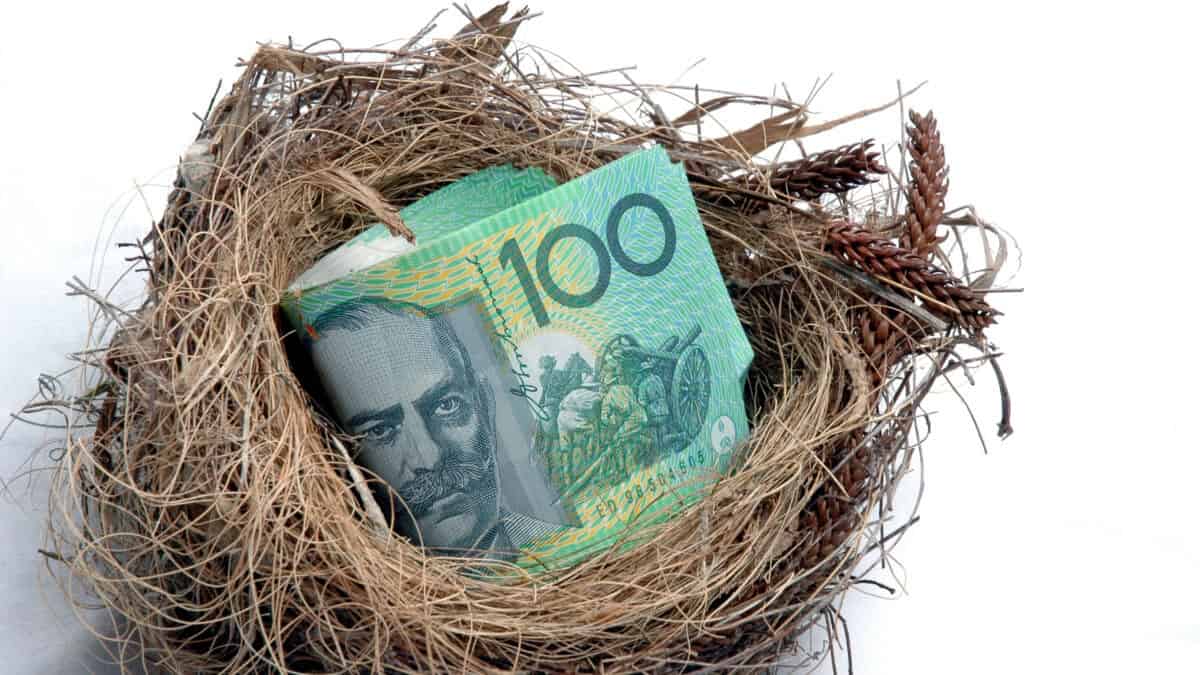
A wad of $100 bills of Australian currency lies stashed in a bird's nest.

Image source: Getty Images

Government money on the table for super

But just because they don't get paid super, doesn't mean there isn't a great reason to sign your children up for a super account.

This is because, as low-income earners, they will likely be eligible for a super co-contribution from the government if they make an after-tax contribution themselves.

There are some rules, including that, for 2026-27, they must earn less than $49,293 to receive the full $500 government contribution.

There is also the 10% eligible income test, which states that 10% or more of your total income must come from either employment-related activities or carrying out a business.

To be eligible for the full $500 contribution from the government, $1000 in non-concessional (after-tax) contributions must be made.

Compound interest works its magic

And while $500 might not sound like a lot, the impact on your child's retirement savings could be huge.

Using the government's Moneysmart website, I have calculated that $500 deposited into a 15-year-old's account will turn into $10,500 by the age of 60, assuming the initial deposit compounds at 7% per year.

And remember, this is calculated assuming just one year of contributions.

The Australian Taxation Office website says your children do not need to do anything to receive the payment, and can make smaller payments throughout the year.

As they say:

You don't need to make your personal contributions as a single lump sum – you can make payments throughout the financial year. We use the total amount you have contributed for the year to calculate the co-contribution. Your super fund can tell you how to make personal contributions, and it will need your tax file number before it can accept them.

The minimum contribution that can be made is $20, and the government has a calculator to help people figure out how much they will be paid.
Motley Fool contributor Cameron England has no position in any of the stocks mentioned. The Motley Fool Australia's parent company Motley Fool Holdings Inc. has no position in any of the stocks mentioned. The Motley Fool Australia has no position in any of the stocks mentioned. The Motley Fool has a disclosure policy. This article contains general investment advice only (under AFSL 400691). Authorised by Scott Phillips.

More on Superannuation

Australian dollar notes in the pocket of a man's jeans, symbolising dividends.
Superannuation

Does the average superannuation balance at 60 generate enough passive income?

How prepared are we for retirement?

Read more »

two women having a coffee whilst working from their laptops
Superannuation

The average superannuation balance at age 62 in Australia. How does yours stack up?

Here's the average balance for men and women, versus what you need for a comfortable retirement.

Read more »

Two elderly people smiling with their fists pumping and with a cape on.
Superannuation

How much is needed in superannuation to target a $40,000 annual passive income?

Superannuation may be the best tool to deliver $40,000 of passive income.

Read more »

Male hands holding Australian dollar banknotes, symbolising dividends.
Superannuation

Superannuation funds have started the financial year well. See how much they're up

After a slow start, superannuation balances are looking good.

Read more »

Australian dollar notes in the pocket of a man's jeans, symbolising dividends.
Superannuation

How much passive income could I earn from a $630,000 superannuation balance?

It's good to know how much income you can expect in retirement.

Read more »

Stacks of Australian dollar currency banknotes.
Superannuation

How much superannuation do I need to earn $10,000 per month in passive income?

How much can you earn off your superannuation balance?

Read more »

Woman with $50 notes in her hand thinking, symbolising dividends.
Superannuation

How much do I need in my superannuation to earn $50,000 per year in passive income?

How much do you have in your superannuation?

Read more »

A man lies on his back with arms akimbo dreaming of big success
Superannuation

Could your superannuation generate $10,000 a month in passive income by age 60?

The path to $10,000 a month may be clearer and shorter than it first appears.

Read more »