Droneshield Ltd (ASX: DRO) shares rocketed 19.4% higher on Wednesday. At the close of the ASX on Wednesday afternoon, the shares were $4.26 a piece.
The uptick means the drone operator's share price is now 28% higher for the year to date and a huge 330% higher than just 12 months ago.
The company's shares have steadily declined over the past five days, then crashed 14% earlier this week amid sentiment that tensions in the Middle East were de-escalating.
Wednesday's share price hike has recovered most of the losses, but the shares are still down nearly 2% over the five-day period.
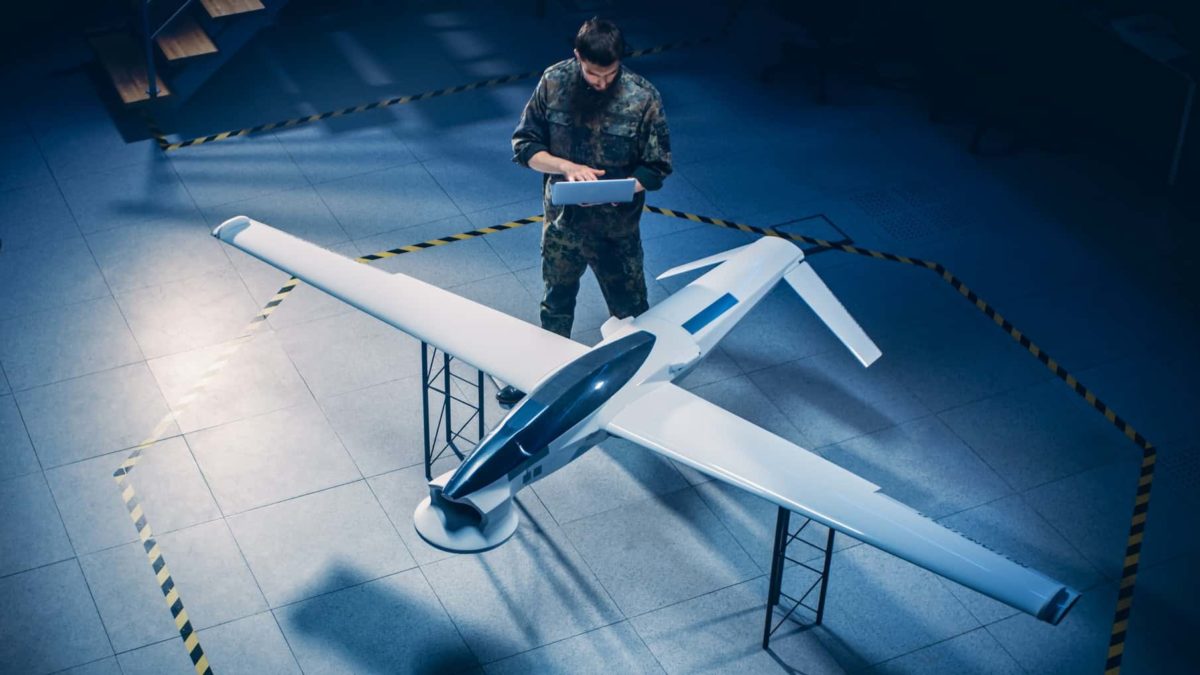
Image source: Getty Images
Why are Droneshield shares being so volatile?
Droneshield shares have jumped higher this year on renewed investor enthusiasm about defence sector stocks. Ongoing conflict in the Middle East and rising geopolitical tensions have led to an uptick in government defence spending. This includes the development of missiles or submarines, as well as technologies such as drones, AI, and electronic warfare.
Given counter-drone electronic warfare sits at the core of Droneshield's business, it has been well placed to soak up the increase in investor demand.
It's possible that the share price crashes over the past five days are a result of softening investor sentiment. It's also possible that investors were taking gains off the table after this year's strong price rally.
Even news of Droneshield's announcement on Tuesday didn't stop the share price from tumbling.
The company revealed that it has a new interoperability between its DroneSentry-C2 command-and-control software and optical sensing technologies from OpenWorks Engineering.
According to the announcement, the integration strengthens DroneShield's ability to combine multiple sensor inputs into a single operational platform, improving detection, tracking, and identification of drone threats.
OpenWorks Engineering is a UK-based company specialising in advanced optical sensors and imaging systems. The release highlights that the addition of its technology gives DroneShield customers another option to enhance visual detection and tracking capabilities within a unified system.
So, why has the share price spiked higher now?
There was no price-sensitive news out of the company on Wednesday, which implies the share price move is driven by broader market sentiment.
Earlier sentiment that the war in the Middle East is de-escalating has also reversed. Iran rejected the US ceasefire proposal on Wednesday, calling it unreasonable and putting forward its own conditions instead. This likely contributed to Droneshield's share price reversal.
Can Droneshield shares keep climbing?
Analysts are mostly bullish about the outlook for DroneShield shares, but it doesn't look like the annual increase will continue at the same pace.
TradingView data shows two out of three analysts have a strong buy rating on the defence stock. The third analyst has downgraded their rating to neutral.
The average target price for DroneShield shares over the next 12 months is $4.50 a piece. At the time of writing, that implies a 5.6% upside ahead for investors.
As tensions in the Middle East continue and pressure on military spending intensifies, we could see demand for DroneShield's counter-drone detection and mitigation technology accelerate. But it won't be the huge 330% uplift we've seen over the past 12 months.