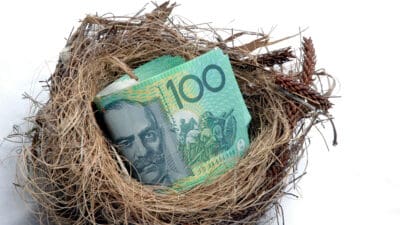
For generations of Australians, the retirement playbook has been simple: pay off the home, park superannuation in cash, maybe add an investment property, and live off the income.
It feels safe. Familiar. Sensible.
Yet for retirees facing longer life expectancies and rising living costs, that approach may be carrying more risk than many realise.
Two blind spots stand out: the silent erosion of purchasing power, and the belief that property is the only "real" way to generate passive income in retirement.
The hidden danger of playing it too safe with superannuation
Cash has an important role in retirement. It provides stability, liquidity, and peace of mind. High-interest savings accounts and term deposits can feel especially attractive when rates are elevated.
The problem is what happens over time.
Even when interest rates look healthy on paper, they can struggle to keep up with the real cost of living.
Headline CPI is a blunt instrument. Retirees don't spend like the "average household". Healthcare, insurance, utilities, food, travel, and services often rise faster than the official inflation number.
When savings sit entirely in cash, purchasing power can quietly decline year after year. A bit like the frog in the boiling water – the balance might look stable, but what it buys subtly shrinks.
That is why many retirement portfolios are built with a mix of assets. Not to chase returns, but to ensure part of the portfolio continues to grow and generate income that can adapt to rising costs over decades.
Property isn't the only path to retirement income
Ask Australians about investing, and property dominates the conversation. Investment properties are seen as tangible, reliable, and proven.
But that reputation often ignores the full picture.
Property ownership comes with concentration risk, high upfront costs, ongoing maintenance, vacancy risk, and a level of physical and emotional effort that doesn't always suit retirees. Net rental income can be far lower than headline yields once expenses are considered.
Shares, on the other hand, have historically delivered strong long-term returns across multiple time periods, with far less hands-on involvement. Importantly, share market returns already account for reinvestment, operating costs, and business expenses before income reaches investors.
For retirees, that difference matters.
Using shares to support both income and longevity
Shares don't have to mean speculation or sleepless nights. Many retirees and superannuation funds use diversified portfolios designed to deliver a blend of income and capital growth over long periods of time.
Exchange-traded funds (ETFs) can play a central role by removing much of the complexity and ongoing effort. Rather than picking individual companies, investors can access broad diversification and built-in discipline through a small number of holdings.
For income, something like Vanguard Australian Shares High Yield ETF (ASX: VHY) provides exposure to higher-yielding Australian companies, offering regular distributions that may help support retirement cash flow. To complement that, a growth-oriented option such as Vanguard Diversified High Growth Index ETF (ASX: VDHG) blends Australian and global shares into a single diversified investment designed to grow capital over time.
The precise mix will always depend on personal circumstances, but these examples highlight how retirees can combine income and growth in a broadly diversified, low-maintenance way — without the hands-on demands of managing property or constantly monitoring markets.
Crucially, this approach avoids the capital concentration and illiquidity of a single investment property, while offering daily liquidity and the potential for compounding income and capital growth that cash in a bank account alone often struggles to deliver over decades.
Cash still matters
None of this means abandoning cash or property altogether. Cash remains valuable for short-term spending needs, emergency buffers, and smoothing out market volatility. Property may still suit some investors depending on their circumstances.
The key idea is balance.
A retirement portfolio designed for longevity often blends cash for stability, income-producing assets for spending needs, and growth assets to protect purchasing power over decades.
Rethinking retirement in a longer-lived world
Australians are living longer than ever. A retirement that lasts 25 or 30 years demands more than safety alone. It requires adaptability.
Superannuation was designed to be invested, not frozen. By thinking beyond bank accounts and property alone, retirees can build portfolios that aim to generate passive income while still growing enough to support the years ahead.
Sometimes the biggest risk in retirement isn't market volatility — it's standing still.