Share markets have entered 2026 with a familiar mix of confidence and concern.
The S&P 500 Index (SP: .INX) and S&P/ASX 200 Index (ASX: XJO) continued to climb in 2025, brushing against new highs, while global headlines felt increasingly uneasy. Geopolitical tensions are flaring across multiple regions, inflation remains sticky in Australia, and interest rate expectations are once again creeping higher.
At the same time, valuation metrics like the Buffett Indicator and the US CAPE ratio are flashing warning signs. By historical standards, markets look expensive.
It's no wonder some investors are feeling uneasy.
But amid all this noise, there is one move that long-term investors should still avoid at all costs in 2026.
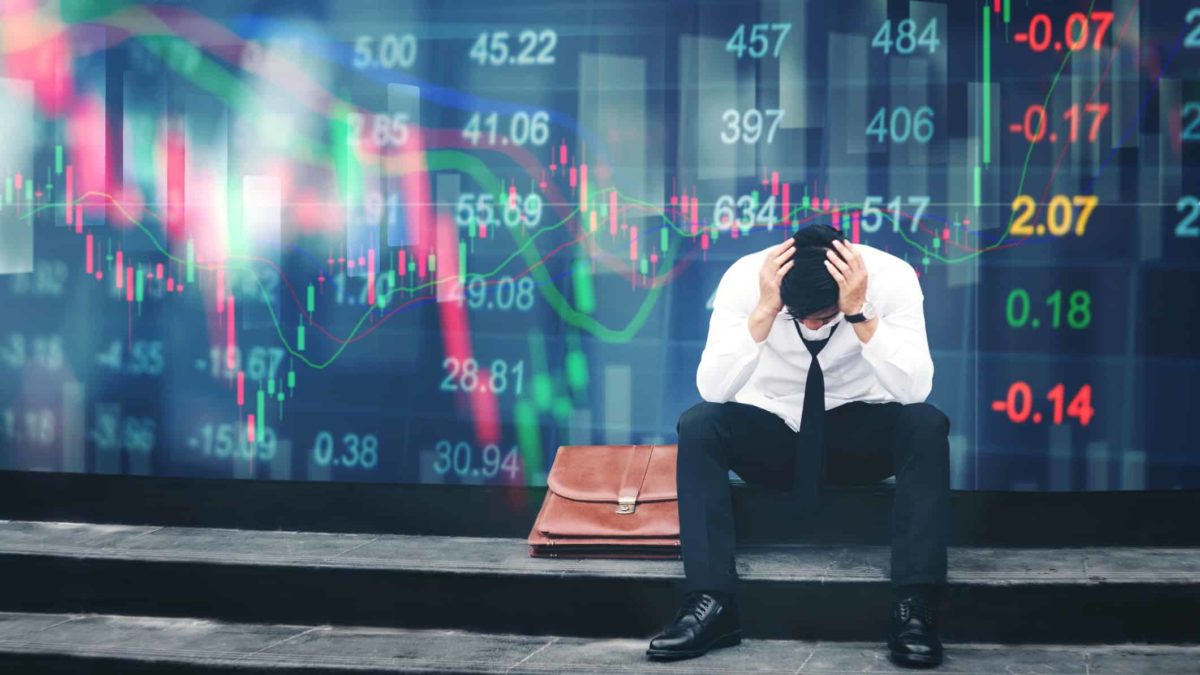
Image source: Getty Images
Panic selling
Panic selling comes in two distinct forms, and both can quietly sabotage long-term wealth.
Panic selling on the way up
When markets keep rising, it can feel unnatural.
Investors start to tell themselves that prices "can't possibly go any higher" or that a correction is surely just around the corner. The temptation is to get clever — trim positions, move to cash, and wait for the inevitable pullback.
The problem is that markets do not operate on neat schedules.
History shows that expensive markets can remain expensive for far longer than most expect. The US market spent much of the late 1990s trading above long-term valuation averages. Australian shares experienced something similar in the years leading up to the global financial crisis.
Trying to perfectly time the top has proven to be a fool's errand for decades. Miss just a handful of strong market days, and long-term returns can fall dramatically.
Real Foolish investing — capital-F Foolish — is about owning quality businesses through cycles, not hopping in and out based on discomfort.
Selling simply because markets feel "too high" risks leaving investors stranded on the sidelines while compounding does the heavy lifting elsewhere.
Panic selling on the way down
The second, and more damaging, version of panic selling happens when markets fall.
Market pullbacks are not an anomaly. They are a feature.
Corrections of around 10% occur almost as regularly as summers. Deeper drawdowns of 20% or more are less frequent, but still inevitable over long investing lifetimes. What we never know is when they will arrive, how deep they will be, or what will trigger them.
That uncertainty makes emotional decision-making incredibly dangerous.
Selling during periods of fear often locks in losses just as long-term opportunities are emerging. Many of the strongest market recoveries in history have occurred when sentiment was at its darkest.
It's also worth remembering that some high-quality businesses can continue growing earnings through economic slowdowns, inflationary environments, and geopolitical stress. Investors who sell everything in a panic risk missing those quiet compounding stories.
Warren Buffett has long emphasised that volatility is not risk — permanent capital loss is. That philosophy remains just as relevant today.
Valuations are high — and that's not the whole story
There's no denying that valuation indicators look stretched in parts of the market.
But valuation signals are blunt instruments.
Markets can stay elevated for years while earnings catch up, particularly when innovation, productivity gains, or global capital flows remain supportive.
For Australian investors, this matters. The ASX has its own mix of resources, banks, healthcare, infrastructure, and global earners. Local inflation and interest rate dynamics may differ from the US, but emotional responses tend to be universal.
Foolish Takeaway
The biggest risk in 2026 is not a market crash itself. It's how investors respond to one.
Panic selling — whether driven by fear of missing the top or fear of deeper losses — can quietly undo years of disciplined investing. Long-term wealth is rarely built by perfectly timed decisions. It's built by patience, quality, and the ability to sit through uncomfortable periods.
Markets will rise. Markets will fall. That part is inevitable.
Making emotional decisions at the wrong moment doesn't have to be.