As 2025 draws to a close, global share markets are once again hovering near record highs.
As usual, bulls and bears are already dusting off their crystal balls and making bold predictions for 2026 — even though predicting short-term market moves has a success rate not far removed from astrology.
Beyond the noise, optimism around innovation and productivity — particularly driven by AI — remains strong. Corporate earnings across broad parts of the market have been resilient, and risk appetite has largely held up despite persistent geopolitical and economic uncertainty.
At the same time, one of the most influential figures in investing is quietly preparing to step aside.
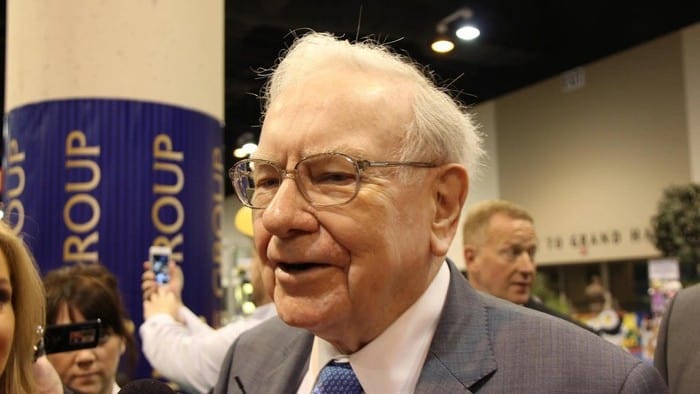
After more than six decades at the helm, Warren Buffett is nearing the end of his tenure as CEO and chief capital allocator of Berkshire Hathaway (NYSE: BRK.A) (NYSE: BRK.B). And the actions he and Berkshire have taken in recent years may offer investors one final, valuable lesson.
The rising cash pile tells a story
Berkshire Hathaway's cash balance has been climbing steadily for years. Rather than aggressively deploying capital as markets have rallied, Buffett has been a net seller of equities, a notable departure from much of his historical behaviour.
For decades, Buffett was known for leaning into opportunities, even when sentiment was uncertain. Today, he is doing the opposite: exercising restraint.
That doesn't mean he believes markets are about to collapse. Nor does it suggest equities are inherently unattractive. Instead, it reflects a simple reality: truly compelling opportunities that meet Berkshire's strict criteria are harder to find at current prices.
Size changes the game
One nuance often missed in commentary around Buffett's caution is scale.
Berkshire Hathaway is now one of the largest capital allocators in history. It can no longer meaningfully invest in smaller, fast-growing companies, even if they appear attractively priced. Those opportunities simply do not move the needle.
Buffett needs whales: enormous, high-quality businesses capable of absorbing tens of billions of dollars at a time. That naturally narrows the opportunity set and raises the bar for what qualifies as "investable".
So while parts of the market may look stretched, Buffett's actions also reflect the constraints of size, not just valuation concerns.
Still the greatest investor of our time
Regardless of market conditions, Buffett's track record speaks for itself. Few investors have compounded capital as consistently, across as many cycles, for as long.
That alone makes his behaviour worth studying, especially as he approaches the final chapter of an extraordinary career.
And while markets, industries, and technologies have changed dramatically since the 1960s, Buffett's core principles have remained remarkably stable.
Three takeaways for everyday investors
1. Stick to your process
Buffett has evolved over the years — moving from "cigar butt" bargains to wonderful businesses — but the foundation has not changed. He still focuses on quality companies with durable competitive advantages, purchased at fair or discounted prices.
The lesson is not to copy Buffett's portfolio, but to commit to a repeatable process you understand and trust.
2. Don't confuse patience with fear
Berkshire has not stopped investing. It has simply become more selective.
When Buffett can't find opportunities that meet his standards, he is comfortable holding cash and waiting. History shows that when markets eventually stumble and fear rises, Berkshire is often ready to act decisively.
For individual investors, the message is clear: investing should be rational, not emotional. There is no obligation to deploy capital simply because markets are rising.
3. Never lose sight of the long term
Despite his caution today, Buffett has never wavered in his belief that equities are the greatest wealth-creation vehicle in history.
Human progress continues. Productivity improves. Businesses adapt. Over long periods, the stock market has rewarded patience and discipline.
That conviction has underpinned Buffett's success — and it remains as relevant now as ever.
The enduring lesson
As Buffett prepares to step back, his final message is not a warning of doom. It is a reminder.
Stay disciplined. Respect valuations. Be patient when opportunities are scarce. And above all, keep investing with a long-term mindset.
Markets will rise and fall. Styles will come and go. But the principles that built one of history's greatest investment records remain timeless.