BHP signs US$2 billion deal: Here's the key takeaway

Let's take a look at what was announced.

Key points
  • BHP has signed a $2 billion deal with Global Infrastructure Partners, with BHP maintaining 51% control over its WAIO power network while freeing up capital. 
  • The agreement allows BHP to access funds without losing operational control, contributing to strengthening its balance sheet and long-term shareholder value.
  • This deal provides financial flexibility, strengthening BHP's growth pipeline amidst increasing project costs, while having no immediate impact on iron ore production.

The BHP Group Ltd (ASX: BHP) share price is currently flat this afternoon, despite the mining giant unveiling a major new infrastructure agreement tied to its Western Australia Iron Ore (WAIO) operations.

At the time of writing, the BHP share price is down 0.12% to $44.41. Meanwhile, the broader S&P/ASX 200 Index (ASX: XJO) has also slightly fallen into negative territory, down 0.20%.

Let's take a look at what was announced.
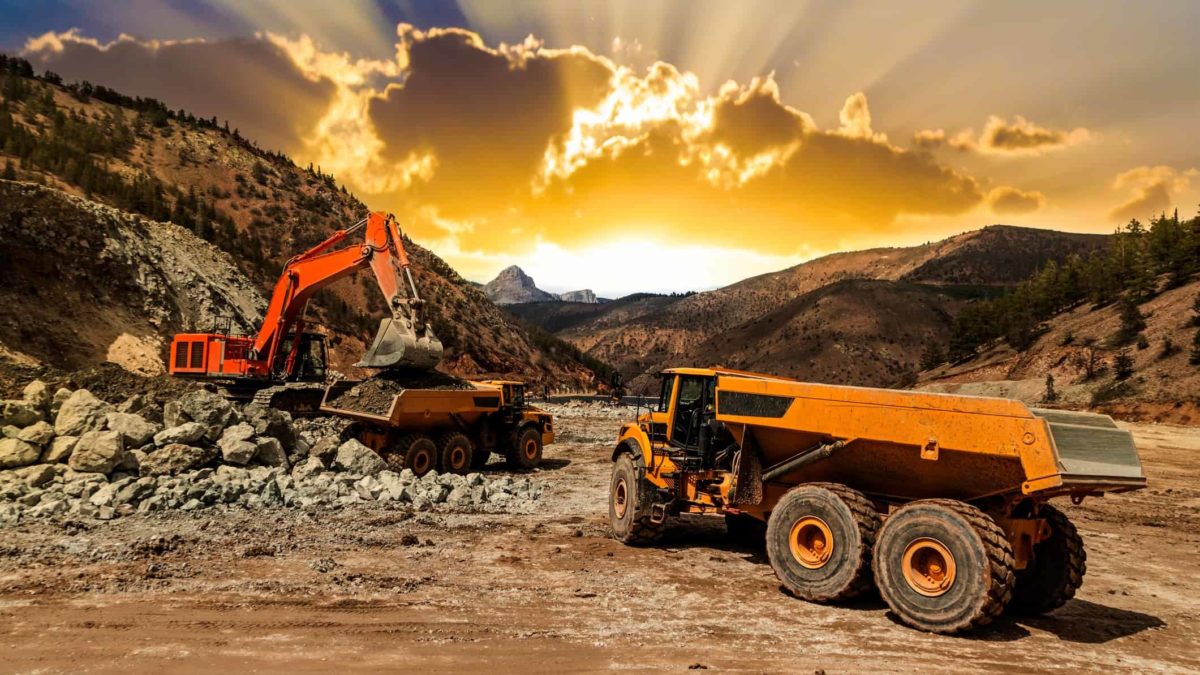
Machinery at a mine site.

Image source: Getty Images

A closer look at the agreement

According to the release, BHP entered into a binding deal with Global Infrastructure Partners (GIP), an investment group owned by BlackRock. The latter is the world's largest asset manager that handles more than $12.5 trillion in assets.

The partnership centres around BHP's inland power network that supports its WAIO operations in the Pilbara region of Western Australia.

Under the arrangement, a new trust will be set up, with BHP owning and controlling 51% and GIP holding the remaining 49%.

GIP will contribute US$2 billion for its stake, while BHP will pay a tariff based on its use of WAIO's inland power network over the next 25 years.

BHP will continue to run WAIO and maintain full control of the inland power infrastructure. Management noted that the deal does not affect any existing joint venture agreements or its commitments to the Western Australian government.

WAIO will keep operating as normal, with its long-term goal of increasing iron ore production to 305 million tonnes per year.

What will BHP do with the cash?

Management noted that the proceeds of the agreement will be evaluated and deployed according to BHP's capital allocation framework. In essence, this will free up capital while still allowing BHP to continue running its operations.

Completion is expected before the end of FY26; however, it is subject to the usual regulatory approvals, such as the Foreign Investment Review Board (FIRB).

What BHP's executives said

BHP CEO Mike Henry highlighted that the deal gives BHP access to capital while maintaining operational and strategic control. He said:

This arrangement enables BHP to access capital and maintain operational and strategic control of a critical part of WAIO's infrastructure.

While BHP CFO Vandita Pant added that the move is a strong example of disciplined portfolio management, strengthening the balance sheet and supporting long-term shareholder value.

Brief summary on GIP

Global Infrastructure Partners (GIP) is one of the world's largest infrastructure investors, with approximately US$189 billion in assets under management. Its investments span energy, transport, water, and digital infrastructure.

What this could mean for the BHP share price

Although the deal has no immediate impact on iron ore production, it does release capital, strengthen BHP's growth pipeline, and reduce funding pressure during a period of rising project costs across the mining sector.

I think this is a smart move that gives BHP a bit more financial breathing room while still keeping control of how it runs and grows the business.


Motley Fool contributor Aaron Teboneras has no position in any of the stocks mentioned. The Motley Fool Australia's parent company Motley Fool Holdings Inc. has recommended BlackRock. The Motley Fool Australia has recommended BHP Group. The Motley Fool has a disclosure policy. This article contains general investment advice only (under AFSL 400691). Authorised by Scott Phillips.

More on Blue Chip Shares

Man looking down and trying to work his laptop.
Blue Chip Shares

CBA vs Wesfarmers: Which looks best for a 50-year-old investor in 2026?

Which ASX blue chip—CBA or Wesfarmers—looks best right now for 50-year-old investors?

Read more »

Stacks of coins in ascending order with a plant on top, next to a piggy bank.
Blue Chip Shares

Droneshield vs BHP shares: Which ASX stock is better for long-term wealth?

I compare Droneshield and BHP shares to decide which looks the better bet to build long-term wealth for a 40-year-old…

Read more »

CEO of a company talking to her team.
Blue Chip Shares

CSL vs BHP shares: Should you swap after CSL's new CEO appointment?

Yesterday, CSL named Deborah Waterhouse as its next CEO. Should investors now pick CSL over BHP?

Read more »

Person holding blue chips.
Blue Chip Shares

Fortescue vs Coles shares: Which ASX blue chip wins this month?

Which delivers more long-term wealth potential: high-yielding Fortescue or steady Coles? Here’s my opinion — with all the key numbers…

Read more »

flying asx share price represented by businessman flying through the air
Blue Chip Shares

Ansell vs Ampol: Which outperforming ASX 200 stock can keep climbing in 2026?

Ampol and Ansell are both flying high, but one stands out for value, yield, and momentum in 2026—see which stock…

Read more »

Person holding a blue chip.
Blue Chip Shares

2 ASX blue-chip shares offering large dividend yields

These businesses are providing a lot of passive income.

Read more »

A happy couple looking at an iPad.
Blue Chip Shares

NAB vs Coles: Which is the better ASX blue-chip buy for SMSF investors?

NAB or Coles shares for your SMSF? See which ASX blue chip looks more attractive on dividends, value, and performance…

Read more »

Elderly couple cosily walking together outside.
Blue Chip Shares

Telstra vs ANZ: Which ASX blue chip is better for retirees?

Comparing Telstra and ANZ shares for retirees: dividend yield, franking, value, and which blue chip looks best for a 60…

Read more »