Investors continued to buy BHP Group Ltd (ASX: BHP) and Fortescue Ltd (ASX: FMG) shares in FY25 despite their share prices deteriorating, new data shows.
Yesterday, we revealed the 10 most traded ASX 200 shares of FY25 based on data from the online trading platform, Stake.
The data includes buy/sell ratios. These provide insight into investors' motivations to trade those 10 stocks more than any others.
BHP and Fortescue shares were not only the two most actively traded stocks, but also had the highest buy ratios of the top 10.
A high buy ratio implies that investors saw an opportunity in BHP and Fortescue shares last year.
They may have seen weaker share prices as an appealing window for dollar-cost averaging on long-term positions.
Let's look into this further.
Why did investors keep buying BHP and Fortescue shares?
Stake markets analyst, Samy Sriram, said BHP and Fortescue shares were heavily traded amid weaker iron ore prices in FY25.
The value of iron ore fell primarily due to China's weak housing market, Sriram said.
BHP and Fortescue shares recorded the same buy/sell ratios of 63% to 37%, respectively.
Sixty-three per cent was the highest buy ratio recorded among Stake's top 10 most traded ASX 200 shares.
BHP was the No. 1 most traded ASX 200 share of the year, according to the data.
Over the 12 months, the BHP share price fell 13.9%.
Sriram said the diversified miner benefited from rising copper prices but was negatively affected by weaker iron ore prices.
She said:
The world's largest miner has been caught in a tug of war between weaker iron ore prices and a copper price rally.
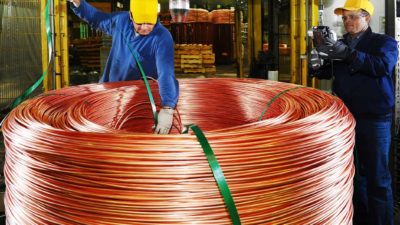
BHP's moves to grow its proportion of copper earnings through the acquisition of OZ Minerals and Filo Corp have it primed to meet growing demand from the rollout of AI infrastructure and the global trend towards electrification.
Iron ore around US$100 a tonne provides solid cash flows, but the outlook depends on the ability of the Chinese government to stabilise the housing market and consolidate steel industry capacity.
As we reported last month, copper now represents 39% of BHP's earnings before interest, taxes, depreciation, and amortisation (EBITDA).
The Stake data shows Fortescue was the second most traded ASX 200 share of FY25.
The pure-play iron ore share dropped 28.6% over the year.
Sriram said:
Its revenue is wholly tied to selling iron ore to China at a time when prices have slipped below US$100 a tonne.
Its ore is priced at a discount given the lower quality of its ore compared to its Pilbara rivals.
The stock has responded well in recent weeks to renewed strength in iron ore prices.
Sriram said Fortescue's clean energy aspirations were challenged in FY25, with the miner cutting costs and reducing its workforce.
Which mining stock had the highest sell ratio?
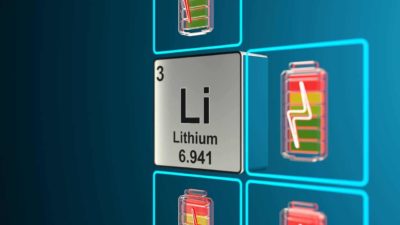
Pilbara Minerals Ltd (ASX: PLS) had the highest sell ratio of the 10 most traded stocks, at 57%.
Overall, the ASX 200 lithium share was the fifth most traded stock of the year.
The Pilbara Minerals share price fell 56% over FY25.
Sriram commented:
The lithium producer struggled as spodumene concentrate prices fell below US$1,000 a tonne amid oversupply from China.
The analyst noted that the mining company remains confident about the outlook, though, saying:
PLS remains confident about the long-term outlook for lithium from the growth of electric vehicles and batteries.
It is optimising its existing operations, while the acquisition of Latin Resources provides a future source of supply in Brazil.
It has over $1b in cash, which provides a buffer in the low price environment.