In today's uncertain market, many Australian investors face a tricky question: should you hold more cash in your portfolio?
What you'd think is a fairly simple question would have a simple answer. But like all things investing and markets: it depends.
And while it is technically easy to sit on cash or hold it in the bank, no one has ever got wealthy by simply saving their hard earned pennies under the bed, as they say.
On that note, balancing cash against ASX shares like those in the S&P/ASX 200 Index (ASX: XJO) can feel like walking a tightrope.
So let's see what the experts have to say.

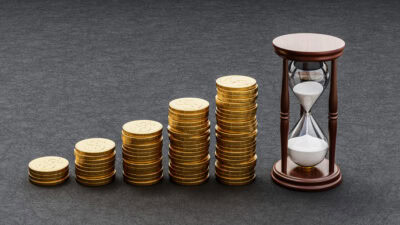
Image source: Getty Images
Why does cash matter in your portfolio?
It's actually an age-old debate in the investment world. How much cash, what to do with surplus cash, and, where does the cash come from?
Philosophy aside, cash offers a buffer in investment portfolios, and can play a diversifying role. Just don't expect it to grow in value like some "money alternatives", such as gold. For example, Global X Physical Gold Structured (ASX: GOLD) ETF, which mirrors the price change of gold over time, is up 22% this year.
Keeping cash handy also helps you pounce on investment opportunities without having to sell your shares at the wrong time, avoiding taxes or losses.
Think of it as your portfolio's shock absorber during market dips. Warren Buffett will tell you (maybe not in person, but Berkshire Hathaway Inc (NYSE: BRK)'s mammoth cash pile is one to talk about for this reason).
But as cold and hard as cash is, there are some things to consider.
One of them, Goldman Sachs says, is inflation.
When you have cash in your portfolio, one of the things you have to think about is inflation. You have to think about that eroding into your cash, and reducing your purchasing power.
Meanwhile, Vanguard points out there is an 'opportunity cost' of holding too much cash. That is, the cost of not investing those funds.
At Vanguard, we expect cash to deliver annualised returns of 3.8% over the next 30 years, compared with 6.6% for shares and 4.8% for bonds, based on average market conditions. When we factor inflation into our projections, those figures decline to 1.8% for cash, 2.8% for bonds and 4.6% for shares.
So while there's a "safety" element in holding a heap of cash versus putting those funds to work, clearly, there's a lot to think about with such a simple question.
What about holding cash in volatile markets?
There's no one-size-fits-all answer to this question either. It depends on a set of factors, including your risk tolerance, and financial goals.
When markets wobble, cash can seem like a safe haven. But moving heavily into cash can mean missing out on rebounds. For example, selling out during the 2008 Global Financial Crisis or the Covid-19 crash meant missing years of strong gains afterwards.
A better question might be, how much should you hold in the first place?
Again, the answer is nuanced, but most experts suggest anywhere between 2% and 20% of your portfolio in cash, depending on the factors I mentioned earlier (your risk tolerance, time horizon, goals).
For example, US Bank recommends a "general rule of thumb" of 2–10%. That means for every $1,000 in value, having $20 to $100 in cash could be sensible, according to the firm.
Vanguard also touched on the time horizon point, noting cash is "useful" for those with a short investment outlook (around 2 years), because "there's no risk of a stock market decline depleting your wealth just before you need to access it".
Meanwhile, the team at Morgan Stanley pinpoint that "panic selling" and 'going to cash and staying there' is one of the 5 common mistakes investors make when markets get a bit choppy.
From what it seams, the experts agree that keeping some funds on the side has some value in any portfolio. But at the same time, you've got to have funds invested to reap the rewards of the market.
Foolish takeaway
With markets gyrating in 2025, many continue to see cash in its traditional role as a safe haven. And sure, having some cash allows you to be ready to buy dips in shares, and also keep a portion of funds on the sides.
But just remember, there's an opportunity cost in holding too much in cash on the sidelines. If history has taught us anything, is that markets do a good job of generating wealth over the long run.
Just remember to consider your own financial goals and circumstances in any investment decision.