ASX 200 shares are trading lower on Friday with the S&P/ASX 200 Index (ASX: XJO) down 1.38%.
In the year to date, the benchmark index has delivered a slightly negative performance, down 0.29%.
One of the factors dragging it down is a significant drop in the share prices of the three major iron ore producers.
This is because these mega miners make up a significant proportion of the ASX 200 market cap.
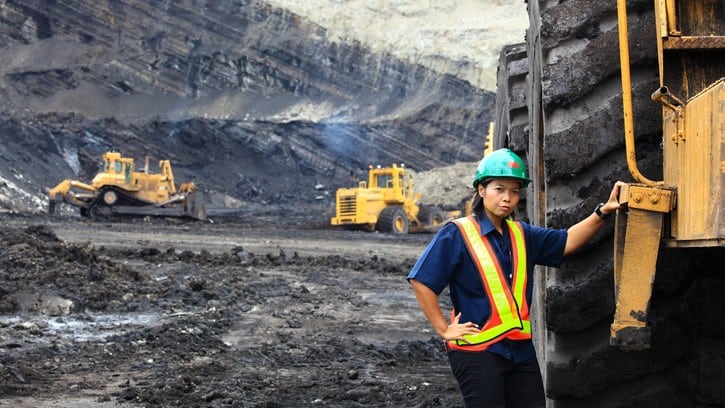
Image source: Getty Images
How are ASX 200 iron ore shares performing in 2024?
In the year to date:
- Rio Tinto Ltd (ASX: RIO) share price is down 15.4%
- The BHP Group Ltd (ASX: BHP) share price is down 16.5%
- The Fortescue Metals Group Ltd (ASX: FMG) share price is down 19%.
No prizes for guessing why.
As we all know, the iron ore price has fallen heavily in 2024 so far.
This is due to lower demand in China, which is historically the world's biggest iron ore consumer, importing 71% of global iron ore exports in 2022.
That's a big problem for us given we are the world's biggest iron ore exporter, accounting for a 57% share of global exports in 2022.
In the year to date, the iron ore price has fallen from about US$142 per tonne to about US$105 per tonne today.
That's a 26% decline in just two-and-a-half months.
This isn't good for the three major iron ore miners, who are the key exporters of Australia. A falling iron ore price impacts the earnings and share prices of these ASX 200 giants.
One of the reasons the iron ore price is falling is because China's property market is pretty much tanking.
What's going on in China's property market?
Average home sale prices rose almost 350% in the 15 years through to 2021 "and remain at significantly stretched levels relative to incomes" today, according to the International Monetary Fund.
The property boom occurred due to strong investment-driven demand from households, driven by massive savings, a mortgage lending boom, and limited investment alternatives.
Developers took on more and more debt to expand construction quickly, and local Chinese governments became increasingly reliant on property activity such as land sales to fill their coffers.
The IMF said real estate has become "ubiquitous as a form of collateral and household wealth" in China.
But now the market has changed.
The COVID recovery in China has been incredibly subdued, and in recent months, President Xi has sought to prick the property bubble by telling his people that homes are for living, not financial speculation.
Debt-laden developers are defaulting. In January, a Hong Kong court directed China's once-largest developer, Evergrande, to liquidate because it couldn't restructure $300 billion in liabilities (Reuters).
When developers are in trouble, half-built apartments sit dormant, demand for steel falls — as does demand for iron ore to make steel — and home values fall as people lose confidence and stop investing.
IMF economist Henry Hoyle notes that Chinese home prices have decreased only modestly, but this is partly because some cities have limited price declines through rules and guidance on listing prices.
Despite these controls on prices, the more important factor is that there is fear in the market. Arguably, that has as much impact on sentiment as falling prices.
We can see this in falling sales volumes. Hoyle says home buyers are fearful that developers don't have the funding to complete projects anymore, and they fear prices will decline in the future.
Broader effects of falling home values on the Chinese economy
While Australia and other Western countries continue to battle high inflation, China is in deflation.
As the Wall Street Journal reported, Chinese consumer prices fell at their fastest rate in more than 14 years in January.
Falling property prices are likely contributing to deflation through the psychological 'wealth effect', which means when the value of people's homes falls, they stop spending because they feel poorer.
Lower prices mean businesses aren't making as much money. That means they need less labour, and can pay lower wages. In January, Bloomberg reported the biggest drop in new hire salaries in China on record.
But here's the scariest stat relating to China's property market downturn and its impact on the economy and also ASX 200 iron ore shares.
Property is 20% of China's GDP
The IMF says property-related activities accounted for an estimated 20% of China's gross domestic product (GDP) during its recent decades of rapid growth.
In a report published last month, the IMF explained:
About two thirds of this comes from real estate's imputed portion of construction activity, and its upstream linkages to producers of metal, glass, cement, and the other goods and service inputs that are used to build housing.
Another third comes from real estate services, a sizeable portion of which comes from services connected to the stock of existing housing, for instance leasing and property management.
The impact on GDP could be larger due to declining demand for housing-related goods (furniture, appliances) as well as due to wealth effects.
Basically, 20% of China's economy is in trouble right now, and that ain't good for ASX 200 iron ore shares.
Trading Economics notes the recent National People's Congress in China "failed to provide any significant support for the property market" and there's been a slow start to China's construction season this year.
Outlook for the iron ore price
As we reported yesterday, Goldman Sachs expects an average iron ore price of US$110 a tonne this year.
It is forecasting a fall to US$95 a tonne in 2025, US$93 a tonne in 2026, and US$92 a tonne in 2027.
Given the strong connection between the prices of ASX 200 iron ore shares and the iron ore commodity price, this appears not to bode well.