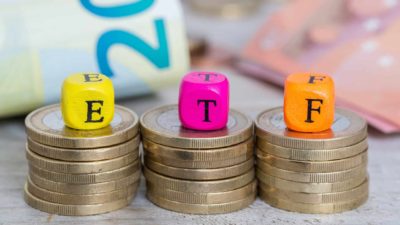
ASX index funds are becoming an increasingly popular option for investors. Exchange-traded funds (ETFs) allow investors to buy a whole group of shares or assets in a single investment.
But, investors shouldn't just buy something because it's popular – that could mean chasing a crowd and being late to the party, which could result in losses if someone overpays.
There are many compelling factors to like ASX index funds, and I'm going to outline some of my preferred reasons to like them below.

Image source: Getty Images
Low management fees
One of the best reasons to like ASX index funds is how low the costs are. The fund providers aren't trying to do extensive analysis, outperform the market or other things that result in costs.
Simply copying an index, like the S&P/ASX 200 Index (ASX: XJO) or S&P/ASX 300 Index (ASX: XKO), can be done very cheaply. Active fund managers might charge 1% per annum, whereas an option like Vanguard Australian Shares Index ETF (ASX: VAS) has an annual management fee of 0.07%.
Lowering fees can make a big difference to the long-term returns. If $1,000 is invested in an ASX ETF for 20 years and it makes 9% per annum it would grow to $6,009. If it rose by 10% per annum, it becomes $7,227. That's 20.27% better overall, simply because of a slight difference in return/fees.
Diversification
A lot of ASX index funds which are based on broad-based indices can offer pleasing diversification. It's good not to have all one's eggs in the same basket. If an ASX ETF is invested in plenty of different assets and businesses, I think this can reduce the risk.
Some of the ETFs that offer strong diversification with excellent holdings include iShares S&P 500 ETF (ASX: IVV) and Vanguard MSCI Index International Shares ETF (ASX: VGS).
Passive investing
Some investments take a lot of management. I'd guess that a lot of people would prefer for their investments to take up as little time and mental effort as possible.
There's no need to try to manage ASX ETFs – it's simply being invested in a particular share market and tracking whatever happens.
I think ASX ETFs are much easier to manage than a residential property, a farm or other things.
Regularly changing portfolio
One of the main advantages, in my opinion, is that an ASX ETF's portfolio is regularly changing.
Plenty of businesses fall by the wayside over time, and staying invested in those businesses would be to our portfolio's detriment, in my opinion.
The fact that the ASX index fund portfolios change means they include the upcoming winners and ensures they can still be long-term investments as they sell down poor-performing investments.
Imagine if the VGS ETF was still invested in the businesses that were the biggest 30 or 40 years ago – it wouldn't have done anywhere near as well as it has.
I think this is one of the best reasons why ASX ETFs can make solid long-term returns.
Good performance
Plenty of the good ASX ETFs have delivered good long-term returns, which would help investors grow their wealth.
Over the long term, the ASX share market and global share market have returned an average of around 10%.
If an investor were able to invest $1,000 per month into ASX index funds and the ASX ETF delivered an average return per annum of 10%, it would turn into $687,000 in 20 years.
I think investing in ASX index funds can be a very useful wealth-building activity.