ResMed Inc (ASX: RMD) shares are down 2.4% to $21.92 in early afternoon trading following the company's 1Q FY24 results release this morning.
As my Fool colleague James reported earlier, revenue increased by 16% to US$1.1 billion in 1Q FY24 compared to 1Q FY23. Operations income increased by 5%, and gross margin contracted 250 basis points to 54.4%. The company will pay a quarterly cash dividend of 4.8 US cents per share on 14 December.
Top broker Goldman Sachs has already delivered its verdict, noting that revenue was in line with expectations and earnings were ahead of estimates.
ResMed's CEO, Mick Farrell, commented that he was "more confident than ever in our growth strategy".
Arguably, ResMed shareholders are not feeling so confident, judging by the recent share price dive.
Let's recap.
ResMed share price takes a serious tumble
The ResMed share price has taken a steep 36% dive over the past six months.
That is significant given ResMed is a popular large-cap within the prestigious ASX 50 and the market's fourth biggest healthcare share with a market capitalisation of $33 billion.
Analysts say the tumble is likely because investors are concerned that Ozempic and GLP-1 medications are going to cost the company revenue.
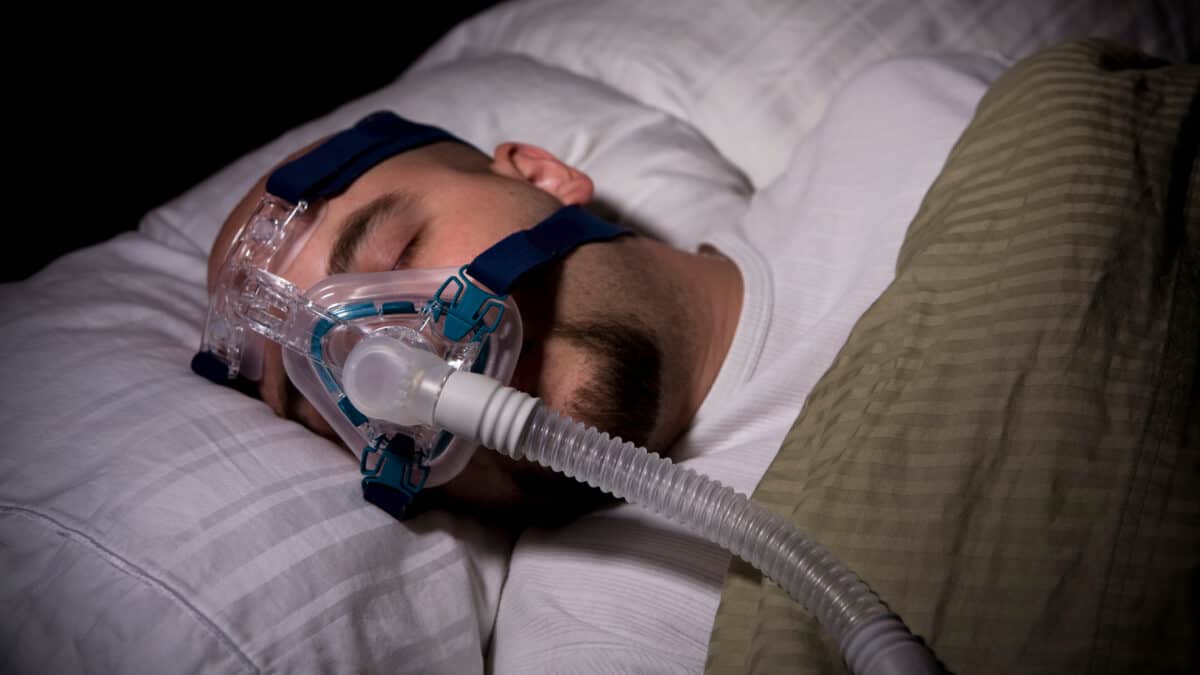
These obesity medicines are proving to be highly effective, which is a problem for ResMed because obesity is a common precursor to obstructive sleep apnoea (OSA), and ResMed's devices treat OSA.
But the brokers argue that investors do not appreciate the scale of the sleep apnea market, and even if GLP-1s do reduce the prevalence of obesity worldwide, a huge OSA market will remain.
Today, the ResMed CEO addressed these concerns directly and explained how the company is tracking the potential future impact of Ozempic and GLP-1 medicines on its business.
What did management say about Ozempic and GLP-1s?
First of all, Farrell reiterated that the company continues to see strong growth in patient numbers.
This is a highly relevant point because GLP-1s only threaten to chip into ResMed's total addressable market by potentially removing some of the portion of customers who have sleep apnea and obesity.
Sleep apnea has many other causes, and this has been the argument of several top brokers who have recommended that investors take advantage of current market confusion and buy a rare dip on a blue-chip share.
They say the OSA market is vast and underserved, thereby leaving plenty of market share for ResMed to gain regardless of the success of Ozempic and other GLP-1s in reducing obesity.
And they're pretty bullish on price, too. Goldman has a buy rating on ResMed with a 12-month price target of $33. Wilsons has an overweight rating and a share price target of $36.25.
Today, Farrell referred to the vast market available to the company, saying:
ResMed is well positioned for ongoing future success and accelerated profitable growth. The opportunity in front of us is huge and largely untapped and it's an incredible runway.
Helpfully, the ResMed CEO did not ask investors to just rely on verbal reassurances today. He actually put a number on the potential impact of GLP-1s on ResMed's future customer base, based on internal modelling.
GLP-1s could reduce addressable market by 200 million people
ResMed says its conservative growth estimate for the global addressable market for sleep apnea is 1.4 billion people by 2050, up from 936 million in 2015. That's without any impact from GLP-1s.
The company then used all data available to assess the potential impact of GLP-1s, as Farrell explained:
We then overlaid an aggressive assumption for the adoption of this new pharmaceutical class globally. We assumed some of the highest penetration rates that we have seen reported by analysts in the industry. With this aggressive and sustained adoption of the new drug class, we forecast that the global prevalence of sleep apnea will still be around 1.2 billion people in 2050.
Farrell said the company would continue to monitor the impact of GLP-1s and update its epidemiology model every quarter.
He mentioned that there were 22.5 million patients on ResMed's Air Solutions ecosystem and that number is growing, with "record numbers of new patients starting up".
But the more salient point is that 22.5 million is a drop in the bucket if the total addressable market for sleep apnea today is somewhere north of 936 million.
Next question…
Are GLP-1s reducing current customer numbers?
At the moment, Farrell said they are not seeing any declining use of ResMed products among patients using both GLP-1 drugs to treat their obesity and ResMed's devices to treat their sleep apnea.
He said the company has "many thousands of patients on our GLP-1 plus PAP database", and they have been tracking the impact of GLP-1 concomitant therapy among them for two years.
ResMed is also tracking 17,000 patients who have had bariatric surgery and are using PAP therapy post-surgery. He pointed out that these patients can lose up to 50% of their weight. This is far greater than the weight loss percentages for GLP-1s, which are about 15% to 30%, depending on the type of GLP-1.
He said:
In terms of existing patients in our installed base, we are actively tracking a cohort of many thousands of patients on these GLP-1 medications and APAP therapy. We are not seeing any significant change in the PAP adherence rates nor any reduced participation in resupply programs versus control groups.
These data indicate that there is a cohort of patients on combined therapies in a stable state. In terms of new patients activated into the funnel, we are seeing the number of new patients activated into the health care funnel picking up. We see patient flow is not only strong but increasing.
Farrell said the company intended to publish the data in the peer-reviewed clinical press at some stage.
He added:
… it's obviously early days, but we're tracking many thousands of patients on GLP-1s and PAP we're seeing maintenance of adherence. We're seeing maintenance of resupply programs and really no change.
GLP-1s could be a 'net positive' for ResMed shares
Farrell said obesity drugs could actually become a "net positive" for ResMed, as patients with obesity tend not to engage with medical services. He said the success of GLP-1s may encourage them to talk to their doctor and discuss the impact of their obesity more broadly, which may include sleep difficulties.
Farrell said:
We believe the work that's being done in the pharmaceutical industry right now with obesity drugs will be a net positive for patient flow and patient growth in sleep apnea, COPD and for ResMed overall.
… there's a high avoidance of people with BMI of 30, 32, 35 of the primary care system. And so we believe it will bring more patients in. We're seeing that with our very high patient flow.
We're seeing actually our adherence rates steady and resupply rates steady in that installed base. And in the new patient flow side, we're actually seeing increased all-time highs of patients coming into the funnel.