How is the Telstra dividend yield looking by historical standards?

We run the figures to see if the Telstra dividend yield has changed over time.

| More on:

You’re reading a free article with opinions that may differ from The Motley Fool’s Premium Investing Services. Become a Motley Fool member today to get instant access to our top analyst recommendations, in-depth research, investing resources, and more. Learn More

Key points
  • Telstra has long been an ASX dividend heavyweight
  • But the company's share price and dividends have fluctuated quite a lot over the past decade
  • We check how the company's yields today compare to their historical levels

Telstra Corporation Ltd (ASX: TLS) shares have always been famous for the dividend income they pay ASX investors. Since Telstra's privatisation in the 1990s, the telco has doled out dividends to its grateful investors. This reputation has spanned decades now, even as the dividends paid out from the company have fluctuated dramatically.

As it stands today, Telstra offers up a trailing dividend yield of 4.21%, based on the current share price of $3.92 and the trailing annual dividend of 16.5 cents per share. Not too shabby from an objective point of view, one could say. But how does this dividend yield compare to what Telstra has offered up in the past?

To answer this question, let's analyse Telstra's historical closing share prices against the trailing dividend yield calculated from the dividends the company was paying at the time:
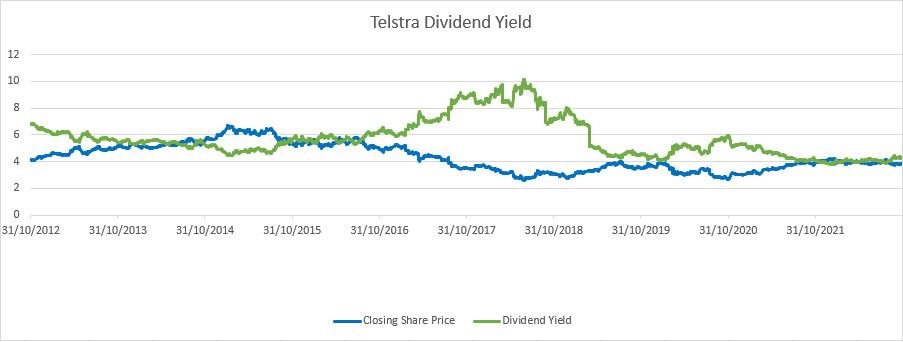
Telstra Dividend Yield
Chart: Author's Own | Data: Telstra.com.au

So the first thing to note is that Telstra's dividends have changed quite a lot over the past 10 years. Back in 2012, the company was paying two sets of 14 cents per share dividends every year. Around this time ten years ago, Telstra was going for just over $4 a share. That gave the company a dividend yield of approximately 6.8%.

But this dividend yield spent the next few years on the slide, thanks mostly to the company's rising share price. By late 2014, Telstra shares were trading at around $5.50. Even though Telstra's raw dividends ticked up from an annual 28 cents per share to 28.5 cents by then, the company's yield was down to around 5.1%.

a young boy dressed in a business suit and wearing thick black glasses peers straight ahead while sitting at a heavy wooden desk with an old-fashioned calculator and adding machine while holding a pen over a large ledger book.

Image source: Getty Images

When did the Telstra dividend yield peak?

Telstra's raw dividends peaked at 31 cents per share in early 2016 and stayed at that level until 2018. But when investors got wind that the company was about to dramatically trim its dividends in late 2017 and early 2018, the Telstra share price began falling dramatically. It dropped from around $4 in September 2017 to a low of $2.65 or so by mid-2018.

This saw Telstra's trailing dividend yield soar to almost 10%, but this soon dropped as well when the new Telstra dividends kicked in. It got to around the 4% mark, where it has stayed pretty much ever since. The only notable exception is the COVID market crash of 2020.

Like most ASX shares, Telstra saw its share price crater during this period. It went under $3 in May 2020 and again dipped to around $2.70 in October of that year.

Since Telstra didn't actually cut its dividend at all in 2020, these drops saw the yield spike to around 6% at the time.

But we can conclude that the Telstra dividend yield today is pretty much at the same level investors have been enjoying for years now. However, it is also not even close to the highs that investors enjoyed in years gone by.

Motley Fool contributor Sebastian Bowen has positions in Telstra Corporation Limited. The Motley Fool Australia's parent company Motley Fool Holdings Inc. has no position in any of the stocks mentioned. The Motley Fool Australia has positions in and has recommended Telstra Corporation Limited. The Motley Fool has a disclosure policy. This article contains general investment advice only (under AFSL 400691). Authorised by Scott Phillips.

More on Dividend Investing

Australian notes and coins symbolising dividends.
Dividend Investing

3 ASX dividend shares yielding 5%+ that still have growth potential

These shares are a great option for passive income seeking investors.

Read more »

A bearded man holds both arms up diagonally and points with his index fingers to the sky with a thrilled look on his face.
Dividend Investing

1 super cheap ASX dividend stock down 16% to buy and hold for decades

The stock was caught up in a sector-wide selloff earlier this month.

Read more »

A mature aged man with grey hair and glasses holds a fan of Australian hundred dollar bills up against his mouth and looks skywards with his eyes as though he is thinking what he might do with the cash.
Dividend Investing

Grow your dividends alongside your job earnings with these Australian stocks

These stocks are delivering rising payouts year after year.

Read more »

Person with a handful of Australian dollar notes, symbolising dividends.
Dividend Investing

I'd buy this ASX dividend stock in any market

This business has a lot to offer income investors.

Read more »

A man holding a cup of coffee puts his thumb up and smiles while at laptop.
Dividend Investing

3 of the best ASX dividend shares for income investors to buy

Income investors might want to check out these top shares.

Read more »

A white and black clock face is shown with three hands saying Time to Buy reflecting Citi's view that it's time to buy ASX 200 banks
Dividend Investing

3 ASX dividend shares raising dividends like clockwork

Shareholders are getting regular payout growth from these stocks.

Read more »

Different Australian dollar notes in the palm of two hands, symbolising dividends.
Dividend Investing

3 ASX dividend shares with yields over 3% today

You don't need to look far for income on the ASX right now.

Read more »

Two elderly people smiling with their fists pumping and with a cape on.
Dividend Investing

Why JB Hi-Fi shares are a retiree's dream

Retirees may want to go shopping for the shares of this business.

Read more »