Renewable energy is undoubtedly a key thematic on the world stage right now. The shift to so-called 'green' sources of power generation has sparked some fairly interesting trends as well.
We've all heard about lithium-ion (li-io) batteries – it's been hard not to – and the (emission-free) glamour that surrounds the electric vehicle space.
It's no coincidence some of the best-performing ASX shares in 2022 are tied to lithium.
Then there are the other 'traditional' sources of renewable energy: solar, wind, geothermal, nuclear, etc.
It really is a new marketplace. Yet, the geopolitical fallback still involves hydrocarbons: oil and gas.
However, one form of clean energy you mightn't be so familiar with is hydrogen.
Hydrogen is also doing the rounds and making a name for itself as a hot (or cold?) contender for top spot in the green energy stakes.
Let's take a deep dive into the sector to strip out the fluff and put some flesh on the skeleton of the ASX hydrogen space. Read on.
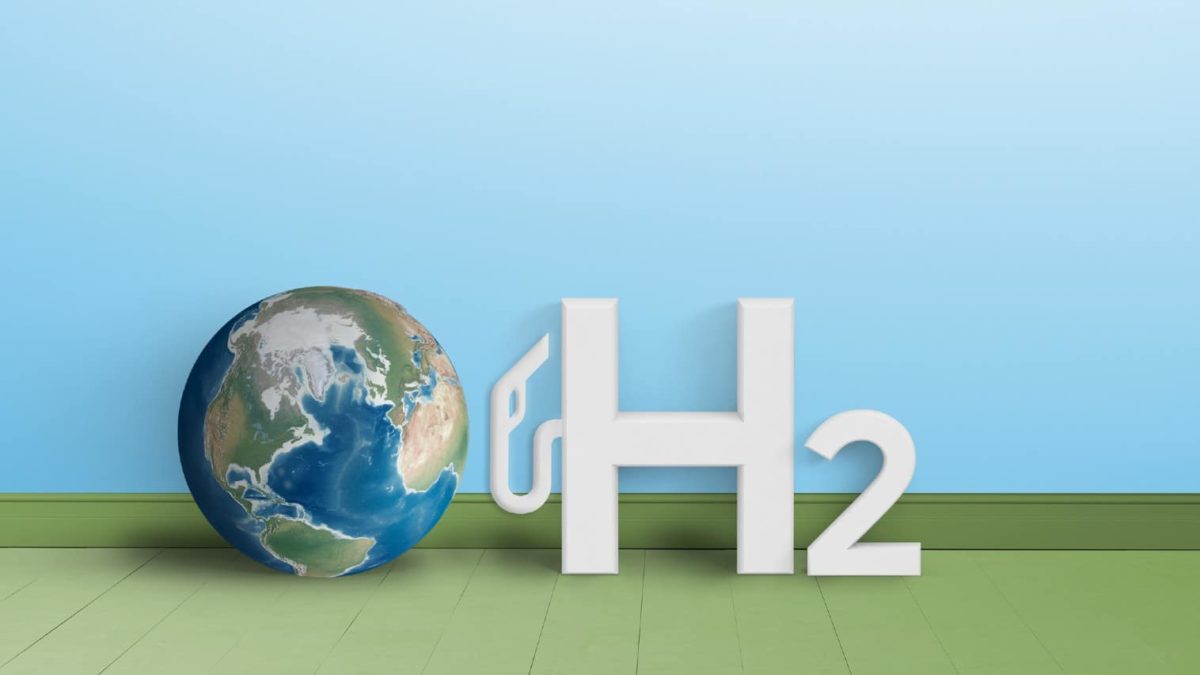
Image source: Getty Images
Hydrogen for fuel?
Hydrogen is a chemical element with the easy-to-remember symbol 'H'. It is, in fact, the lightest element on the periodic table.
In practical terms, it is a highly combustible and flammable gas that – like natural gas – can also be condensed into a liquid, albeit at roughly minus 253 degrees Celsius.
Hydrogen is found just about everywhere in nature. In particular, water (the classic H2O) and hydrocarbons, like methane, are very common sources.
The gas can also be produced from a variety of sources, such as natural gas, nuclear power, and even renewable energy like solar.
This gives rise to hydrogen's 'green' credentials as hydrogen produced by electrolysis is a more energy-intensive process.
According to the United States Energy Department (USED), "Hydrogen is an energy carrier that can be used to store, move, and deliver energy produced from other sources".
Hydrogen is also faring as a contender to power fuel cells of non-combustion engines. It can, as USED says, "power fuel cells in zero-emission vehicles".
But just how efficient and effective is hydrogen at powering vehicles? And how does it stack up compared to 'traditional' fuel sources like oil?
Actually, quite well. According to USED:
A fuel cell coupled with an electric motor is 2–3 times more efficient than an internal combustion engine running on gasoline.
The energy in 2.2 pounds (1 kilogram) of hydrogen gas is about the same as the energy in 1 gallon (2.8 kilograms) of gasoline.
So then, does it have any advantage over lithium-ion electric vehicle batteries?
It seems to boil down to two factors: distance and refuelling time.
According to sustainability publisher youmatter: "While most fully electric vehicles can travel between [160–320 kilometres] on a single charge, hydrogen ones can get to [482 kilometres]."
However, there is far less of a gap when comparing premium lithium-ion EV batteries to the best hydrogen fuel cells. Indeed, most prominent EV manufacturers have opted to proceed down the battery-powered technology path.
Interesting debate
The push to discover and develop new forms of fuel for transport has sparked an interesting debate. While hydrogen is abundant on earth, it must undergo a process to separate it into its pure form, and then compress it into fuel cells.
Meanwhile, developing lithium-ion battery technology has led to a wave of new mining ventures on a global scale. Indeed, the International Energy Agency (IEA) says the auto industry will require 30 times the current amount of minerals to meet demand.
We are already seeing the effect this imbalance in supply and demand is causing. The price of lithium hit all-time highs again this week. There are also questions on the ongoing availability of these critical minerals.
And so the debate turns to what's going to be the best at powering vehicles looking ahead, from a cost and feasibility perspective.
Australian mining figure Andrew Forrest, founder of Fortescue Metals Group Ltd (ASX: FMG), has been leading the hydrogen charge both on our shores and abroad via his investment vehicle Fortescue Future Industries (FFI).
Forrest is aiming to produce 15 million tonnes of green hydrogen by the year 2030, in line with targets set by the European Commission.
When quizzed on how he intends to finance the ambitious goal, he told The Financial Times Hydrogen Summit: "Look, I built $50 billion worth of iron ore infrastructure in the Pilbara…I am very used to executing large capital projects at a cost that is a fraction of what our competitors do," The Financial Times reported.
He also took a shot at prominent lithium-ion battery proponents, adding: "[Tesla CEO] Elon Musk knows that almost every time a Tesla is plugged into almost every grid in the world, it is just burning coal and oil and gas…[and] it is doing nothing for the environment."
What's all this mean for ASX hydrogen shares?
Whilst there's plenty to like about the future of hydrogen, it hasn't yet made its mark on the ASX. In fact, the sub-sector continues to face heavy selling pressure.
Shares of Hazer Group Ltd (ASX: HZR), a company that conducts research and development into hydrogen-producing technology, are down 45% this year to date.
In July, the Hazer share price was crushed when the company reported a part for its commercial demonstration project had failed during fabrication.
Meanwhile, shares of Pure Hydrogen Corporation (ASX: PH2) have also headed south and are down 52% since January.
In contrast to the speculative mania setting the lithium/electric vehicle space alight over the past two years, the hydrogen fuel camp hasn't secured anywhere near the hype.
The returns for both of these ASX hydrogen shares are plotted on the chart below against the S&P/ASX 200 Energy Index (ASX: XEJ), in red, over the past 12 months.
The diversion in performance is abundantly clear, perhaps as abundant as hydrogen is in the environment.