Is it 'game over'? Top crypto plunges 97% overnight in stablecoin rout

With no government backing, digital assets depend on their users' confidence for much of their value.

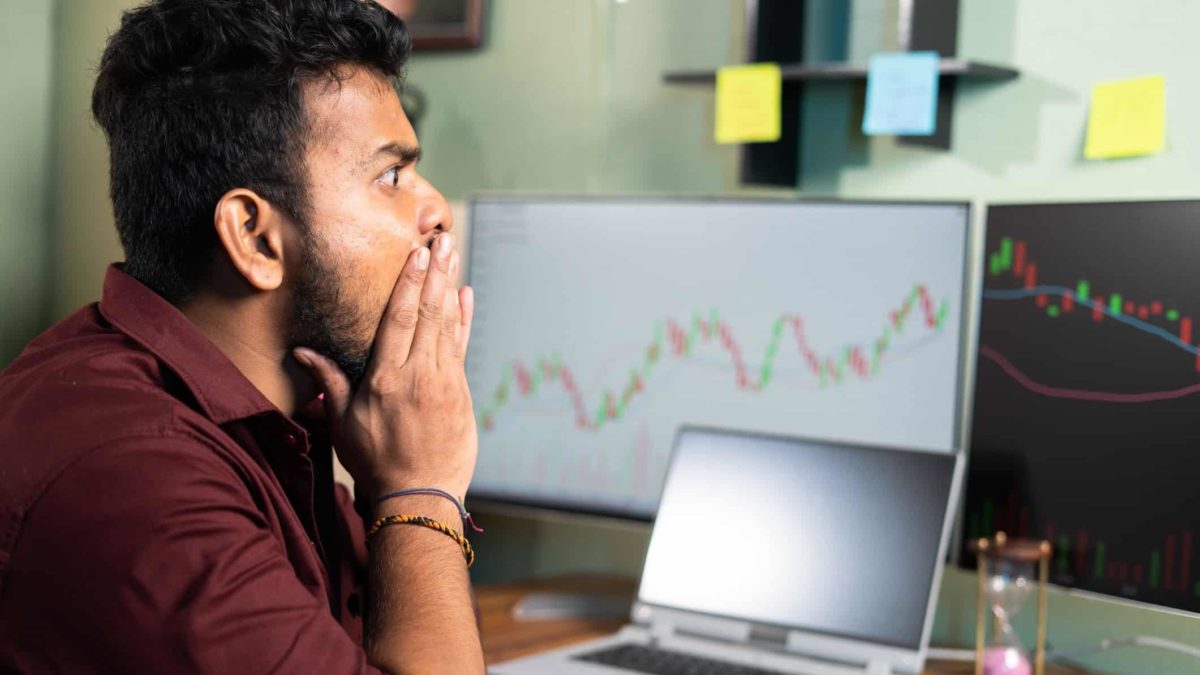
Investor looking at falling ASX share price on computer screen

Image source: Getty Images

You’re reading a free article with opinions that may differ from The Motley Fool’s Premium Investing Services. Become a Motley Fool member today to get instant access to our top analyst recommendations, in-depth research, investing resources, and more. Learn More

Key points

  • Stablecoin UST plunges to 30 US cents from intended US$1 peg
  • LUNA, intended to keep UST stable, loses 97% of its value in hours
  • Analysts are forecasting more pain ahead for Terra's two cryptos

Crypto investors woke today to the realisation that so-called stablecoins are not so stable at all.

This comes as TerraUSD (CRYPTO: UST) – intended to be pegged to the US dollar – plunged to an all-time low of 30 US cents overnight.

In a sign of the ongoing volatility in crypto markets, including within the stablecoin subsector, UST has rebounded from those lows and is currently worth 81 US cents.

Whether it will hold there, return to its intended peg of US$1, or plunge back to new lows is anyone's guess at this stage.
'Stabilising' crypto loses 97% of its value

The even bigger carnage happened to the crypto that's intended to keep UST in line with the US dollar. Or stable, in other words.

Terra (CRYPTO: LUNA) plunged 97% overnight, dropping to US$1.04. LUNA traded for as high as $19.17 over the course of the day. At the time of writing, LUNA has edged higher to US$1.05, down 94% from this time yesterday.

So, what's going on?

Why the massive sell-off?

If you're not familiar with LUNA, CoinMarketCap explains that: "Terra's native token, LUNA, is used to stabilise the price of the protocol's stablecoins."

Those stablecoins are UST.

Some stablecoins are backed by the asset they're pegged to, like US dollars. Some are backed by other cryptos like Bitcoin (CRYPTO: BTC) and Ethereum (CRYPTO: ETH).

Still others, like Terra's UST, use algorithms to maintain their pegs. UST attempted to do this by enabling crypto investors holding its stablecoin to swap it for US$1 worth of LUNA at any stage.

That was meant to keep UST trading within a close range of the US dollar, as any dip below that could be regained by moving into LUNA.

However, the system ultimately relies on crypto investor confidence. And that confidence looks to have gone missing.

According to analysts at Coinbase (quoted by Markets Insider): "The exact reason UST became untethered from the dollar remains unclear, but on Saturday, hundreds of millions of dollars' worth of both UST and LUNA were rapidly sold across exchanges, pushing UST to around 98 cents." Not long after that, they said, "panic set in".

Commenting on the meltdown at Terra, Nikita Fadeev, head of crypto fund Fasanara Digital, said (courtesy of Bloomberg):

Many people were caught off guard. Everything broke there. It is full capitulation … It will get worse before it will get better. Way too much UST is looking to exit, and the death spiral is very reflexive at these levels. It's a long road ahead.

"Once liquidity evaporated, this perpetuated the collapse of the stablecoin," Clara Medalie, research director at Kaiko, added.

Do Kwon, the billionaire crypto investor whose Terraform Labs developed UST and LUNA, tried to stem the sell-off by issuing US$1.5 billion of loans in UST and Bitcoin.

But Bryn Solomon from crypto trading platform Mgnr.io doesn't believe there will be many takers.

"At this stage, I don't think these firms will have the risk appetite to support it," he said. "Algorithmic stables are a confidence game. Once confidence is lost, it's game over."

The Motley Fool Australia's parent company Motley Fool Holdings Inc. has positions in and has recommended Bitcoin and Ethereum. The Motley Fool Australia has positions in and has recommended Bitcoin, Ethereum and Terra. The Motley Fool has a disclosure policy. This article contains general investment advice only (under AFSL 400691). Authorised by Scott Phillips.

More on Cryptocurrencies

A man lays his head down on his arms at his desk in front of an array of computer screens and a laptop computer.
Cryptocurrencies

The Bitcoin price has now halved since October. What's going on?

Bitcoin and Ethereum are both crashing again on Friday. But why?

Read more »

A man sits at his computer with his head in his hands while his laptop screen displays a Bitcoin symbol and his desktop computer screen displays a steeply falling graph.
Cryptocurrencies

Why is the battered Bitcoin price tumbling again today?

Crypto investors are selling their Bitcoin holdings. But why?

Read more »

A man sits wide-eyed at a desk with a laptop open and holds one hand to his forehead with an extremely worried look on his face as he reads news of the Bitcoin price falling today on his mobile phone
Cryptocurrencies

What on earth is happening with the Bitcoin price?

The Bitcoin price is now down more than 38% from its October all-time highs.

Read more »

Hand holding a Bitcoin with a rising arrow in front of a chart.
Gold

Is Bitcoin digital gold? It seems investors prefer the real thing

Store of value? Perhaps not.

Read more »

A smiling woman holds a Bitcoin token in her hand.
Cryptocurrencies

How is Ethereum stacking up against the Bitcoin price so far in 2026?

Bitcoin versus Ethereum. Which crypto is leading the charge in 2026?

Read more »

Bitcoin ticker on a blue and black sphere.
Cryptocurrencies

Bold calls, big risks, and what really matters for Bitcoin price in 2026

Crash calls or moonshots? Bitcoin enters 2026 with bold predictions and even bigger uncertainty.

Read more »

Hand holding a Bitcoin with a rising arrow in front of a chart.
Cryptocurrencies

Better Buy in 2026: XRP, Dogecoin, or Bitcoin?

Here are the pros and cons of each.

Read more »

BTC spelt out on wooden blocks with a red sign going down.
Cryptocurrencies

Will the Bitcoin price crash in 2026?

Crash fears return, yet Bitcoin’s evolution suggests volatility is a feature, not a flaw.

Read more »