This article was originally published on Fool.com. All figures quoted in US dollars unless otherwise stated.
Big news is about to hit the stock market, and you don't want to be caught off guard when it happens. The Federal Open Market Committee (FOMC) is meeting this week to discuss monetary policy and interest rates, and there's a strong chance that stocks will react sharply to new information that comes out of that meeting. Make sure that your investment portfolio is set up to handle one of the biggest events in the financial calendar.
Why the FOMC is important
The stock market has been heavily influenced by interest rates over the past two years, and the Federal Reserve is the driving force behind interest rate changes.
Interest rates are often associated with relatively low-risk assets, such as Treasury notes and investment-grade corporate bonds. When interest rates are high, investors can generate decent rates of return without taking on much risk. However, periods with especially low interest rates force investors to look elsewhere for better returns.
That exact process has been happening over the past few months. Low rates tend to increase demand for stocks, especially high-growth stocks with more speculative valuations. That was important fuel for the COVID-19 bull market.
The Fed controls interest rates by buying and selling securities (usually Treasuries) on the open market. When the central bank purchases bonds, it increases demand for these securities and injects cash into the economy. This drives down interest rates and stimulates economic growth, so it's considered expansionary monetary policy.
Expansionary policy also tends to push inflation higher by stimulating demand for goods, services, and labor. The Fed sells securities and reduces the money supply if they want to raise rates.
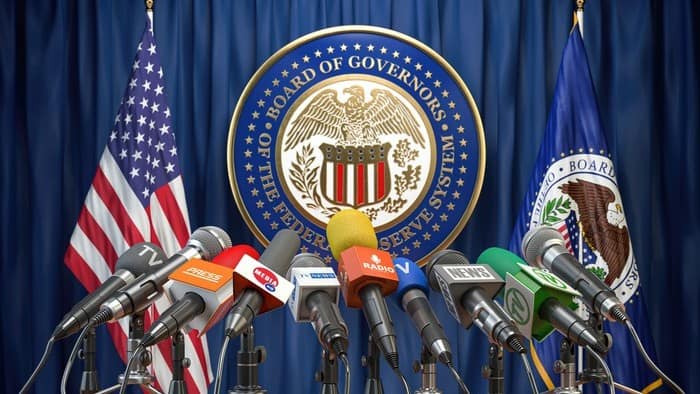
The FOMC is the arm of the central bank that implements these strategies. The committee convenes every other month to discuss those actions, and the meetings are followed by a data release and a press conference. There's an FOMC meeting this week, giving investors rare insight into one of the largest economic forces as it changes.
If any of the information from this week's FOMC meeting differs from expectations, there's a good chance that the market shifts once again. The market's been shaky and the CBOE Volatility Index has been high, so any surprises from the Fed are likely to result in a big move up or down.
What to expect
There's no way to know exactly what the Fed will do, so any forecasts are speculation and guesswork. Still, we can make some educated guesses and prepare for a range of outcomes.
The Fed's core responsibility is balancing inflation and economic growth. Not everyone agrees with modern monetary policy, but there's plenty of evidence to suggest that central bank activities can reduce the severity of recessions or put a cap on irresponsible economic expansion. The idea is that a smoothly growing, more predictable economy is better for everyone in the long run.
The basic playbook is to cut interest rates when unemployment is high and to raise rates when inflation is too high. February's employment report smashed expectations, with nearly 300,000 more jobs added than anticipated. Unemployment dipped to a low of 3.8%, and there was also meaningful improvement among people who are underemployed due to economic reasons. We are closing in on pre-pandemic employment levels, which were very high.
Meanwhile, the latest inflation data indicates the largest consumer price increases in decades. Food and energy prices spiked due to supply shocks, adding to an already high inflation environment.
Since the FOMC last met in January, inflation has been higher than expected, while unemployment has been better than expected. That would indicate that the Fed will either maintain or accelerate its rate hike timeline.
Some people think that the Fed's hesitation to take any action has caused the stock market to dip. It's naive to think that the Fed doesn't consider stock investors at all, but the monetary authorities have previously taken actions that resulted in a stock sell-off. Inflation is a threat to economic stability right now if it's left unchecked, and the economy overall looks strong enough to absorb higher rates. Therefore, the monetary policy response seems pretty predictable.
Don't be surprised if the market reacts negatively as the Fed takes a more aggressive stance against inflation. Prepare yourself mentally and emotionally for volatility so that you don't panic if there's bad news. Make sure that your investment portfolio has the proper balance of growth and volatility so that you'll enjoy optimal results whether economic news is good or bad.
Remember: All of this is just a temporary disruption to long-term growth in the economy and stock market. You have to manage your way through this short-term stuff.
This article was originally published on Fool.com. All figures quoted in US dollars unless otherwise stated.