As inflationary pressures continue to mount on global markets, the US has just experienced its highest jump in core inflation in 40 years.
There are a multitude of undertones feeding into the inflation narrative, not in the least the enormous quantitative easing (QE) programs made by central bank's over the last 2 years in response to the COVID-19 pandemic.
The result has been a flooding of liquidity in financial markets, propping equity indices around the world to reach heights never once thought possible.
ASX shares have no doubt fared well over this time as well, such that the benchmark S&P/ASX 200 Index (ASX: XJO) was setting record highs last year, shown on the chart below.
However, inflation appears to be getting too far ahead of governments around the world, and conflict from Europe only adds to the pressure. Commodity indices have soared to decade-long highs as well.
Add in red hot markets for housing, mortgages, equities, and now, raw materials, the stage is set for inflation to continue driving north from 2022, many experts say.
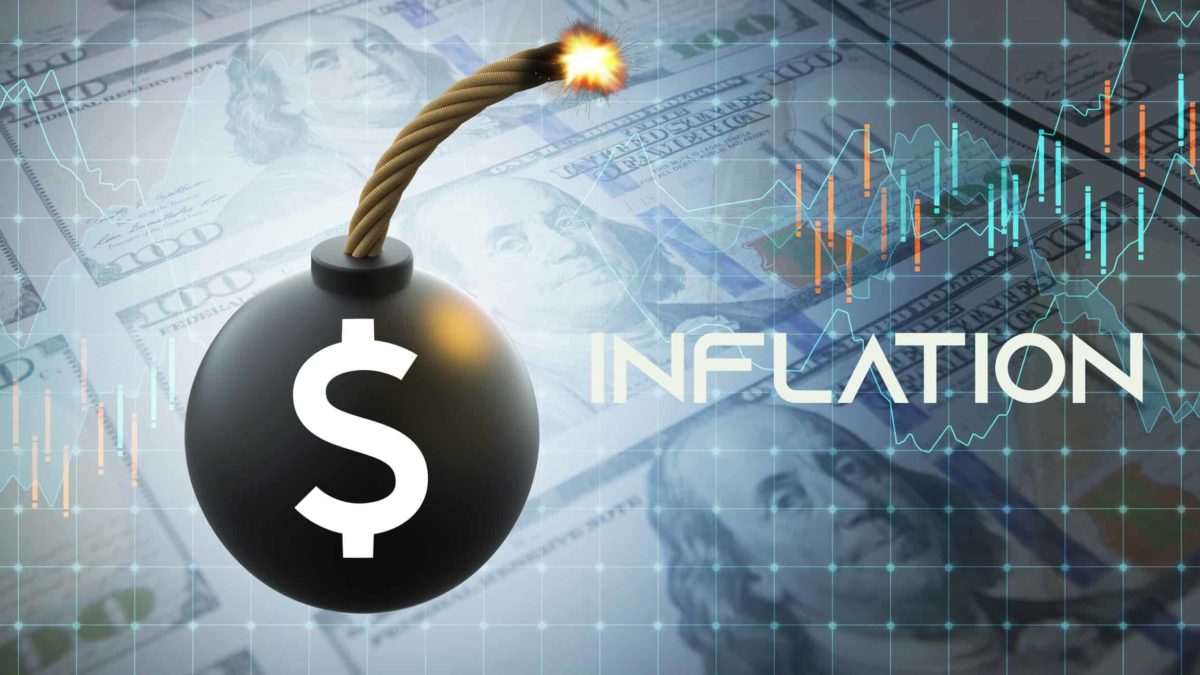
Image source: Getty Images
What got us here?
The pandemic resulted in a number of unconventional measures of government and monetary policy around the world.
In the US, its central bank released untold amounts of liquidity into the system through its QE programs. Inflation has basically followed suit along the way (shown below).
Government-enforced lockdowns from COVID-19 then sent global supply chains into turmoil, resulting in supply backlogs and manufacturing bottlenecks.
The US Fed responded by releasing several, multi-trillion dollar "bazookas" as they were labelled, in order to flood the system with liquidity.
Let's just dispel something first – the US (or any central bank) wasn't 'printing money'. None of them do.
In fact, there isn't really such a thing as printing or creating money. The only money 'creation', is done via banks when lending money on credit to obtain interest.
Instead, the government 'prints money' through its bond-buying programs, by purchasing Government bonds and mortgage backed securities (MBS) from the public markets. It does this via its own federal reserves.
The impulse effect is that there is a huge flood of money onto the scene, as the Government has in a way released more liquidity into the system.

In effect, the US loaned investors money, which is an unconventional way of conducting monetary policy.
Normally, it's the other way around – the Government issues bonds and the public buys them. That is, investors are loaning the Government money by buying their bonds.
This is typically done to finance large capital projects, such as roads and other infrastructure.
For their risk, investors earn some interest and their principal back after a set time. Don't forget – in this standard scenario, the Government pays.
But this time it's different. This time, with QE programs, the US lent investors the money – meaning they are now liable to pay back that debt, with interest – and not the other way around.
One other factor driving the liquidity spike and inflation jump is record low interest rates that have been at nearly zero for a few years now.
These record low rates have allowed borrowers to take on more debt at lower cost in all aspects, not just obvious areas like housing.
Low interest rates are also great for asset prices, considering the impact they have on valuations, discussed below. Hence with record low rates, it's not surprising to see global stock markets charge higher these last couple of years.
That's also been fuelled by a huge thirst for growth and tech shares, such that the ASX and US indices are heavily weighted towards these themes.
But as the liquidity has flushed its way throughout the economy, aggregate prices have caught up to speed. Now US inflation is at record highs of almost 7% and shows no signs of slowing down.
What does this mean for ASX shares?
The US has finally thrown its term of 'transitionary' for the current rate of inflation out the window. It has now accepted that inflation is a problem and that actions must be taken.
The best tool central banks have in curbing inflation is to influence interest rates in the real economy, in order to reign in spending and cost increases. In Australia, the Reserve Bank does this via the cash rate.
Market pundits are already pricing in a number of rate hikes from both the US and Australia this year and next.
As such, the bond market has begun pricing in the chance of a rate hike as well, a fact that has hurt the valuations of ASX large cap and small cap shares in 2022, as seen below.

Valuations and the yield on long-dated bonds are inversely related, such that an increase in yield will compress stock valuations.
Not only that, but these yields tend to match the direction of various rate movements in the real economy, and give a good sign into the current state of affairs.
Now let's bring it all together so it's clearer – Inflation is at 40-year highs in the US. Central banks try and raise aggregate interest rates to curb inflation.
In Australia, that's done via the cash rate. Bond yields often reflect this rate, and these bond yields are inverse to stock valuations.
If these interest rates rise, this might hurt the performance of ASX shares due to this relationship.
The result of this activity so far has been a correction in ASX shares in 2022 as bond yields have begun climbing once more.
So if inflation continues running hot in the US – the world's largest economy by GDP – and central banks respond by jacking up rates, this could further influence stock valuations here in Australia.